
When Jon Clarke emigrated from Luton to Sydney with his young family, he knew there was a long list of creatures that could kill him, from great white sharks to eastern brown snakes and funnel web spiders.
The common magpie was the least of his worries.
One sunny spring morning in 2013, shortly after he had arrived in Australia, Clarke was struggling uphill on a cycle path near his home when he had his first encounter with one. “This bloody great big bird decided to swoop at me, and it made this awful snapping sound in my ear,” he said. “I could see the magpie swooping at other riders as I was cycling.”
Clarke escaped unscathed, but others are not so lucky. Australians have grown accustomed to their native magpie’s seasonal capacity for violence.

During breeding season, which falls in Australian spring between August and November, the male magpie develops an unnerving habit of “swooping”, launching at cyclists, joggers and anyone that could be considered a danger to their chicks.
Each spring, councils put out signs warning the public to beware of swooping magpies, and to protect themselves with wide-brimmed hats, sunglasses and umbrellas. Children are prime targets, in part because they have a tendency to run around and behave erratically, meaning they are seen as a threat. They are taught not to look up if they hear the clacking of a beak, a tell-tale sign that an attack may be imminent.

Brisbane, Queensland
RICHARD MILNES/ALAMY
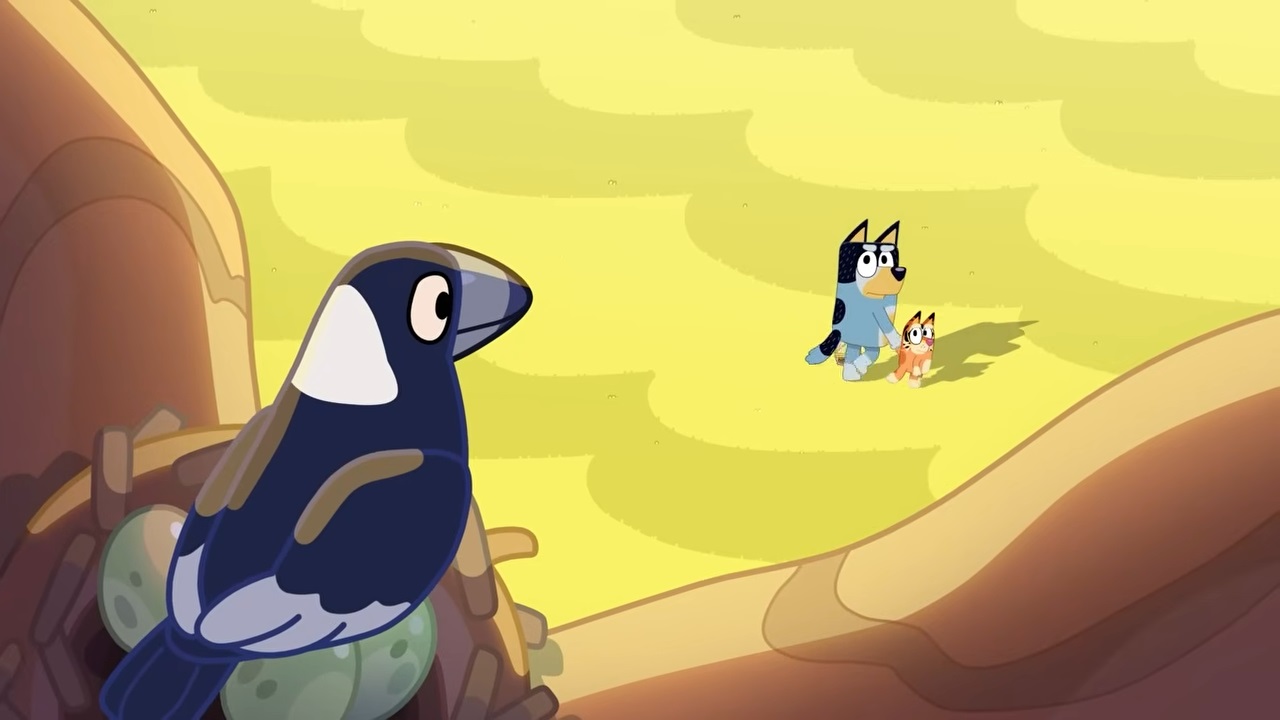
In one episode of the hit Australian cartoon series Bluey, the protagonist’s little sister Bingo and father Bandit have to brave a swooping magpie when walking through a park to deliver a curry to a friend’s house.
Having grown up with British magpies, which, despite similar black-and-white colouring, are a different species, Clarke’s first brush with an Australian magpie made a lasting impression on him. The software manager, who now wears sunglasses and a specialised anti-magpie helmet with ear guards whenever he goes cycling, built a website where people could report magpie attacks during swooping season and pinpoint their location.
• Attacking magpies can’t stand the rain in Spain
The site, MagpieAlert, is still widely used by cyclists, joggers, pedestrians, councils and even postmen anxious to avoid the attentions of the birds while out delivering.
At last count, as spring comes to an end, there have been 4,724 magpie swoops reported on the site — up from 3,568 last year — and 567 injuries.
Clarke said it was hard to tell whether magpie attacks were on the rise, or whether it was simply that more people were reporting due to increased awareness of the problem.
Residents are encouraged to report aggressive magpies but told not to take up arms; as a native bird, they are a protected species in almost every territory, meaning it is illegal to kill them without a permit. Instead, national parks staff, local councils and pest control companies regularly step in to shoot particularly problematic magpies.
Most people escape with minor cuts and abrasions to the head or face from a magpie’s beak. But this month 12-year-old Sam Moodie was taken to hospital in Perth after she was pecked in the eye by a swooping magpie while on her way home from school.
Doctors operated on her left eye in an effort to save her sight but have said she may require several more operations.
Hospitals report a rise in eye injuries during spring, ranging from corneal abrasions to puncture wounds that can lead to permanent blindness. Most injuries, however, are from people who fall off their bike as they try to escape.
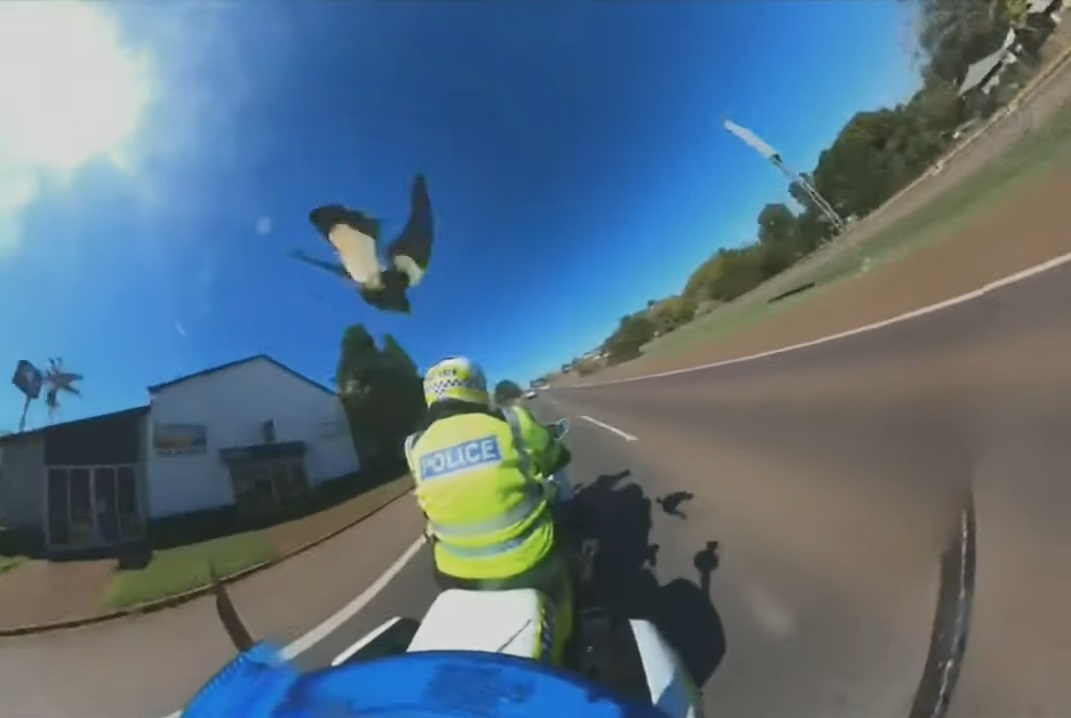
The birds have no respect for law enforcement
9 NEWS AUSTRALIA
Last month, a 30-year-old working holiday tourist from Chile was attacked by a magpie while riding a bike in the remote gold mining town of Ravenswood, in Queensland. She said she noticed the “shadow of the bird overhead” before the magpie swooped.
She lost control of her bike, hitting the left side of her face on the tarmac, sustaining severe facial injuries and a broken neck bone. “The last thing I remember is the sound — the magpie was screaming. Then everything went black,” she told Channel 7 News.
In a handful of cases, magpie attacks have even proved fatal. In 2021, a five-month-old baby was killed when her mother, who was holding her, fell as she attempted to dodge a magpie in a park in Brisbane. Two years earlier an elderly man died of head injuries after swerving on his bicycle to avoid a swoop in Wollongong, a coastal city in New South Wales.
Each spring Dr Antony Clark, a consultant ophthalmologist at Perth Children’s Hospital and the Lions Eye Institute, treats a handful of patients who have been attacked by a magpie. “Magpies go straight for the eye as that’s the most disabling for the predator. Most of the patients with the nasty injuries are children as they’re not very good at protecting themselves, and often look up towards the thing that’s attacking them rather than turning their head away.”
The Australian magpie belongs to the Artamidae family, along with currawongs and butcherbirds, which are also well known for swooping. The common Eurasian magpie found in Britain, as well as Europe, Asia and parts of north Africa, is from the Corvidae family, which includes crows, ravens, jays and jackdaws.
Bill Bateman, an associate professor of ecology at Curtin University in Perth, said: “The only reason we call them magpies over here is British colonist settlers came over, saw a black-and-white bird which looked a bit like a magpie, and decided to call it that.”
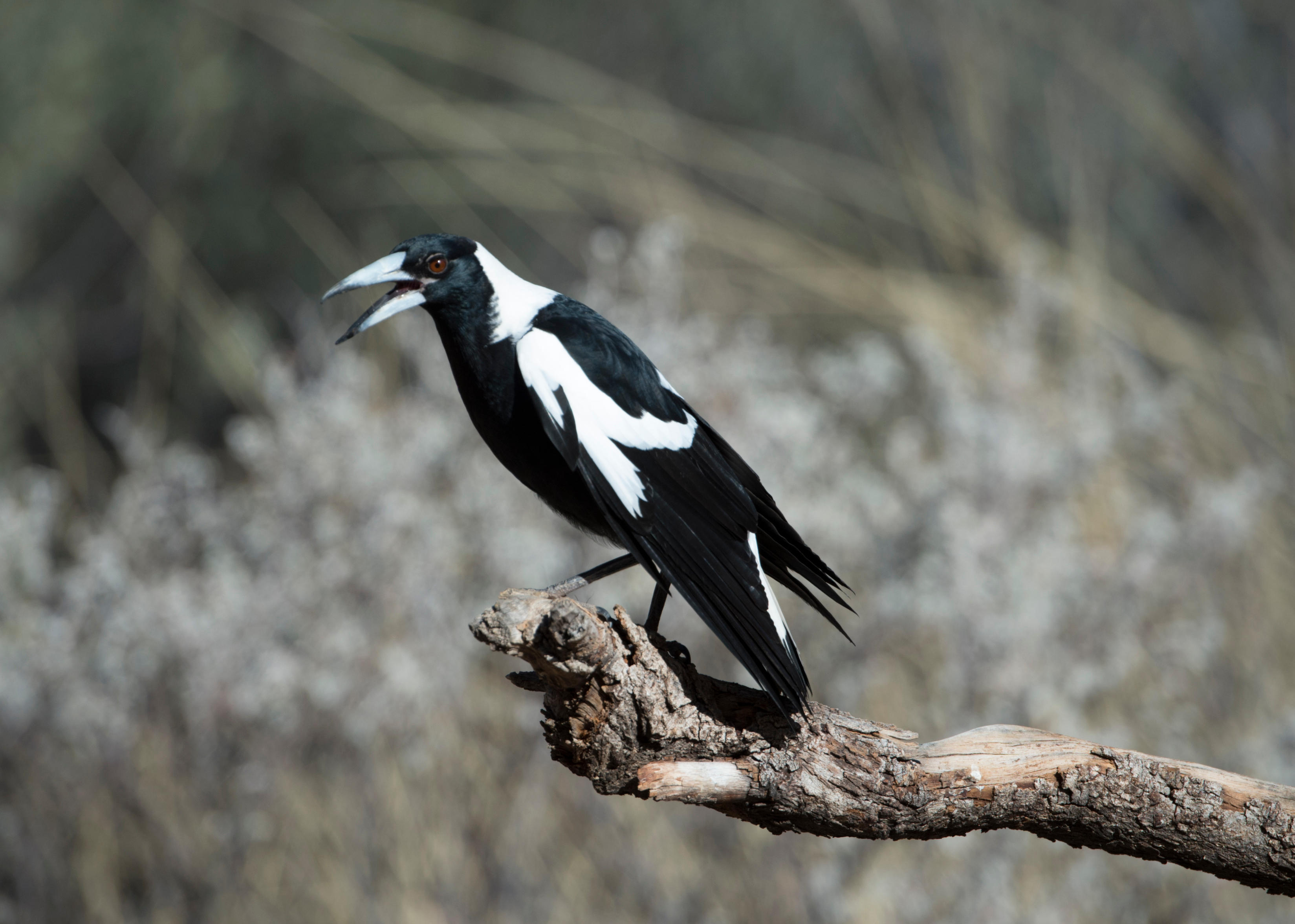
An Australian magpie
ALAMY
Scientists estimate that no more than one in ten magpies swoop on people, and only do so in the few weeks when their chicks are hatched and still in the nest. It is almost always the males who go on the attack, with most swoops occurring within 100 metres of the nest.
“They’ll swoop [on] people walking but they really hate people on bikes,” Bateman added. It is thought to be because cyclists move more quickly, often entering magpies’ territory silently at high speed, presenting a greater perceived threat.
Like their British counterparts, Australian magpies are also highly intelligent and can recognise and remember individual faces. That means they can bear a grudge and will often target the same cyclists who commute on a particular route.
Some cyclists have developed their own personal deterrents, including attaching cable ties to stick out of their helmet like a hedgehog.
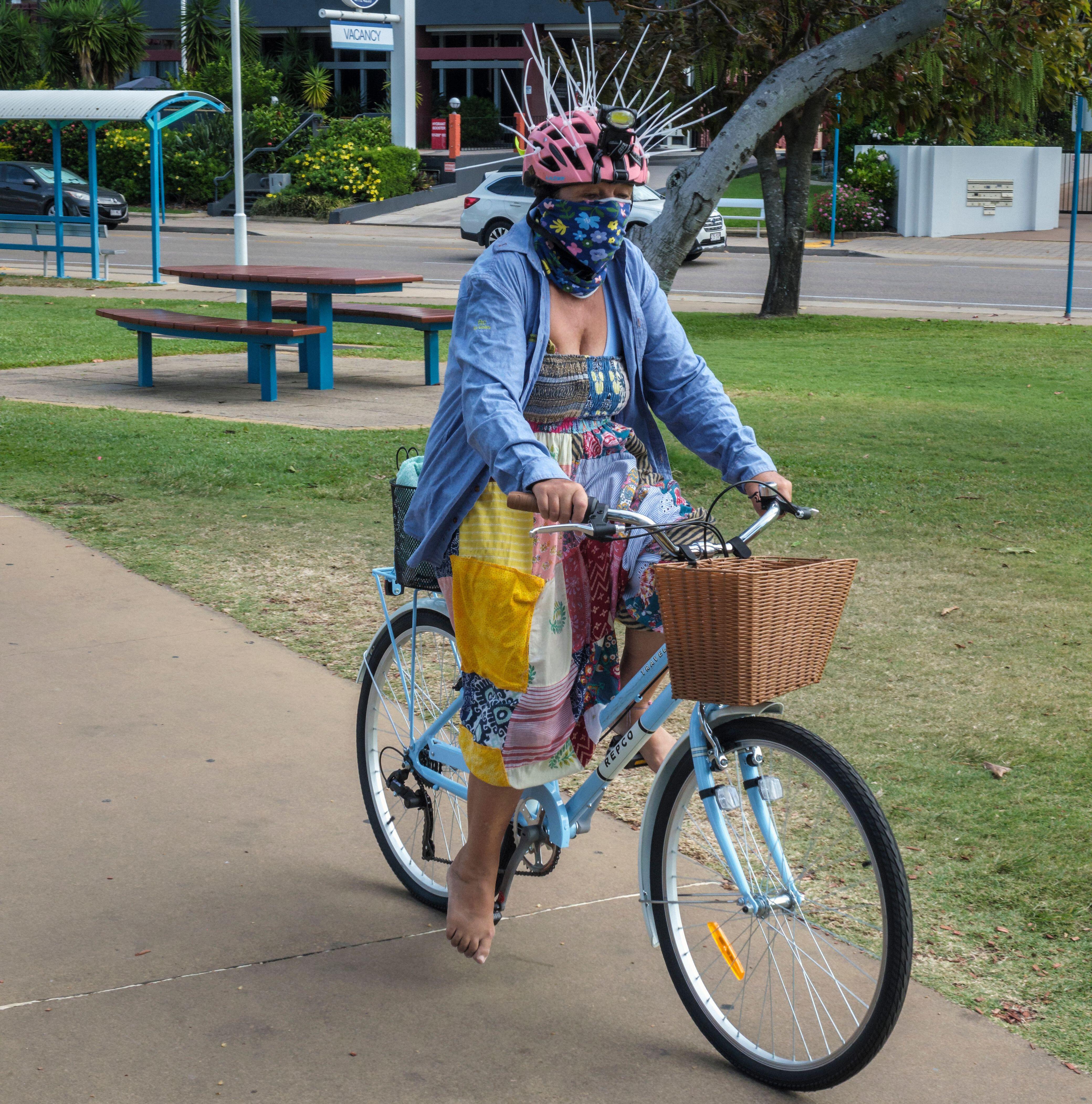
A Queensland cyclist
ALAMY
Clarke said he had developed a healthy respect for the Australian magpie over the years. “Magpies are intelligent birds, and their song is melodic and beautiful. They just tend to get a tad overprotective in spring.”