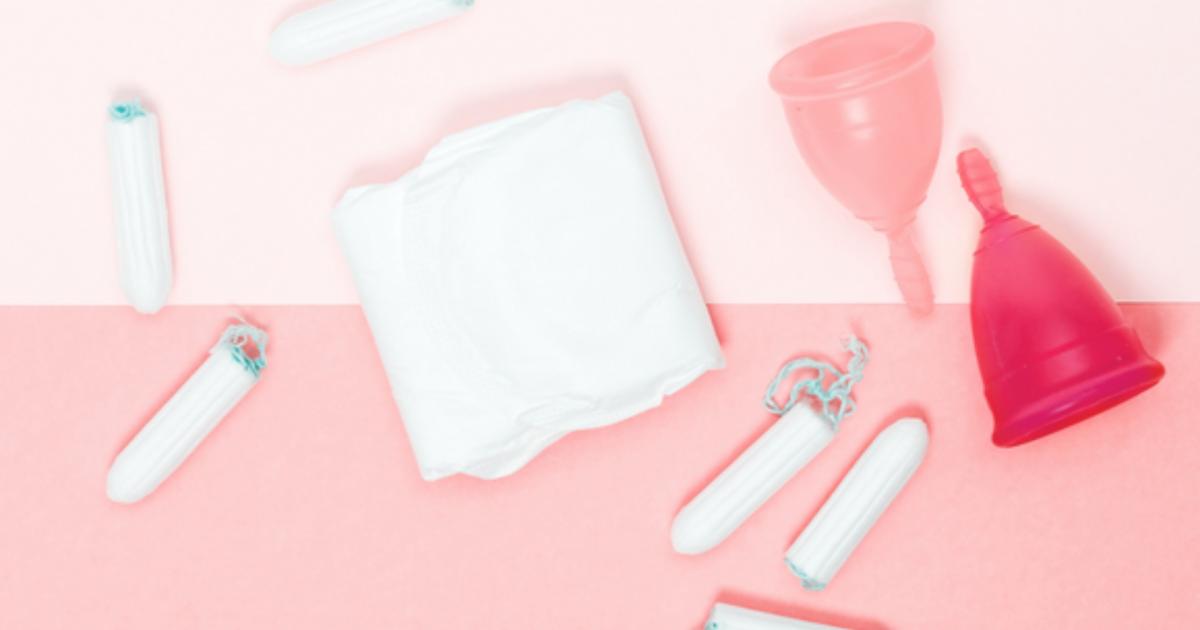
Despite progressive legislation guaranteeing free access to menstrual products in Scotland, the research revealed that reusable period products remained “significantly underused, with only three per cent of people in Scotland who menstruate relying on them exclusively”.
Dominique Haig, a master’s student at QMU, has explored why uptake of reusable menstrual products remained “low”, despite the Period Products (Free Provision) (Scotland) Act 2021 encouraging their distribution.
The findings point to a “complex web of barriers – institutional, educational, and infrastructural – that prevent organisations fully understanding and complying with the act’s goals around equity, sustainability and choice”.
Dominique, a student in QMU’s Institute of Global Health and Development, said: “We found that while reusable products are technically available across colleges, universities and public organisations, they’re often out of sight – sometimes hidden behind reception desks or restricted to student unions.
“This type of gatekeeping, combined with poor signposting and limited education, means many students who may be particularly vulnerable to period poverty don’t even know they have the option of accessing the free sanitary products.”
The research has identified that students most likely to benefit from reusable products – such as low-income, disabled and trans/non-binary individuals – faced “disproportionate barriers”.
These included: inconsistent menstrual education and limited teacher training, leaving students unaware of their entitlements and product options; parental influence, which can shape attitudes toward menstruation and product choices, especially when stigma or misinformation has shaped communication; and inadequate washing facilities and lack of private spaces, which make using reusables impractical in many institutions.
“One teacher told us that students often don’t receive menstrual education until halfway through the school year. By then, their understanding is shaped mostly by what their parents have told them,” Dominique said.
In addition, student input “rarely shaped procurement practices which resulted in the purchase of reusable products that didn’t meet the needs of students in terms of quality and aesthetic preferences – resulting in wasted budgets and a continual reliance on single-use sanitary wear”.
“We spoke to one university procurement officer who confirmed that students had to go to a specific location to collect reusable products. That alone can be a deterrent, especially if the space isn’t welcoming or inclusive,” said Dominique.
She added: “The availability of free sanitary wear across Scotland has been an excellent way of improving equality for women across the country.
“However, without targeted interventions, Scotland risks entrenching its dependence on single-use menstrual products, which ultimately undermines the environmental and social equity goals of the Period Products (Free Provision) (Scotland) Act 2021.
“We are therefore calling for improved menstrual education and teacher training; inclusive procurement processes that reflect student preferences; better infrastructure to support reusable product use; and clearer signposting and more accessible distribution methods.
“This will help protect the dignity of everyone who menstruates and the sustainability of service provision, ensuring every student has real choices.”