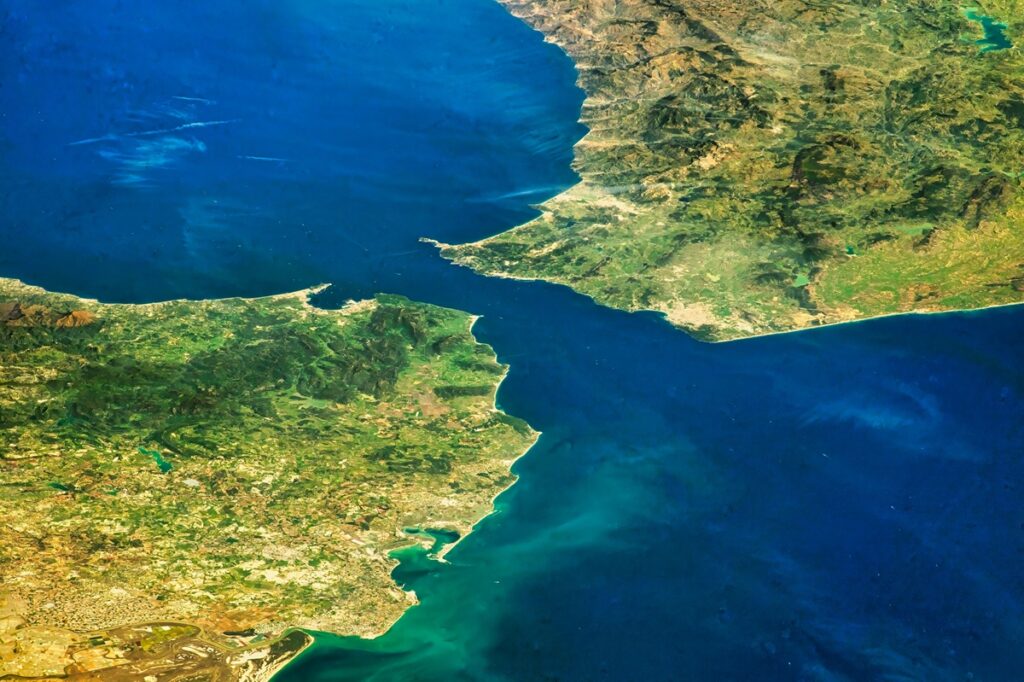
The Strait of Gibraltar, the narrow waterway separating Spain and Morocco, may not last forever. Scientists from Portugal and Germany say tectonic forces are slowly pushing Europe and Africa toward a geological reunion, according to a study published by the Geological Society of America.
The strait lies where the African and Eurasian plates converge. Beneath the surface, the western Mediterranean plate is sinking under the Atlantic plate, a process called subduction. This movement fuels earthquakes in the region, including those in Morocco’s High Atlas, showing the tectonic system continues to evolve.
The Mediterranean Sea has been closing for millions of years while the Atlantic slowly expands. Researchers say the existing subduction zone in the Mediterranean is moving west, gradually encroaching on the Atlantic through Gibraltar. Over millions of years, this could seal the strait, cutting off the Atlantic from the Mediterranean entirely.
Scientists predict Europe and Africa could reconnect in roughly 20 million years. That shift would trigger intense seismic and volcanic activity in southern Europe and northern Africa, forming a new “Ring of Fire.”
The study shows that coastlines and continents are far from permanent, as geological forces continually reshape the planet. While Spain and Morocco may seem worlds apart culturally and politically, tectonic activity is steadily bringing them closer.
While no one alive today will witness the full transformation, it has already started. The Strait of Gibraltar, familiar on every map, is a place in flux.