
Our journalism is only possible thanks to the trust of our paying members. Not a member yet? Sign up now
Welcome to Bureau Brussels – your weekly deep dive into the power plays, backroom deals, and expert investigations shaping life for over 450 million EU citizens. Tips or feedback? Reach us at [email protected]
Just another ‘slow’ week in Brussels… we chase shadow fleet enablers out of Germany; #Natogate reaches Parliament; the Albanian mafia is suspected of planning to kill Brussels’ chief prosecutor; and the EU’s foreign policy chief insists there is”nothing to see” in a secret Signal chat. Plus, the Ombudsman digs into a far-right funding scandal.
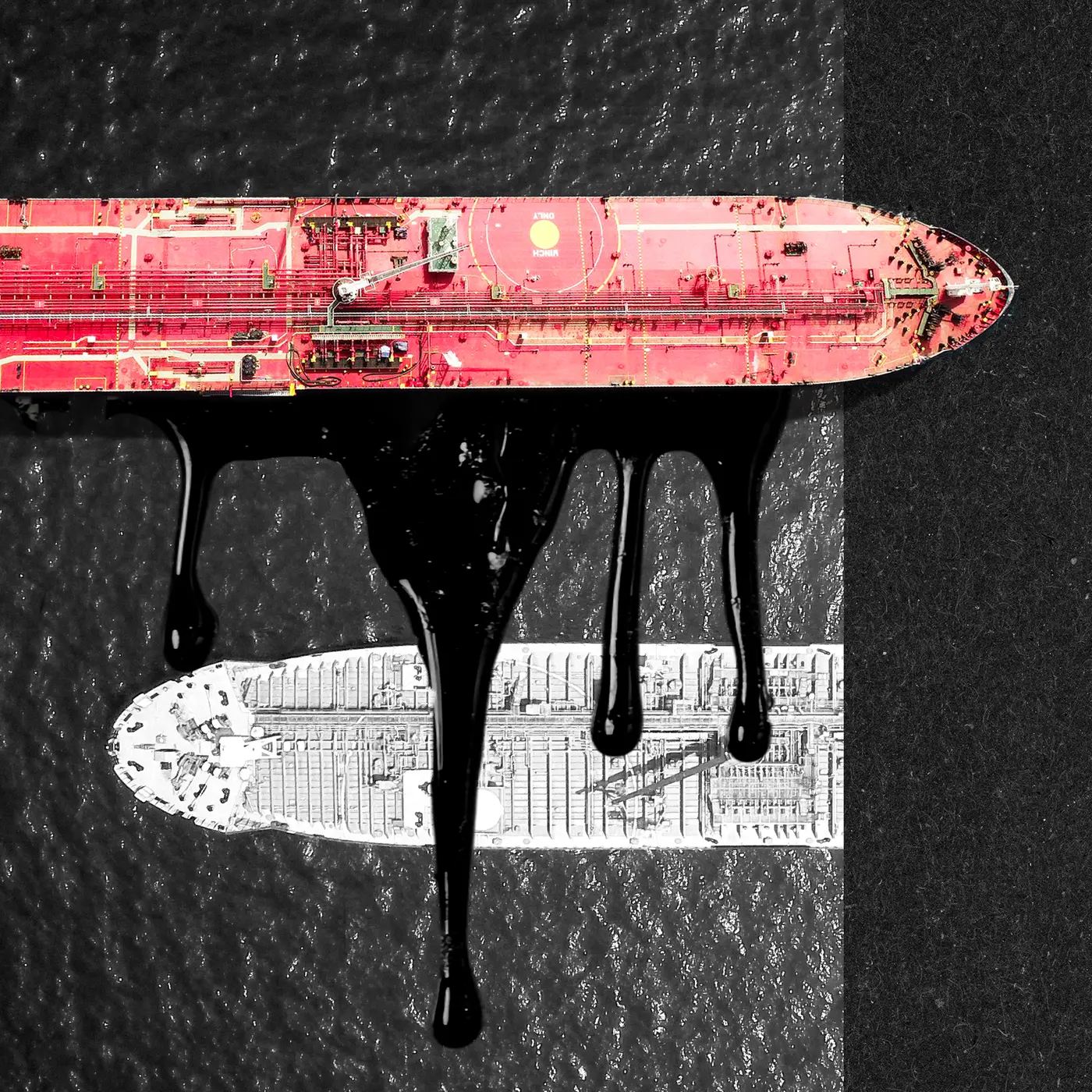
I chased shadow fleet enablers out of Germany. Here’s how.
For years, the EU has been battling the shadow fleet of oil tankers that transport Russian oil and fund Putin’s war in Ukraine. But today, the people who keep this fleet running still rely on European companies.
I stopped one of those sanction-evading practices with a single email.
Let me tell you what happened.
Ships must fly the flag of the nation where they’re registered. Otherwise, they operate outside maritime regulations, making it nearly impossible to do business or enter ports. But no self-respecting flag state – not even maritime cowboys like Panama and Liberia – wants to help out the shadow fleet anymore.
But a workaround has been found. Companies have popped up illegally claiming to represent a nation and offering to register any ship, sanctioned or not. Take for example, the Caribbean island state of Sint Maarten, which we wrote about last summer.
Over the last few months the number of fake flag registries has exploded. Recent additions reported by Windward: Benin, Angola, Malawi, Mozambique and Botswana.
52 vessels are registered under these flags, 51 of which are sanctioned.
When researching these illegal operations, I found out that all five countries listed above use data centres in Germany, owned by the company Hetzner Online, to run their websites.
“We were not aware of this case until now,” was Hetzner’s reply after I asked them about it. “With several hundred thousand customers and presumably millions of websites, it is impossible for us to check or monitor all content.”
They did, however, spring into action after I flagged (pun intended) the issue. Within a day, the websites received an inquiry from Hetzner and quickly decided to abandon the German data centres.
Did the single email I sent thereby knock a dent in the shadow fleet operations? Hardly. The websites are still up and running. Benin and Botswana found a safe haven at a data centre in Iran, the others moved to Bangladesh, the U.S. and the U.K.
Sanction-busting is indeed, as the EU’s sanctions envoy once told me, a game of whack-a-mole.
Jesse Pinster
Other news from the EU bubbleMEP demands probe into #Natogate corruption scandal
Raquel García Hermida-van der Walle, the MEP leading EU anti-corruption reform, has called for an independent investigation into mounting allegations of corruption at NATO’s procurement arm.
Last month, FTM and media partners revealed a web of corruption allegations and investigations surrounding the military alliance. The U.S. unexpectedly shut down two major corruption probes in July, a move former DOJ officials told us was so unusual that it suggests political interference.
“It’s crucial for our trust in government and the rule of law that the police, the public prosecutor’s office, and the judiciary can do their work independently, without political interference,” García Hermida-van der Walle told us.
A study for the European Commission last year flagged defence and security as one of the EU’s six highest risk sectors for corruption.
Given the scale of public money flowing into defence, García Hermida-van der Walle said people expect it to safeguard their freedom, not enrich corrupt actors. “So we really need to get to the bottom of this.”
On Friday, we published leaked NATO documents in which top officials accuse the head of NATO’s procurement arm of favouritism and blocking corruption investigations.
Simon Van Dorpe
Albanian mafia suspected in plot to murder Brussels prosecutor
Belgian police on Tuesday raided 18 addresses, mostly in Brussels, and questioned eight people they suspect were preparing to assassinate Brussels’ chief prosecutor Julien Moinil. Several of the suspects have strong links to the Albanian mafia.
Moinil was placed under maximum threat level (four) police protection last July. A huge force was deployed to investigate the case, leading to Tuesday’s operation.
According to Belgium’s federal prosecutor’s office, which is leading the probe, the main suspects have past involvement in organised drug trafficking and are likely active in the Albanian criminal underworld.
Prosecutors said on Wednesday that all eight people questioned had been released, but the inquiry continues as seized items are analysed.
According to Belgian newspaper Le Soir, Moinil has in the past secured convictions against several members of the Albanian clan.
For more context, read our recent investigation about how Albania became a narco-state and how its criminal networks are increasingly active in Europe.
Simon Van Dorpe
EU foreign policy chief says there is “nothing to see” in secret Signal chat
The EU’s High Representative Kaja Kallas has defended her use of a Signal group chat with EU foreign ministers. She acknowledged our reporting, as long as that of other media, that messages in the group chat were not consistently kept by the European External Action Service (EEAS). This had been raised by MEPs in the Parliament’s budget control committee.
“If you have talks in the corridor, you don’t have record keeping. For every single thing, it is impossible,” Kallas told German Green politician Daniel Freund. The EU’s foreign policy chief acknowledged that she had shared important documents with ministers in the chat. Yet she downplayed its significance, describing it mostly as a tool to coordinate meetings. “There are no negotiations [happening on the group chat], there is no financial impact.”
Despite this insistence, the EEAS and member states have consistently denied Freedom of Information requests for messages exchanged in the group.
The EU’s most exclusive diplomatic group chat therefore remains an enigma – both too trivial to record, but also too secret to share with the public.
Alexander Fanta
Ombudsman probes secrecy over far-right finance scandal
The European Ombudsman has opened an investigation into Parliament’s refusal to disclose an audit report revealing the alleged misuse of at least €4.3 million in public money by the far-right Identity and Democracy (ID) group.
The European Public Prosecutor’s Office (EPPO) had earlier announced it would investigate the allegations after Le Monde and media partners obtained a leaked version of the report.
According to the report drawn up by Parliament officials, the far-right group funnelled contracts to associates in violation of tender rules.
ID, which was dissolved last year and mostly absorbed into the new Patriots for Europe group, described the investigations as a “witch hunt”. The Ombudsman’s investigation, prompted by a complaint from journalist Charlotte Wirth, is set to investigate why the Parliament refused to disclose the report, thereby shielding the far-right group from public scrutiny.
Alexander Fanta
Our latest investigationsSenegal’s EU-funded migration crackdown puts innocent people behind bars
“The days are gone when the EU cared about democracy and human rights; all it cares about is stopping migration,” a diplomat from an EU country in Dakar told FTM.
In Senegal, that shift has meant ordinary people being jailed for cooking a meal, renting a room or driving a taxi – all swept up in an EU-funded crackdown on migrant smuggling.
Our new investigation reveals months-long detentions, cases collapsing for lack of evidence and real organisers remaining untouched. How did European money end up reinforcing a system that criminalises innocent people?
Podcast | The Libyan war crimes suspect released by Italy
When Italy arrested an alleged Libyan war criminal wanted for torture and crimes against humanity earlier this year, it made international headlines. Forty-eight hours later, Osema Habish Najim Almasri was flown home as a free man. Lorenzo Bagnoli and Paolo Riva reveal how migration politics seem to have trumped international justice.
Listen to the episode
WeTransfer owner snaps up apps, then sacks workers and raises price
Why are some of the internet’s most familiar apps changing so quickly? After Evernote was taken over by Bending Spoons, some users complained about its functionality, slow loading and crashes, alongside steep price increases. Meetup organisers saw their fees more than double, pushing some long-running groups to close. WeTransfer subscribers faced sharp price hikes, while three-quarters of staff at several acquired companies were laid off within weeks.
These shifts trace back to Bending Spoons, the Italian tech group reshaping major platforms through aggressive takeovers and large-scale redundancies. As the company accelerates into ever bigger deals, its decisions are having a direct impact on how millions of people use and experience the apps they rely on.