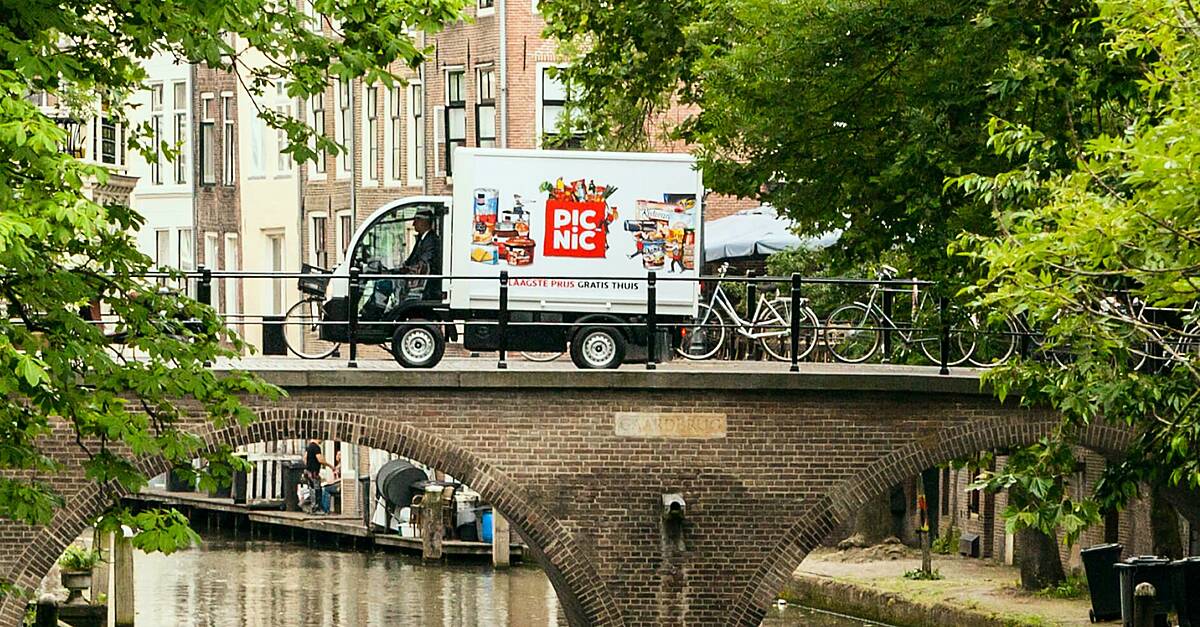
Dutch online supermarket Picnic has announced a successful funding round, raising €430 million from its existing investors.
The capital infusion will be primarily allocated to support the company’s growth strategy in Germany.
The expansion into new regions and cities necessitates significant investments in infrastructure, particularly in distribution centres.
Founded a decade ago by a team of seasoned entrepreneurs, Picnic offers a comprehensive range of supermarket items with free home delivery.
The company’s business model promotes a more environmentally friendly food supply system by using small electric vans for its deliveries, reducing waste and carbon emissions.
The online supermarket quickly gained popularity in the Netherlands and currently serves two million customers across 200 towns from seven distribution centres in its home market.
Following its success in the Netherlands, Picnic expanded into Germany in 2018 and subsequently into France in 2021.
Germany, with a population nearly five times that of the Netherlands and almost nine times its geographical size, presents a vast opportunity for Picnic.
Co-founder Michiel Muller stated, “We want to be able to deliver to a large share of households in Germany as well, so this requires substantial investments to roll out the same infrastructure we have in the Netherlands.
“Since launch, we’ve been growing even faster in Germany than in the Netherlands, so the outlook is positive.”
In the Netherlands, Picnic has already achieved operational profitability.
Previous Funding
The latest funding round brings Picnic’s total capital raised to nearly €2 billion.
In January 2024, the company secured €355 million, with €230 million contributed by German retailer Edeka, now one of its largest investors.
Other notable investors include The Bill and Melinda Gates Foundation Trust, Dutch investment firm Hoyberg and Amsterdam-based investment firm NPM Capital.
New Distribution Centre In Germany
To further drive growth, Picnic partnered with TGW Logistics in July to open a largely automated distribution centre in the western German city of Oberhausen.
The new warehouse, which TGW claims to be Europe’s largest online grocery fulfilment centre, can handle up to 200,000 deliveries per week in the Rhine-Ruhr area.
The centre includes a shuttle warehouse with 1,500 autonomous robots that manage chilled, frozen, and ambient products across three temperature zones.