
The first men are being recruited to a landmark trial in the UK, kicking off the biggest prostate cancer screening study in a generation.
The £42m TRANSFORM screening trial is co-funded by Prostate Cancer UK (PCUK) and NIHR, and is the most ambitious prostate cancer study in decades. The Government is investing £16m for the trial through NIHR. The remaining £26m is funded by PCUK through its supporters and other founding partners.
The trial’s 6 lead researchers represent 4 of the biggest UK research centres. They are from Imperial College London, the Institute of Cancer Research, University College London and Queen Mary University of London.
Revolutionizing diagnosis
Prostate cancer remains the most common cancer in the UK without a screening program. The trial is another step towards screening for all men to save as many lives as possible.
From today, the first men will begin receiving letters from their GPs, inviting them to join the trial. The study is designed to make diagnosis earlier, safer, and more effective. It will revolutionize diagnosis by testing the most promising screening techniques available. This includes PSA blood tests, genetic spit tests and fast MRI scans. They will be combined in ways that have never before been tested in a large-scale screening trial.
The opening of TRANSFORM comes as the UK National Screening Committee (NSC) is soon to announce its decision on whether current evidence supports the introduction of screening for prostate cancer in the UK. The trial goes far beyond this existing evidence, testing new ways to diagnose the disease that could find the cancers that today’s methods miss. However, the trial will also quickly produce robust new information about the tests we currently use. If the NSC decides there is insufficient evidence to recommend screening now, these early results could help shift the evidence in favor of screening in as little as 2 years.
Tackling health inequalities
TRANSFORM has also been specifically designed to help tackle inequalities in prostate cancer research and care. Black men are twice as likely to get prostate cancer and twice as likely to die from it. Yet historically too few Black men have been recruited into trials to generate reliable evidence of how effective screening would be for them. To help address this, at least 1 in 10 men invited to the trial will be Black. The charity and trial team will work with Black community leaders and organizations to ensure good representation of Black men in the trial. This ensures that future evidence is informed by, and reliable for, the men who stand to get the most benefit from screening.
Those recruited this week will form part of the initial 16,000 men taking part in stage one, which will test new techniques against the current NHS diagnostic pathway. The approaches that prove most effective will then be tested in a much larger group of up to 300,000 men, making it the biggest prostate cancer trial launched in more than two decades. The massive scale of TRANSFORM will also allow the creation of the biggest ever bank of prostate cancer samples, images and data to power the development of new tests and treatments for decades into the future.
It is not possible to volunteer for the trial, but anyone who receives a letter is strongly encouraged to take part.
The trial will recruit men aged 50–74 (or 45–74 for some groups known to have poorer outcomes, such as Black men).
Professor Lucy Chappell, Chief Scientific Adviser at the Department of Health and Social Care (DHSC) and NIHR CEO, said: “The start of recruitment for the TRANSFORM trial marks a major milestone in prostate cancer research.
“The NIHR is proud to be driving this forward with PCUK and supporting this landmark study with £16 million, reflecting our confidence in the trial and our commitment to research that saves and improves lives.
“Thanks to PCUK’s leadership and the TRANSFORM team’s commitment and expertise, we will soon have the evidence we need to show the best, safest and most effective way to screen men across the UK, including black men who are at significantly higher risk of prostate cancer diagnosis.”
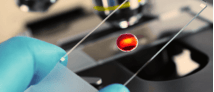 Can crystals in dried blood illuminate the early signs of prostate cancer?
A team have pioneered a novel approach for analyzing crystals in dehydrated blood, for detecting and monitoring prostate cancer.
Laura Kerby, Chief Executive at Prostate Cancer UK, said: “The future of prostate cancer screening starts today. It’s incredible to see the launch of this once-in-a-generation trial that so many people have worked to make possible, from our scientists to our amazing supporters raising funds.
“We’re delighted that the UK Government, through the NIHR, has partnered with us to help make TRANSFORM a success, and has committed an incredible £16m of funding. We are also incredibly grateful to all our founding partners and major donors who have got us to this exciting milestone. Now we need the public to stand up and be part of it.”
Health and Social Care Secretary Wes Streeting said: “Prostate cancer is one of the biggest killers of men in the UK. Devastatingly, around 1 in 8 will get it and that risk is doubled in Black men.
“But today marks a turning point for prostate cancer care in this country, as the first men are invited to take part in this game-changing trial funded by the Government and PCUK.
“When the UK National Screening Committee share their initial findings on screening for prostate cancer, I will look carefully at their recommendations as I am determined to bring about genuine change. Just this week, this Government announced that men with prostate cancer will be able to book a blood test on the NHS App in the comfort of their own home, as part of our landmark Men’s Health Strategy.”
The supporting founding partners are Cockburn Shaw Legacy, Freddie Green and Family Charitable Foundation, Garfield Weston Foundation, Movember, Omaze and Paddy Power.
NIHR funding is provided through the Health Technology Assessment (HTA) Programme. HTA has initially committed £4m for the trial’s pilot stage. Further funding will be provided for the main trial if the pilot is shown to be successful.
The study is also supported by the NIHR Research Delivery Network (RDN).
This article has been republished from the following materials. Material may have been edited for length and house style. For further information, please contact the cited source. Our press release publishing policy can be accessed here.