By Ella Joshi, Second Year, English and Classical Studies
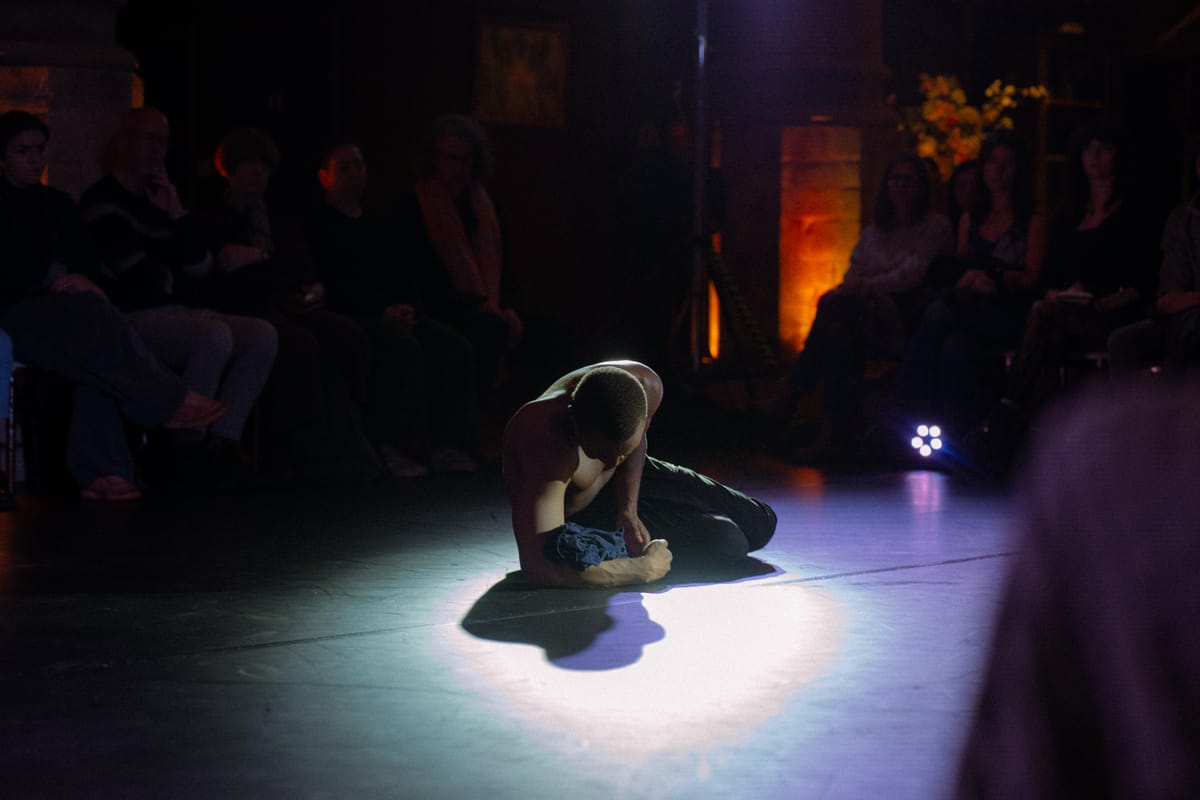
As the second feature of their Autumn-Winter dance series, IMPERMANENCE presents Akropolis I by Kennedy Junior Muntanga, performed solo at The Mount Without. Muntanga’s dance-theatre hybrid combines striking choreography with vocal expression to produce a piece that reflects poignantly upon the agony of diasporic identity and an inherited cultural legacy. Staged within the stripped-back walls of the main church hall with no set, no props, and no costumes, Akropolis I offers a raw and intense theatrical experience that will not be easily forgotten.
Even before the show began, the events space at The Mount Without – a vast church hall restored by locals after decades of neglect and vandalism – underpinned the performance with a sense of deep profundity. The audience was seated within an intimate ‘theatre-in-the-square’ arrangement, eyes of every age gazing inward upon rows of illuminated faces. A gentle buzz filled the air, our hushed anticipation. Muntanga sat motionless in a corner of the room, head bowed as if in pensive prayer. For a moment, the air stilled, and the room appeared to hold its breath. Then, a stirring ambience began to filter through the sound system – rustling movement, a baby crying, the low and familiar rumble of civilian life. Muntanga rose, turned to face the centre of our square, and the show began.
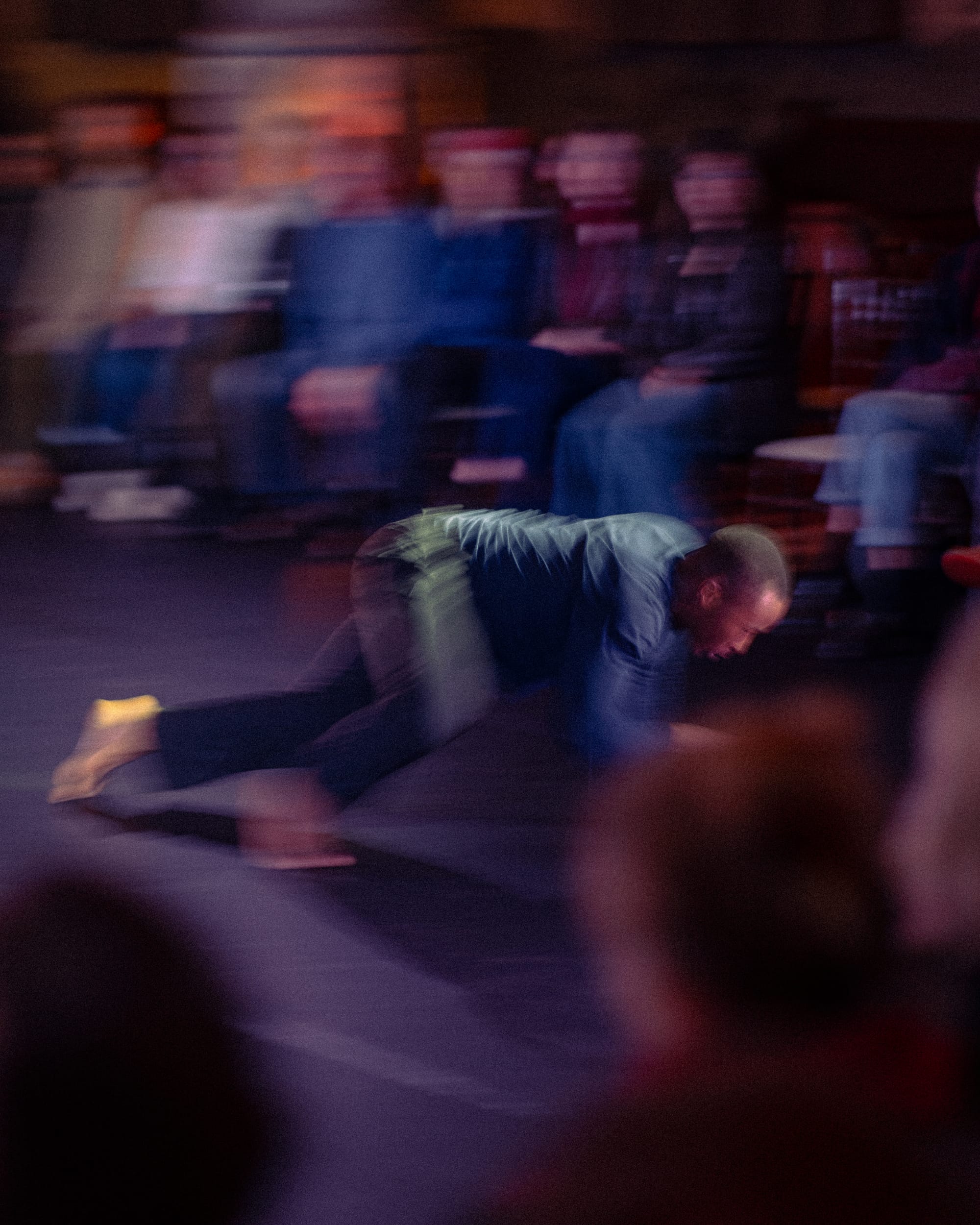
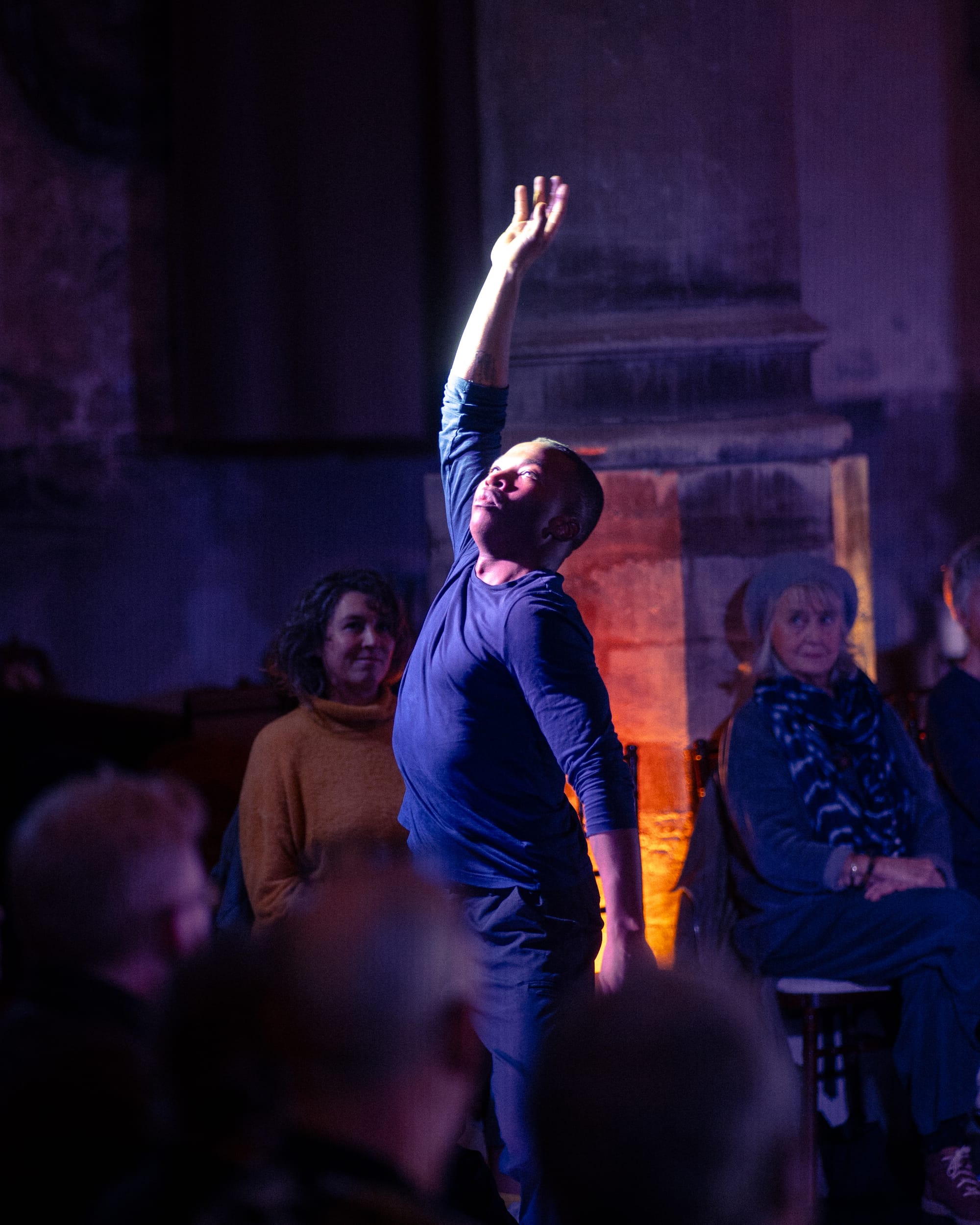
The first stage of Akropolis I flowed with yogic composure. Muntanga moved as if in slow motion, feet pressing gently into the floor and arms curving to form smooth arcs. Although the movement appeared languid, his face was contorted in pain, and an implicit anguish was felt in every strained muscle. Suddenly his stasis became a state of entrapment rather than slow meditation, as though something were physically holding him back. The scene changed frequently and without pausing for breath. This felt like an intentional representation of fractured identity, as his internal agony was plastered over with a serene facade. In mere moments his form would have shifted from a shrinking, quivering foetal position to being perfectly upright, with expression composed. Equally, the strange beauty of his dancing was fragmented by anxiety-inducing, fricative breathwork, or an irregular beating upon his chest, or the resounding words that he would repeat over and over: ‘It’s a lie.’ The question remained – what was the lie?
 Akropolis I | Louis Veillon
Muntanga engaged every aspect of physical expression in his work, combining stunning choreography with breathwork, spoken word, and facial contortion, a technique that was at once unexpectedly experimental and wildly immersive. His artistry was expressed with such intent and sincerity that it felt as though the air he clasped held tangible shape, and when he silently opened his jaws I could almost hear his scream. A moment that stood out to me as encapsulating the eerie beauty of Muntanga’s piece came as he came to a sudden halt and held an outstretched thumb to an audience member, with his eyes wide and staring, and his tongue sticking out. Something unspoken seemed to pass between Muntanga and the man before him, who held his gaze with only a gentle smile. The man, as if understanding, brought his own thumb to rest just beside the dancer’s. A moment of wordless communication, that intrinsic human connection. Just as swiftly as he had stopped, Muntanga was then pulled back into the unceasing force of his own dance, and we moved into the second stage of Akropolis I.
‘It’s about ambition. It’s about prosperity. It’s about wealth. It’s about knowledge.’
The dancer’s voice cut crisply through the room’s silence, crescendoing with erratic repetition until it came to an abrupt end. In this section, Muntanga seemed to deal primarily with the trauma of separation and diasporic identity, representing the journey of immigration through agonised movements and echoing speech. His use of spoken word, with phrases such as ‘I have to push myself’, and ‘You have to trust yourself. There are obstacles’, suggested a vulnerable and isolated interiority, yet his expression remained firm and unflinching. This contrast between a fractured interior and armoured exterior was highly effective and thought-provoking, sustained as the dancer moved around on his hands, with his legs dragging behind him as if in partial paralysis. I felt a profound sense of pain and empathy for his journey across the ‘square’, which appeared not only fruitless but the result of a manufactured lie, the fantasy of a paradisiacal West. As Muntanga tells us over and over, standing shakily on what look like broken feet:
 Akropolis I | Louis Veillon
‘When I arrive, life will be amazing.’
In the final moments of Muntanga’s emotionally raw performance, his story began to come full circle. The dancer conversed partly with himself and partly with the audience, returning to that resounding phrase that peppered his storyline: ‘It’s a lie.’ Finally, the realisation settled weightedly upon the audience. What we have been told is a lie.
‘It’s not about ambition’, Muntanga tells us now, ‘It’s about my mother. It’s about my father. It’s about my friends. It’s about my sister. It’s about my aunt. It’s about my uncle. It’s about my grandma. It’s about my girlfriend. It’s about my son. It’s about my daughter.’ His love and familial connections fuel his journey, not superficial desires for power and influence.
Clifton Literature Festival
Alex Boersma reviews a couple of events from this years Clifton Literature festival.
The epic odyssey that was Akropolis I came inevitably to an close, leaving behind the chance for deep personal reflection on the hidden agony of others. From beginning to end, the audience was brought face-to-face with themselves, forced to confront the lies that shape the lives of the vulnerable. I thoroughly enjoyed the experience, however anxiety-inducing and unexpected, and look with wide and eager eyes forward, to the remainder of IMPERMANENCE’s Autumn-Winter features.
Featured image: Louis Veillon
Would you watch a one-man performance like this?