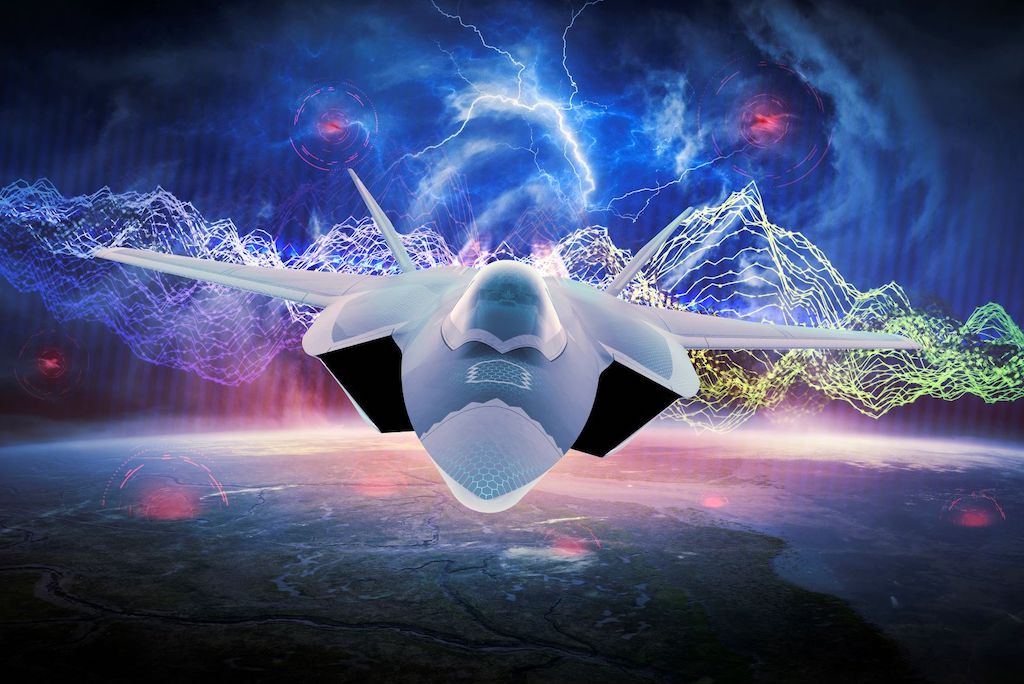
The future of the Next-Generation Fighter (NGF) under the Future Combat Air System (FCAS) program looks bleak amid disagreements between the main contractors, Airbus and Dassault Aviation.
Germany and France are piling pressure on industrial leaders to find a solution for the troubled joint fighter jet project by mid-December, two informed sources told Reuters. The CEOs of the companies involved are purportedly meant to agree on a deal by December 18.
The FCAS is a ‘system of systems’ program that includes a next-generation fighter (NGF), remote carriers or adjunct aircraft, and a combat cloud—a multi-domain capable, data-rich network enabling cross-platform information sharing. It is a trilateral collaborative effort among France, Germany, and Spain.
The program has been delayed by several years and is currently understood to be on the brink of collapse due to the gridlock between Airbus (representing Germany and Spain) and Dassault (representing France) over a host of factors, including disagreements over work sharing, control of the aircraft’s design, and choice of suppliers.
In fact, Germany and France are discussing downsizing their 100-billion-euro ($116 billion) flagship defense project by dropping plans to jointly build a fighter jet. They could instead focus on developing a command-and-control system dubbed the “combat cloud.”
In a recent Der Spiegel interview, the Chief of the German Air Force, Lieutenant General Holger Neumann, sent shockwaves through European defense circles when discussing FCAS.
When probed about the grossly delayed FCAS program and the unpredictability surrounding the next-generation fighter jet, Lt Gen Neumann said, “We have GCAP — the highly ambitious sixth-generation program with Britain, Italy, and Japan — and we have the F-35. Anyone who thinks we can meet all our future needs with the F-35 alone is mistaken.”
While he did not enunciate further, this has left observers wondering whether Berlin would choose to join the GCAP if the FCAS does not work out.
Nonetheless, the future of the next-generation fighter that is being developed as part of the FCAS now seems to have hit a dead end. The FT report states that shelving the NGF’s development is intended to salvage the wider FCAS program, which involves billions of dollars in investment.
The program is divided into seven technical “pillars,” each headed by a different business and including contributions from subcontractors.
The NGF, led by Dassault, is the first pillar. The development of this combat aircraft is under the lead of Dassault Aviation, the French aerospace company that currently produces the Rafale.
Meanwhile, the Combat Cloud is the second pillar, led by Airbus Germany. It is a decentralized, distributed, and delegated information-sharing, command-and-control system meant to integrate sensors, responsibilities, and weapons.
“One option discussed ahead of high-level meetings this week is to narrow the collaboration to the joint ‘combat cloud, officials in both countries said. The concept of creating a cloud-based interface — which would link fighter jets and their pilots to sensors, radars, and drones as well as land and sea-based command systems — is already one FCAS pillar,” the FT report states.
“If the plan for a jointly built fighter jet is abandoned, focusing on the cloud would enable the countries to continue some form of collaboration, the officials said. They cautioned, however, that no decision had yet been made,” the report added.
The EurAsian Times reached out to Airbus and Dassault Aviation to verify the claims. Airbus declined to comment on the matter.
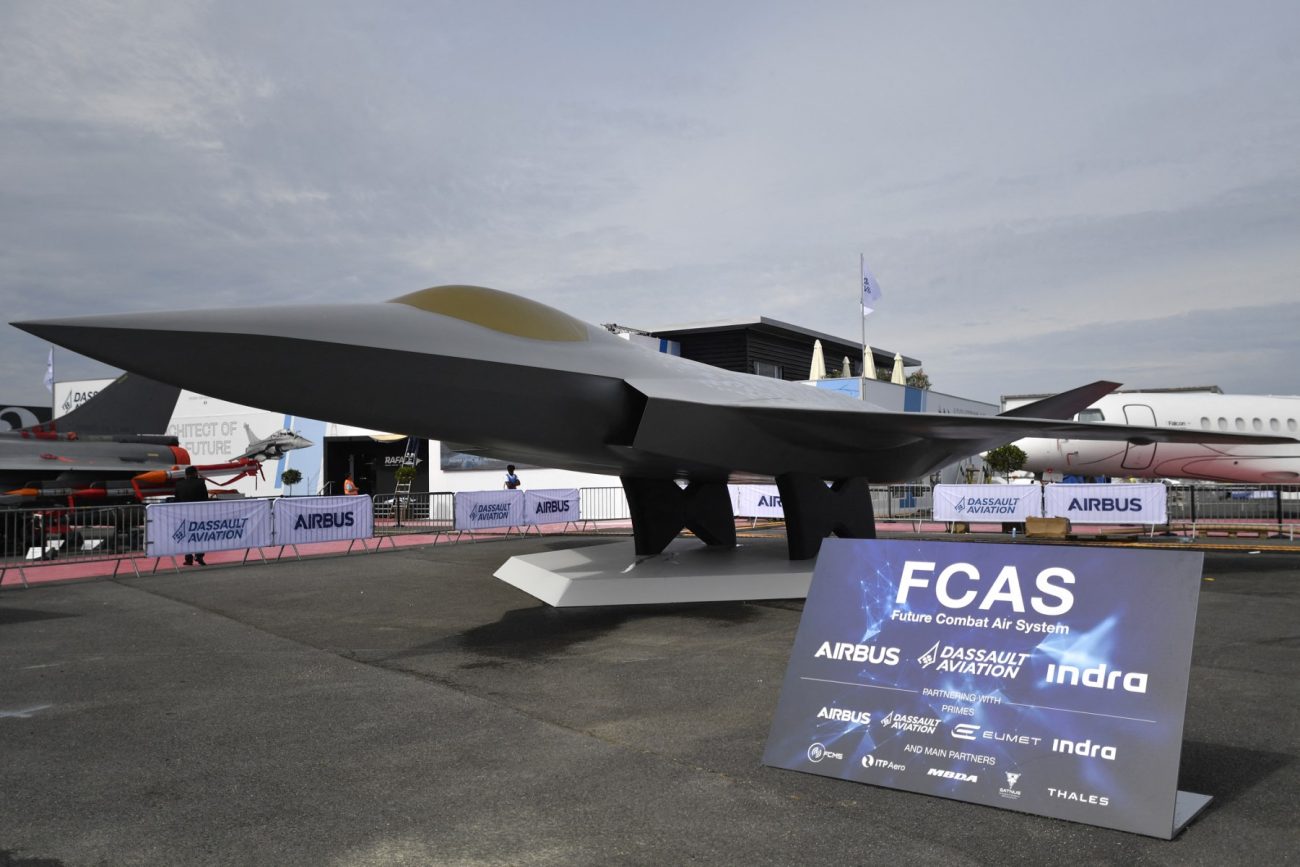 This photograph, taken on June 18, 2023, shows a mock-up of the European New Generation Fighter (NGF) for the Future Combat Air System (FCAS) under development by Dassault Aviation, Airbus, and Indra Sistemas during the International Paris Air Show at ParisLe Bourget Airport. (Photo by JULIEN DE ROSA / AFP)
Notably, Dassault argues that the NGF is FCAS’s “heart”, and, therefore, the other pillars —Combat Cloud– serve to enhance the fighter on which the whole project rests. For Airbus, however, FCAS represents “The Future of Battle Management” and “does not necessarily have a fighter plane as its core”.
Against that backdrop, how Dassault will cooperate with Airbus Germany, leading the work on Combat Cloud, remains to be seen.
The disagreements between the two main contractors have caused delays in the overall FCAS program, leaving it well behind rival sixth-generation fighter programs.
The Unabated Troubles In The FCAS
In the wider FCAS program, Airbus is responsible for the “loyal wingman” remote-carrier drone design, new cloud capabilities, and stealth technology, while Dassault is responsible for the crewed NGF. Meanwhile, Safran is developing a new jet engine for the fighter, and Spain-based Indra is in charge of the sensor systems.
Currently, the program is in Phase 1B, during which industry partners are working on the research, design, and development of the NGF, encompassing extensive work on propulsion, sensors, and communication systems. Once the development phase is complete, the program will enter Phase 2, which will involve creating a demonstrator.
According to previous reports, Phase 2 was scheduled to be announced in 2026, with the demonstrator’s first flight planned for 2029. However, this can happen only if the two contractors can iron out their differences over work-sharing and the development of the crewed fighter jet.
Dassault CEO Eric Trappier refused to share workload on the fighter, saying that only his company has the necessary skills to develop the NGF.
Trappier said at an interview earlier this year that a partnership centered on sharing work might result in a less-than-ideal technology solution. This argument apparently rests on the fact that Dassault has the required expertise and decades of experience in designing end-to-end fighter jets with little to no outside collaboration.
On the other hand, Germany, represented by Airbus, has refused to allow Dassault to receive the larger share, which would favor the French contractor and leave very little for German industry. Some reports in German media had earlier noted that France and Dassault are demanding an 80% work share on the crewed fighter–a claim France denied.
 German Chancellor Friedrich Merz (L) and French President Emmanuel Macron deliver a joint statement prior to a working dinner on the eve of a Franco-German cabinet meeting, at the Fort de Bregancon in Bormes-les-Mimosas on August 28, 2025. (Photo by Manon Cruz / POOL / AFP)
Meanwhile, the German Works Council of Airbus Defence and Space questioned Dassault Aviation’s involvement in the Future Combat Air System (FCAS), calling on political authorities to clarify the program’s purpose and the industrial arrangements for Airbus workers. The council’s Chairman, Thomas Pretzl, has repeatedly stated that Dassault is not the right partner for FCAS.
In October 2025, German Defense Minister Boris Pistorius said the three partners needed to decide by the end of this year, or Germany would withdraw from the program.
“I’ll talk with my counterparts as soon as there is a French government,” Pistorius said in October. “The Chancellor and I are in full agreement that there needs to be a decision by the end of the year… Otherwise, we will pull the plug.”
More recently, Pistorius said last week that discussions were underway about “whether the project should continue and how it should continue.”
France had earlier signalled that it could develop the next-generation fighter jet on its own, taking the Rafale route.
Some reports earlier suggested that Germany was considering the option of replacing France with another international partner, as explained in detail by the EurAsian Times.
Either way, this still puts their next-generation fighter programs much behind the the F-47 developed by the US that will be fielded by 2029, the GCAP (Global Combat Air Program) developed by the trio of the UK, Japan, and Italy, which is expected to be ready for induction by mid-2030s, as well as the Chinese next-generation aircraft which may enter soon enough given that the prototype are already flying.
Whether France again proves to be an “Unreliable Partner” remains to be seen. You can read the EurAsian Times article on how and why France’s collaboration with European allies failed, over and over again.