Tuesday, 25 November 2025, 19:10
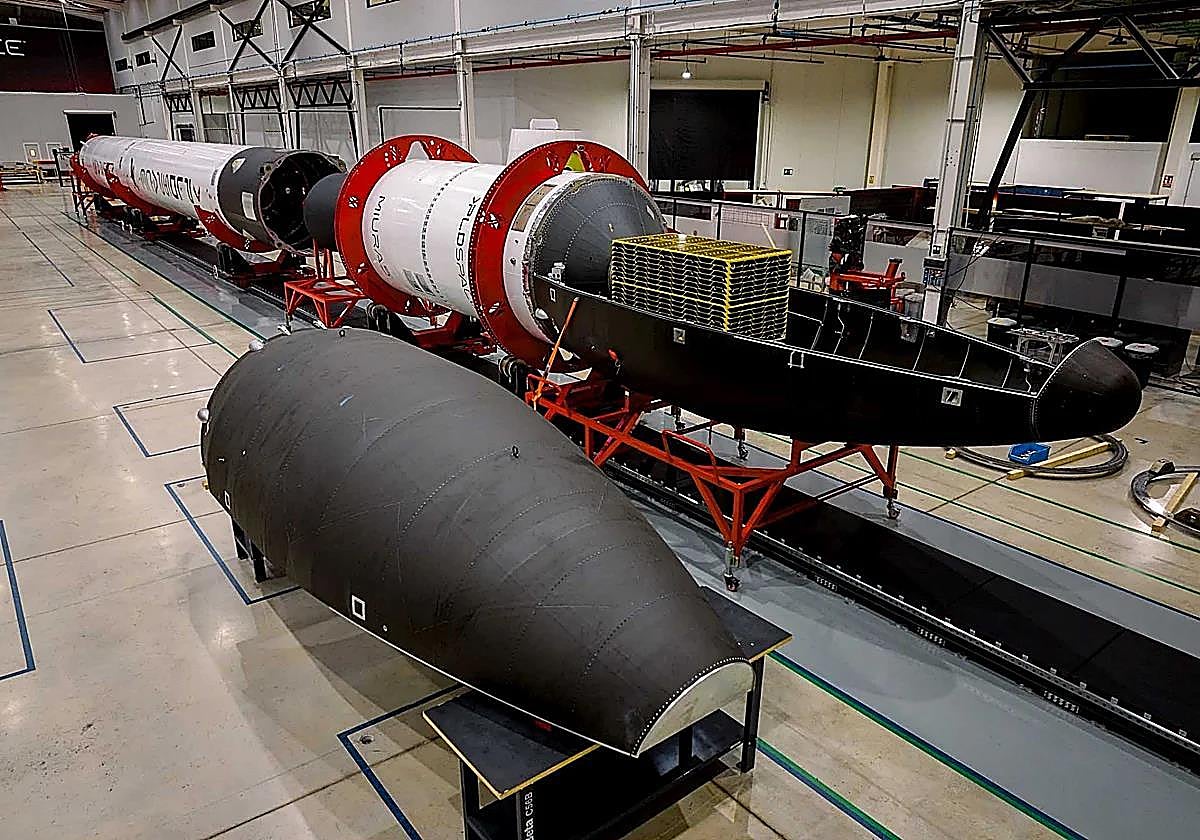
The space transportation company PLD Space has unveiled its first integrated unit of the Miura 5, the 100 per cent Spanish reusable super rocket scheduled for launch in the first quarter of 2026 from the Kourou spaceport in French Guiana. The giant, weighing 70 tonnes and with a height comparable to an 11-storey building, is the successor to the Miura 1, the first launch vehicle that was also 100% ‘made in Spain’ and which took to the skies in 2023.
The Qualification Model 1 (QM1), as this unit is called, has been developed at the company’s facilities in Elche (Alicante) in a record time of two years. This first unit will not be the one that goes into space, but will be used to complete testing of the rocket’s subsystems, such as the first and second stages, under real-world conditions, “with the aim of minimising in-flight risk as much as possible and ensuring the vehicle’s reliability before its first mission”, which will be a test mission carrying experimental cargo from space agencies and institutions.
Destruction test
The rocket’s second stage will undergo a destruction test in the United States to validate the operation of the flight termination system (FTS). This test will verify the functioning of the explosive charges on board the launch vehicle and their ability to destroy the launcher in the event of an in-flight anomaly.
Meanwhile, the first stage must undergo and pass a ‘wet dress rehearsal’, a comprehensive propellant loading test that replicates all the scenarios that can occur during the fuelling and pressurisation phase. This test “is essential to validate the behaviour of the structures in real-world operations”, according to PLD Space.
“Introducing our first integrated Miura 5 unit is proof that our model works: vertical integration, our own infrastructure and a philosophy based on testing, learning and improving. This combination allows us to move faster than ever before without sacrificing reliability, which is what truly makes the difference in this sector,” said Raúl Torres, CEO and co-founder of PLD Space together with Raúl Verdú.
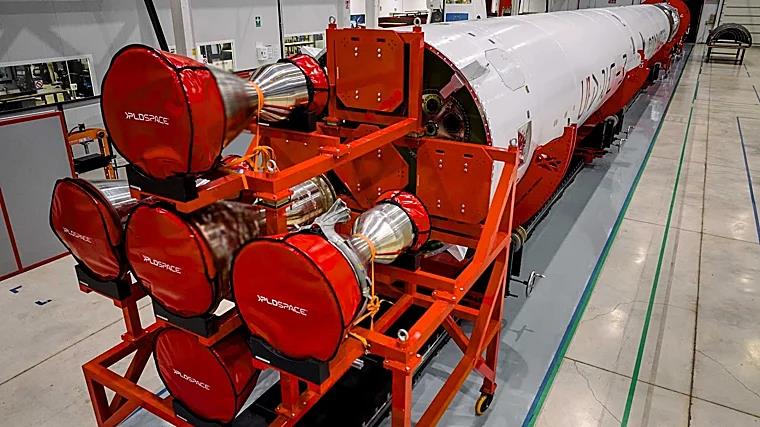
The rocket, photographed at the Elche facility.
PLD Space
The company plans to complete three integrated units of the Miura 5 in just five months. A second qualification unit will be ready by the end of December and, in the first quarter of 2026, PLD Space will unveil the flight rocket that will travel to Kourou for the launch campaign. This makes PLD Space the company that has developed an orbital launcher in the shortest time ever, just two years. According to the company, this has been possible thanks to the lessons learned from the Miura 1.
Alongside this QM1 test, the company continues testing subsystems, such as the engines, avionics and the separation of the rocket’s payload at its facilities in Teruel. At the same time, civil engineering work continues on the launch complex at the Guiana Space Centre, with progress being made on the launch, vehicle preparation and control centre areas. As such, PLD Space will become the first privately-owned company to launch from the European launch site, a spaceport owned by CNES, the French space agency.
The launch, when it happens, will allow Spain to join the select group of ten countries with autonomous and independent access to space.