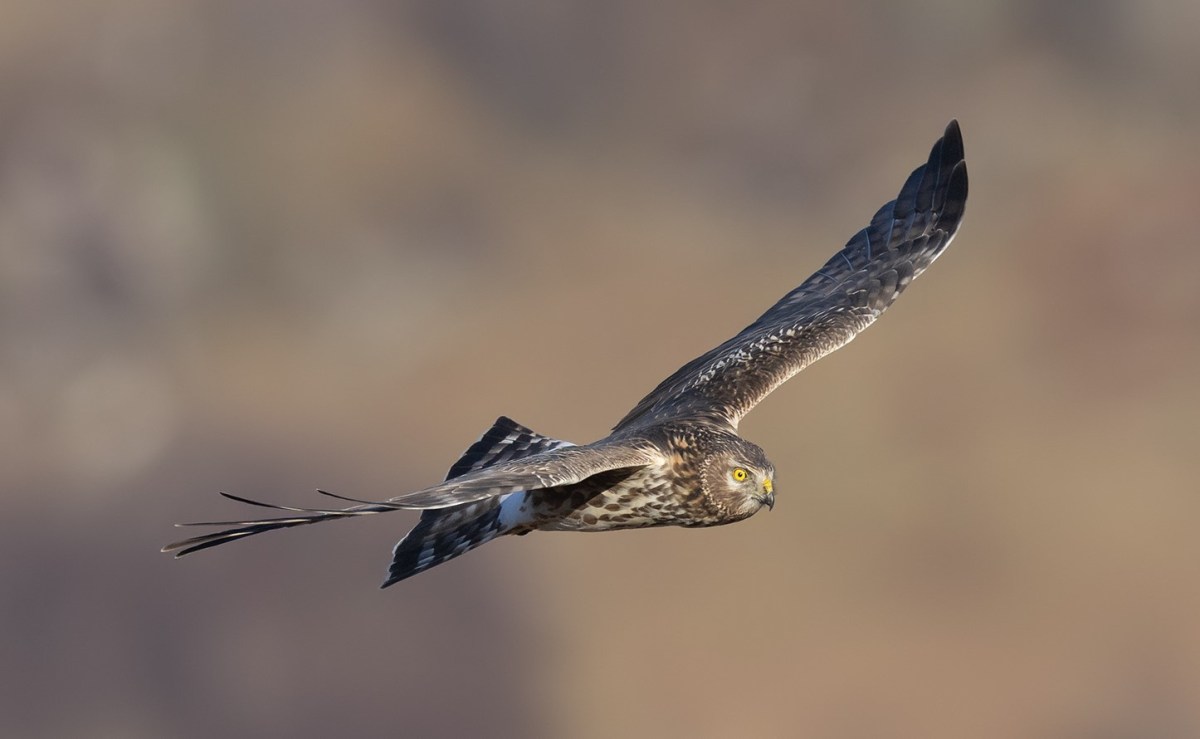
This is a blog about one of those dead Hen Harriers for whom we’ve been waiting over a year for Natural England to confirm the cause of death.
The young Hen Harrier in question (Tag ID: 254843) was fitted with a satellite tag when she was a nestling in Northumberland on 5 July 2024.
In Natural England’s HH spreadsheet that was updated in August 2024, her status was given as follows:
Date of last contact: 29 July 2024
Location of last contact: Northumberland
OS reference: Recovered awaiting PM
Status: Dead
There were no further details provided until 14 months later, when Natural England quietly updated its spreadsheet in October 2025. This bird’s status was now given as follows:
Date of last contact: 29 July 2024
Location of last contact: Northumberland
OS reference: NY824937
Status: Dead
Notes on Loss: The recovered carcass was not suitable for any PM owing to level of decomposition
The grid reference places the last location in an upland area of Northumberland National Park, to the north east of Kielder Water. This area of moorland is not known to be a raptor persecution hotspot – indeed it’s one of the few strongholds for Hen Harrier breeding attempts in England – and there was nothing in Natural England’s spreadsheet notes to suggest she had been killed illegally. So we’re led to conclude it was a probable natural death.
 Last known location of Hen Harrier 254843 according to Natural England info
But hang on a minute.
I’ve recently found a fascinating blog posted within the depths of the National Wildlife Crime Unit’s (NWCU) website that tells a very different story. It was published on 10 October 2025 and is entitled, ‘Cracking the Case: How Experts Uncovered the Truth Behind a Hen Harrier’s Mysterious Death‘.
The original blog can be read here, and I’ve copied it here incase the link is broken in the future:
When a young female hen harrier known as 254843 took her first flights over the moorlands of Otterburn, Northumbria, in July 2024, she became part of a vital conservation effort. Fitted with a satellite tag by Natural England (NE), this small device would help scientists track her journey, monitor her wellbeing, and contribute to the protection of one of the UK’s most threatened birds of prey.
But just weeks later, her signal stopped. What initially appeared to be a tragic but natural loss of a young bird soon revealed something far more sinister and set in motion a remarkable multi-agency investigation into suspected wildlife crime.
When NE staff noticed that 254843’s satellite tag had stopped transmitting, they followed established procedures to locate her. The bird’s remains were found roughly 1.2 kilometres from her nest close to where she had been learning to hunt under her parents’ watchful eyes. At first, the team suspected natural predation.
 The remains of HH 254843 (photo Natural England)
 HH 254843 with damaged tag (photo Natural England)
However, during recovery, one small detail caught their attention — a small, round dent and hole in the satellite tag. It was an anomaly that couldn’t be ignored.
This discovery triggered the involvement of the UK National Wildlife Crime Unit (NWCU) and the Harrier Task Force (HTF). Working closely with Natural England, the Northumbria Police Rural Crime Team, and scientific experts, they began piecing together what had really happened.
The first step was to send the remains and the tag to the Zoological Society of London (ZSL) for a detailed postmortem. Due to the bird’s advanced decomposition, the pathologists couldn’t confirm a cause of death, but their findings were enough to justify further forensic testing.
 Radiograph of the carcass of HH 254843 and her satellite tag (photo by ZSL)
From there, the investigation moved to Nottingham Trent University (NTU), where specialists used CT scanning and chemical analysis to examine the damaged tag. Their results revealed elevated levels of lead around the hole a crucial clue pointing toward a lead-based projectile.
Finally, the tag was analysed by a ballistics expert from the Scottish Police Authority (SPA). The verdict: the damage was consistent with being struck by a shotgun pellet, likely from a birdshot cartridge fired from below the flying bird. Tests confirmed traces of lead, and the impact trajectory supported the theory of a shotgun discharge at an estimated distance of up to 30 metres.
The conclusion was clear. This was no accident of nature. It was a deliberate act of wildlife crime.
 Shotgun damage to HH 254843’s satellite tag (photo by Scottish Police Authority)
Thanks to the combined expertise of scientists, conservationists, and law enforcement, the incident has been officially recorded as criminal damage. Each satellite tag costs around £2,800, not including the significant resources dedicated to fitting and monitoring them but the real loss is far greater, representing another blow to hen harrier conservation efforts.
The investigation also led to important lessons for future responses. New procedures now ensure that if anything suspicious is discovered during a bird recovery — no matter how small — the process halts immediately, and police take over to conduct a forensic recovery. This prevents potential evidence from being lost and strengthens the chance of bringing perpetrators to justice.
This case demonstrates the high level of skill, coordination, and dedication required to detect and investigate wildlife crime. From the precision of CT imaging and chemical testing to the meticulous work of forensic ballistics experts and the vigilance of conservation field teams every partner plays a crucial role.
It also serves as a reminder that wildlife crime is not victimless. Each illegal act damages not only individual animals but also the broader ecosystem and the tireless efforts of those working to protect it.
The public can play their part too. If you have any information about this incident or any suspected wildlife crime please report it.
Every report helps protect the wild places and species that make our countryside unique and ensures that those who threaten them are held accountable.
ENDS
It’s clear from the NWCU blog the extent of the effort, by multiple partners, to determine what happened here, and I applaud them for it.
I’m less impressed that this information hasn’t been given the media attention it deserves, nor that a link to the NWCU blog hasn’t been added to Natural England’s spreadsheet entry about the circumstances surrounding this Hen Harrier’s death. It really isn’t difficult.
I’m also interested that the NWCU blog states, “…the incident has been officially recorded as criminal damage“. This is presumably in reference to the shotgun damage caused to the satellite tag.
I wonder, though, how the death of Hen Harrier 254843 has been officially recorded…’Unknown’? ‘Suspicious’? ‘Illegally killed’?
The blog says, “The conclusion was clear. This was no accident of nature. It was a deliberate act of wildlife crime”. So why doesn’t Natural England’s spreadsheet reflect this?