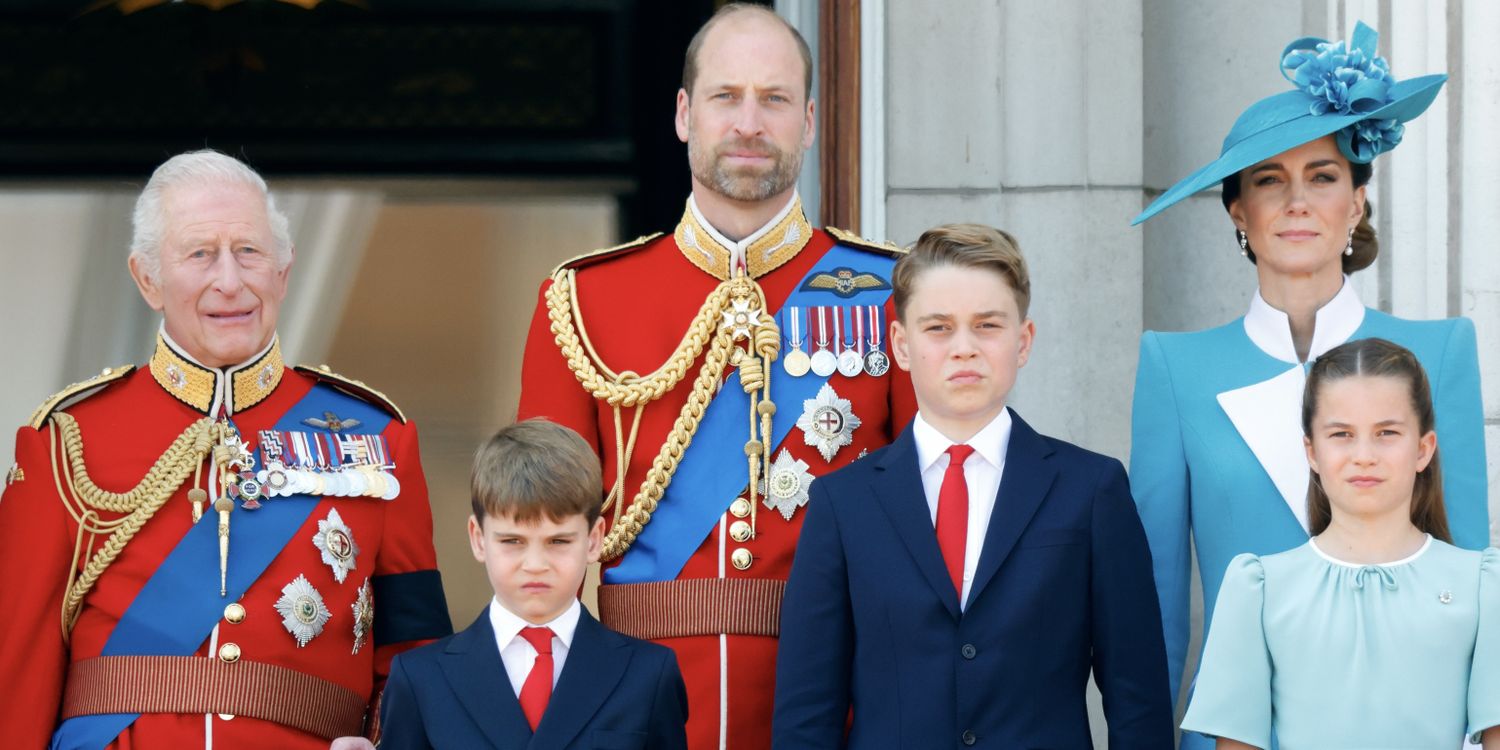
- While there’s no way to put an exact number to their wealth, it’s estimated that the British royal family is worth approximately $28 billion.
- The British royal family’s income largely comes from their jewels, real estate, and the publicly funded Sovereign Grant.
- Their most valuable assets include the Duchy of Cornwall, worth around £1 billion, and the Crown Jewels, which are valued between $4 billion and $8 billion.
Despite spending much of their existence in the public eye, the British royal family still endeavors to keep some of their life private. Unsurprisingly, this strategy extends to their finances—including their estates, castles, investment portfolios, fine art, and Crown Jewels. For example, it is not clear how many real estate properties the Firm actually owns, or whether or not the assessment of those properties is accurate.
Still, much of the Firm’s financial portfolio is public, and some of those aforementioned estates—like the Duchy of Cornwall and the Duchy of Lancaster—publish annual profit reports. Taken together, the net worth of the British royal family can be approximately summed up at roughly $28 billion.
Their assets stem from a few main sources. There’s public funding from the Sovereign Grant—which is a taxpayer-funded grant that covers the costs of official duties, maintenance of royal palaces, and staff salaries. The BBC estimates that the British royal family receives tens of millions of pounds annually from this grant. Then there’s the personal wealth amassed by Queen Elizabeth and King Charles, as well as the expansive real estate portfolio known as the Crown Estate.
Keep scrolling for an overview of the British royal family’s most valuable assets.
The Sovereign Grant
According to BBC, the Sovereign Grant has tripled since 2012, when it provided just under £50 million to British monarchs. During the 2025-2026 fiscal year, however, that number rose to over £100 million. One explanation for the rise is adjusting for inflation. However, a spokesperson for the British royal family has also credited the rise to the Buckingham Palace project—which began in 2016 to renovate the palace’s plumbing, electrical wiring, and heating systems.
The King’s Fortune
King Charles III and Queen Camilla waving to the crowd at Buckingham Palace in September 2022.
Max Mumby/Getty Images
Since his coronation in May 2023, King Charles’s net worth increased by $12.5 million, bringing his total net worth to roughly $772 million, according to the Sunday Times. (Even so, he is nowhere close to being the richest man in Britain, and in fact ranks #258 on the list.) His net worth took a small hit in 1996, when he had to make a $22.5 million payment to Princess Diana following their tumultuous divorce.
Like most other rich people, the King’s assets are divided up amongst a number of different holdings and ventures, including sprawling countryside estates, castles, and good old-fashioned stocks and bonds.
Queen Elizabeth’s Net Worth
Post-coronation, King Charles officially became wealthier than his mother, who was worth roughly $500 million when she passed away in 2022. Queen Elizabeth’s holdings included Sandringham House in England and Balmoral Castle in Scotland, the latter of which was purportedly her favorite residence.
King Charles inherited most of his late mother’s wealth when she died at Balmoral on Sept. 8, 2022, and—unlike the rest of his countrymen—he did not pay a dime of inheritance tax. All in all, this rather convenient royal loophole saved the new King roughly £200 million.
Queen Elizabeth II with Prince Philip and their sons Prince Edward, Prince Charles, and Prince Andrew on the grounds of Balmoral Castle in Scotland in September 1979.
Keystone/Getty Images
The Duchy of Cornwall
One of the crown’s most important assets is the Duchy of Cornwall, a 700-year-old estate that was established in the late Medieval Era to provide financial security for the heir to the throne. The heir—in this case, Prince William—is thus given the estate, along with the title Duke of Cornwall, and passes it on once he ascends to the throne.
Though the Duchy is technically a “crown body” and therefore tax-exempt, then-Prince Charles began voluntarily paying taxes on the estate in 1993. (Prince William, by contrast, refused to reveal his tax payments after he inherited the Duchy in 2022.) Via land holdings and an investment portfolio, it generates tens of millions of pounds per year for the Prince of Wales, and is valued at approximately £1 billion.
The Crown Estate
Founded in 1760, the Crown Estate represents one of the largest collection of land holdings in Great Britain. The proceeds go directly to His Majesty’s Treasury, a portion of which are then diverted back to the monarch in the aforementioned Sovereign Grant. In this way, the estate helps to fund the British government while at the same time bringing in millions of pounds per year for the royal family. According to the estate’s own website, it generated a whopping £1.1 billion for “public finances” in 2024, much of which came from investments in clean energy and other carbon-zero initiatives.
“Today’s record results are the product of years of commitment and investment into helping create the U.K.’s world-leading offshore wind sector, as well as the active management of our diverse and resilient portfolio,” Dan Labbad, CEO of The Crown Estate, said in 2024. “Our track record and remit are also enabling us to invest and lay the foundations for future value creation that will benefit the country and its finances.”
The Crown Jewels
Prince William and Kate Middleton during their wedding day in London in April 2011.
Chris Jackson/Getty Images
Beyond stocks and real estate, the royal portfolio also boasts an astonishing array of wearable family heirlooms known as the Crown Jewels. Dating back to the Restoration of the Monarchy in 1660, the collection includes the Imperial State Crown (worn by the late Queen Elizabeth II at her coronation in 1953), the Cartier Halo tiara (worn by Kate Middleton on her wedding day), and, perhaps most famously, Princess Diana’s sapphire and diamond engagement ring.
Amongst these prize pieces is also one that has generated quite a bit of controversy: the Koh-i-Noor diamond. Obtained by the East India Trading Company in 1849, the question of whether or not it was stolen for (or gifted to) Queen Victoria is still in dispute. It weighs a whopping 105.6 carats and is the center feature of the Crown of Queen Elizabeth the Queen Mother.