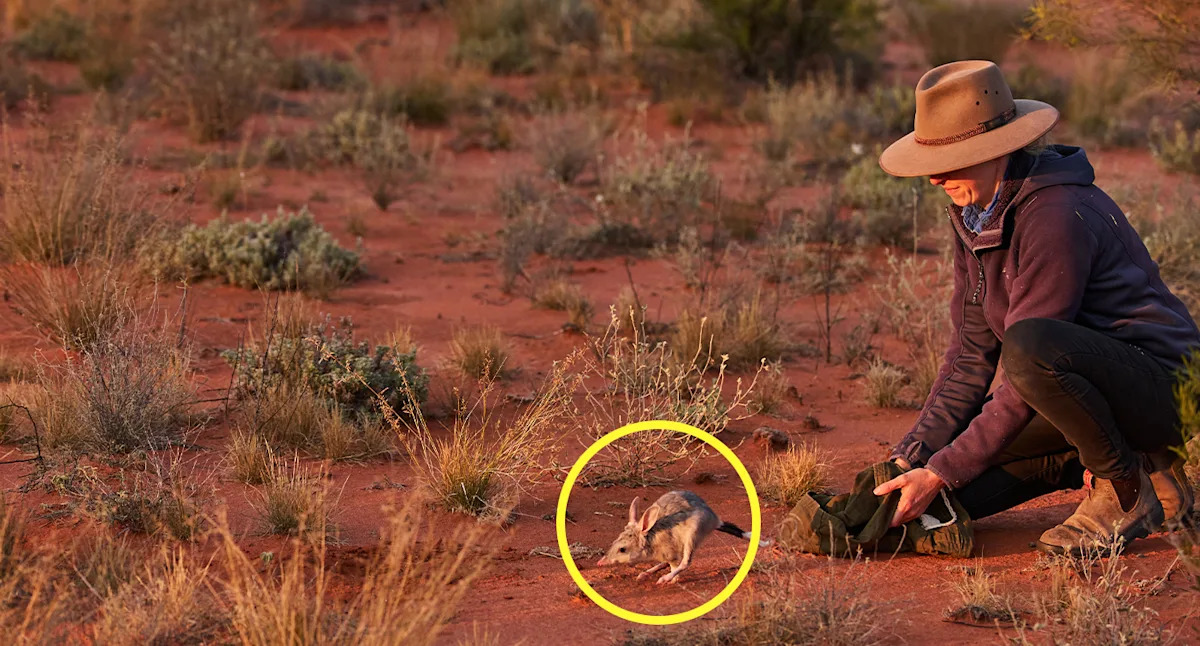
Researchers are working on a radical new plan to take back the outback from Australia’s most pervasive predators. The aim is to breed “smart” generations of native marsupials that can evade attacks from foxes and cats.
They’ve focused their attention on western quolls, bilbies and golden bandicoots, all of which were likely driven to extinction a century ago in NSW.
While some scientists are working to genetically engineer “super species” to repel threats like fungus and cane toads, the team is instead working to alter behaviour.
Rebecca West, the principal ecologist at the UNSW Centre for Ecosystem Science, explained that historically, scientists tried to teach native prey species to avoid predators by scaring captive animals and then releasing them.
“They would train them by running up and making the sound of a cat, or spraying them with cat pee and then catching them to give them a negative experience,” she told Yahoo News.
“But we found that didn’t translate to learning in the real world, because it wasn’t actually a learned experience with the real thing.”
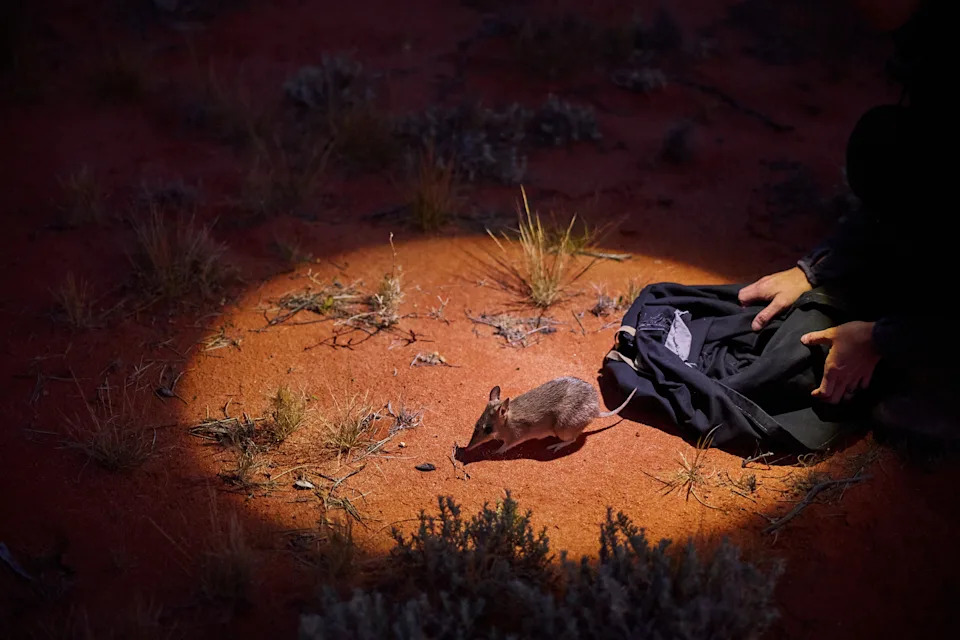
A bandicoot is released into an arid environment where cats exist. Source: Richard Freeman/UNSW
Instead, West and her team use a method called in-situ predator exposure, which is much riskier, but it could see the face of Australia transformed over the next 20 years, with small marsupials able to survive once again in the arid landscape they once roamed.
It involves getting cat density down to 0.15 to 0.3 animals per square kilometre, a number that will see populations of their newly released marsupial prey harassed but not wiped out.
“The principle is that they have the opportunity to meet a real predator, and have a slightly negative experience,” West said.
“They might get chased but not get caught, they might see one of their friends get chased, and over time, they start to learn there are things that you need to look out for.”
Scientists record incredible changes in marsupial behaviour
The plan is part of a collaboration between the UNSW Centre for Ecosystem Science, NSW National Parks and Wildlife Service and Taronga Conservation Society Australia, called the Wild Deserts Partnership Project.
It was first trialled in South Australia by tracking the survival of 350 burrowing bettongs in a low-cat density area.
“The longer they spent in there, the more cautious they became with their eating,” West said.
“They realised they needed to look up and around them, and they got harder to approach.”
Within 12 to 18 months, they became difficult to sight in the environment, while those that remained in a predator-proof sanctuary could almost be picked up off the ground by scientists, similar behaviour to what’s been observed in zoos.
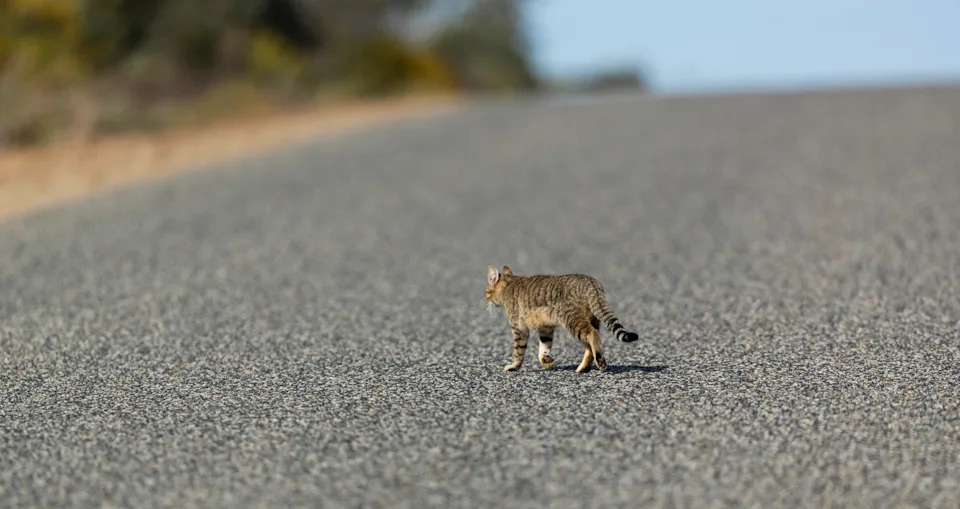
Feral cats have wiped out most of the native marsupials that once roamed the outback. Source: Getty
How many of the rare animals survived?
In NSW across 2024 and 2025, the team has released 51 western quolls, 305 bilbies, and 234 golden bandicoots into what it’s dubbed the Wild Training Zone, a 104-square-kilometre region within the Sturt National Park, in the far northwest tip of NSW.
Cat numbers in the area were kept low using an arsenal of weapons, including some fencing, shooting, trapping and Felixers – an Aussie invention that can recognise cats and shoot them with toxic 1080 gel.
Evidence suggests some have even begun breeding in their new homeland. And estimates suggest over 90 per cent of bilbies, 70 per cent of quolls, and a high number of golden bandicoots have survived.
“Some of those species are being eaten by cats but that’s what you need to get that learning happening, and we have to remember that predation is part of the natural cycle,” West said.
Small marsupials could re-conquer outback in 20 years
The group’s work has left West “super proud”, saying that taking on such a radical plan “takes guts”.
“You’ve got to be a bit risky to do this sort of stuff, but I think it’s the only way we’re going to, we’re going to make long-term improvements to the conservation status for most of these animals,” she said.
Australia has the worst mammalian extinction record in the world, and successive governments have failed to create laws that protect them from ongoing threats like climate change, habitat destruction, worsening fires, and feral predators — arguably the most destructive of all.
As foxes and cats spread across the landscape following European colonisation, localised extinctions of small marsupials occurred rapidly, in part because they lacked natural fear of the predators.
Earlier this year, it was confirmed the remains of a newly discovered species were found too late because it was already extinct.
Species like quolls, bilbies and bettongs that once existed across most of arid Australia are now confined to small ranges where predator numbers are naturally low, or inside sanctuaries.
As they’ve declined, the once brilliant desert ecosystems they supported have collapsed, because they no longer dig into the soil, germinating and spreading seeds.
“I’d like to hope that in the 10 to 20 years, we might be able to get them out beyond [predator-proof] fences and into the wider landscape at scale,” West said.
Love Australia’s weird and wonderful environment? 🐊🦘😳 Get our new newsletter showcasing the week’s best stories.
