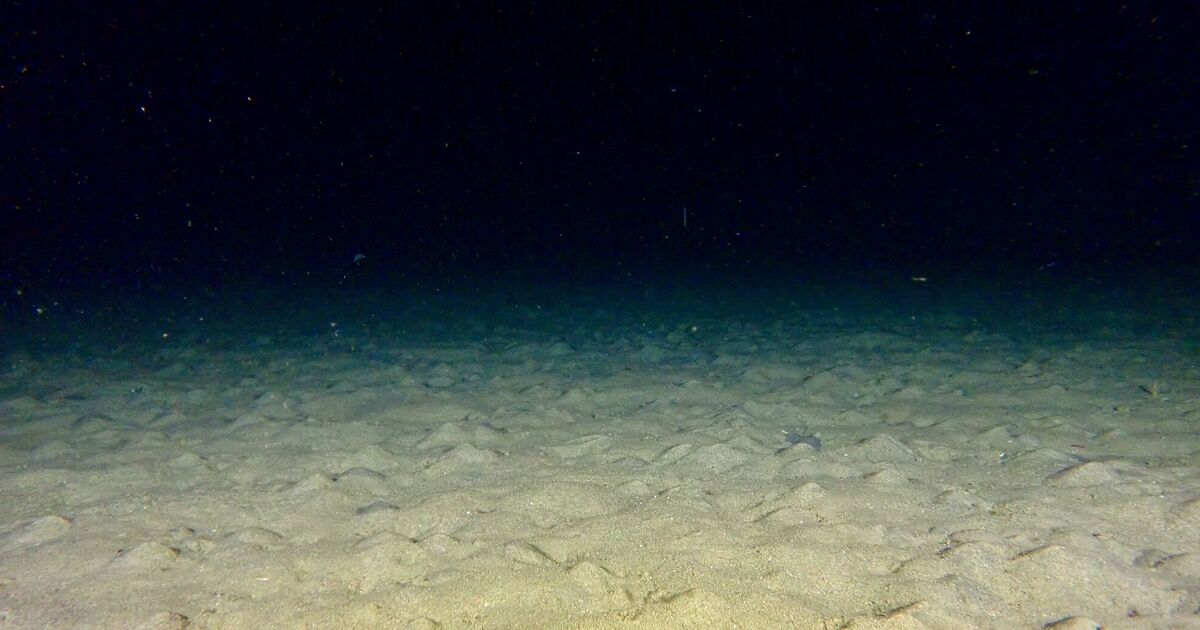
In his video, published in July, he said: “This is a deepwater ray and appears to be a species of stingaree from the urulophus genus, a group of small-bodied stingrays with paddle-like tails.
“The problem though is that stingarees aren’t really supposed to be in Indonesia with almost all of them being endemic to Australia. The Java stingray, once endemic to the nearby island of Java is supposedly extinct, and another species, the kai stingaree, is only known from two juveniles caught as bycatch in eastern Indonesia.”
Barny revealed he consulted with “some of the biggest shark experts in the world” who were unable to identify what the species his camera filmed was. He pondered whether an Australian species had extended its range, a kai stingaree had matured, or it was the kai stingray.
Barny pondered whether the species might be something completely “new to science”. Experts at Ocean Census believe roughly two million species exist in the deep sea.
Scientists reckon they’ve identified approximately 250,000 so far, prompting questions about whether there truly are “plenty more fish in the sea”. They say researchers frequently struggle to reach sufficient depths to discover new fish, plankton and molluscs underwater.
The deepest point, the Mariana Trench, sits roughly 10,935 metres beneath sea level. Mount Everest’s official height, by comparison, stands at 8,848.86m above sea level.
The ocean’s vast expanse, blanketing 71 per cent of Earth, also means scientists often battle to pinpoint where to hunt for new species. Even when they narrow down search zones, numerous deep sea species are believed to be masters of camouflage.
These challenges were encountered by Barny and his team during their “late-night” camera drops. The rocky terrain initially gave the camera rig a “shaky start” as it plummeted 200m beneath the surface, though Barny informed viewers it “eventually found its footing”.
Beyond the unidentified stingaree, the content creator also uncovered plankton he claims he hadn’t encountered previously.
He added: “Alongside the crabs and eels, many strange planktonic creatures drifted past the camera, likely attracted to the light, confusing it for the moon.”