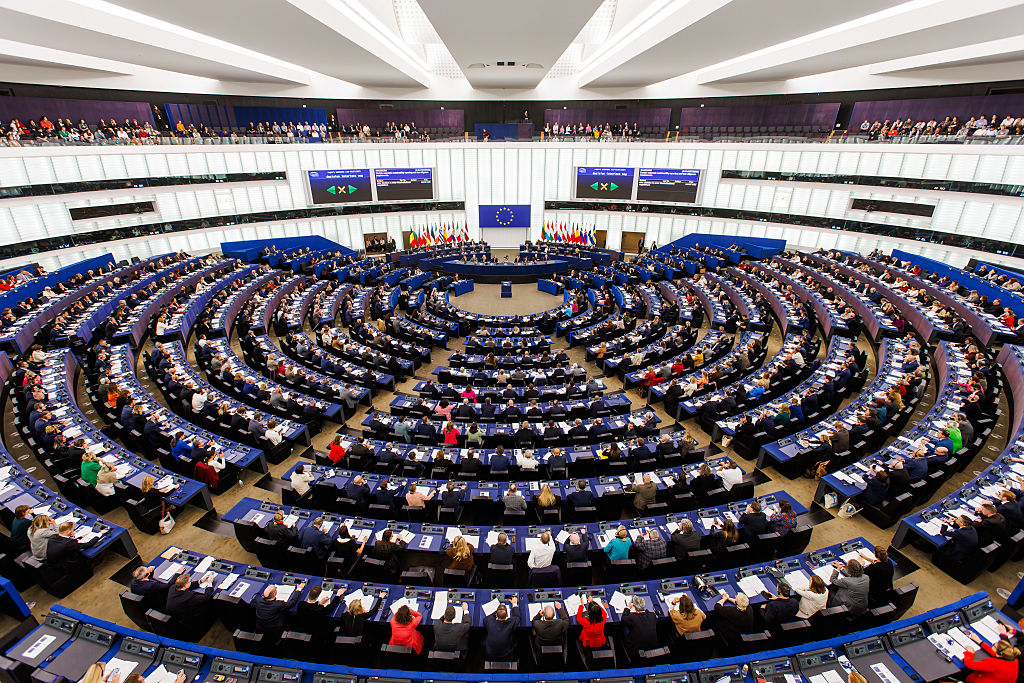
The European Parliament has largely backed changes to the EU’s anti-deforestation regulation (EUDR) that mirror the position adopted by EU countries at the Council last week, paving the way for a swift agreement before Christmas.
The rules, which should have entered into force by December this year, require companies to demonstrate that products sold in the EU – including cocoa, coffee, soy, palm oil, rubber, livestock, and timber – did not contribute to deforestation.
420 million hectares of forest – an area larger than the EU – were lost to deforestation between 1990 and 2020, according to the UN’s Food and Agriculture Organisation (FAO), with EU consumption contributing to 10% of deforestation.
EU countries back German push to delay, reopen deforestation rules
EU countries have backed a proposal to stop the clock on deforestation rules for an…
2 minutes
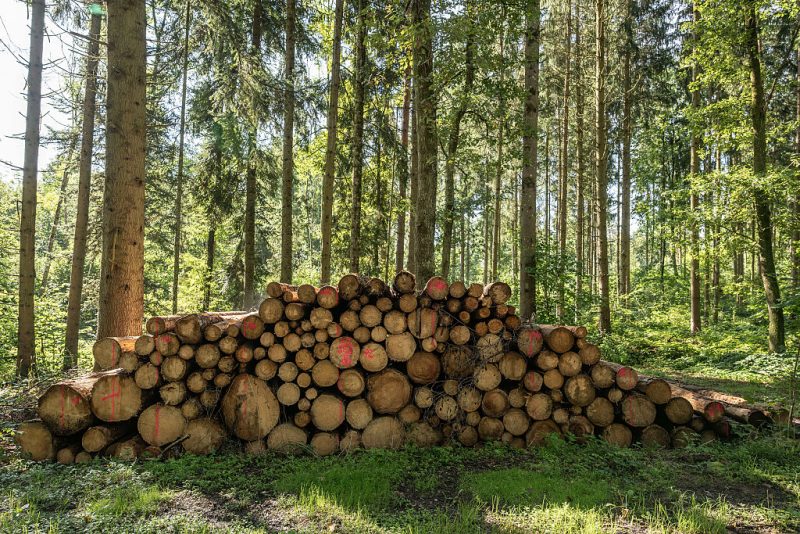
A majority of MEPs voted in favour of the amendments put forward by EPP negotiator Christine Schneider (Germany), which seek to delay the rules’ implementation for all companies by one year and mandate the Commission to carry out an assessment of the rules’ impact on businesses by April 2026 – even if the rules would not have been enforced by then. This could include legislative changes if needed.
The changes were backed by the so-called “Venezuela majority,” including the far-right groups Patriots for Europe and European Conservatives and Reformists. A faction of Renew – 40% of members – did not follow the line of French negotiator Pascal Canfin, and endorsed the EPP’s more far-reaching changes.
“Today’s vote demonstrates the EPP Group’s commitment to protecting the world’s forests, while also listening to the concerns of farmers, foresters and businesses affected,” Schneider said after the vote.
Interinstitutional negotiations are expected to proceed swiftly, as the Council and Parliament share the same position. The final plenary vote is planned for the week of 15 December.
Wait and see
The move has been criticised by Socialists and some Liberals, who said their groups tried to align their positions as much as possible with the EPP’s, with only one red line: implementation for large operators and avoiding a reopening of the legislation before the rules take effect.
For Canfin, Renew’s MEP leading the file, a 2026 review means a new “wait and see” moment for companies. “Everybody now will wait: It is the exact opposite of what we needed,” he said, noting that companies and governments worldwide had invested millions in compliance.
In recent weeks, major food companies, including Ferrero and Nestlé, had pushed to keep the implementation timeline as originally planned to avoid rewarding laggards, and warned that reopening the legislation next year would create more uncertainty.
Socialist negotiator Delara Burkhardt noted that the decision comes after the COP30 climate conference in Belém, Brazil wrapped up last week. Brazil launched the Tropical Forest Forever Facility (TFFF) during COP30, a new climate-finance initiative to protect forests worldwide, which received backing from the EU.
“I think Europe is acting contradictorily, because on the one hand we promise at climate conferences that we want to take care of forest protection, and on the other hand we are gradually reducing our contribution to it,” Burkhardt said after the vote.
EU executive vice-president Teresa Ribera, herself a socialist, took to social media once again to criticise Parliament’s move, notably questioning the planned revision of the rules before they even come into force.
Mercosur’s looming shadow
The reopening of the EUDR comes as Brussels enters a period of heightened political tension over efforts to finalise the EU-Mercosur free trade agreement, which green politicians and NGOs see as a potential driver of Amazon deforestation.
EPP Mercosur fast-track bid collapses at plenary
The centre-right European People’s Party (EPP) on Tuesday beat a hasty retreat from its own…
3 minutes
French MEP Mathilde Androuët (PfE) presented an oral amendment during today’s vote opposing the classification of Mercosur countries – Brazil, Argentina, Paraguay and Uruguay – as standard- or low-risk for deforestation under EUDR. The benchmarking determines the level of checks and bureaucracy required for imports.
Androuët added that the current classification under the EUDR is not enough to prevent farm imports from Mercosur.
The Left group shared a similar view. In a statement, they stressed that “in light of ongoing trade negotiations with the likes of Mercosur, Indonesia and the United States,” the EU should have protections in place for imports from countries “where deforestation is rife.”
Resistance has also come from some communities in Mercosur countries. During a visit by agriculture lawmakers to Brazil ahead of COP30, Green MEP Thomas Waitz met with Indigenous leader Chief Raoni, who rejected an EU-Mercosur agreement in a letter, saying it would threaten the territories, forests and rights of Indigenous peoples.
UPDATE: This article was updated to include latest details and quotes
(adm, mm, aw)