
By Harry Gillingham, Second Year Politics and International Relations
Amongst the Bristol suburb of St Paul’s, the mural of its Seven Saints perched upon its residential buildings to honour the pioneers of its Windrush past, stand as a beacon around the neighbourhood’s pervasive forces of gentrification.
As rent is hiked and property prices unregulated, Bristol’s spirit of rebellious subculture is under threat. Once characterised by celebration of its multifaceted identity, indebted to the influence of underground grassroots movements and artistic expression, it now reflects the exclusion of the people that make up its landscape.
As deep basslines and rapid drums pulsate through the veins of the city’s skin, the significant influence of its subcultural history is enshrined in the landscape of Bristol. The emergence of sound system culture in Bristol transformed the city’s roots, as its underground scene became a cultural hub for expression. Its breeding of innovation between DJs, MCs and Engineers created a space where its rhythms and hard hitting bass, originating in Jamaica, preached to communities a sense of Caribbean identity and community upon the Windrush Generation’s migration to the UK in the 1950s and 60s.
 Owen Adolphus Henry mural | Epigram / Ella Heathcote
Sound system culture has remained a transmitter of both social integration as well as resistance to mainstream and socio-economic forces. The emergence of Bristol Amalgamated DJs, the first Black Caribbean Pirate Radio established in 1987, saw the transmission of such resistance against mainstream assimilation, amplifying neglected voices. Amidst this environment, The Wild Bunch, based in St Paul’s, were influenced by Caribbean sound system culture, curating a unique sonic blend of reggae, hip-hop, funk, and soul through a lens of moodier electronic ambience. Three of its members, Del Naja, Marshall and Vowles, later formed Massive Attack, pioneering trip-hop alongside contemporaries such as Portishead, that characterised the ‘Bristol Sound’ of the 90s. Bristol’s contemporary identity is fundamentally indebted to these innovative subcultural influences, through its grassroots ecosystem of venues such as The Crown, Lakota, The Love Inn and Cosies keeping Bristol’s independent underground scene alive.
Their breaths of resistance, however, flail amongst the howling socio-economic forces that engulf Bristol. No case highlights the attack of gentrification upon the cultural blood of the city more than the recent displacement of the well-renowned club Motion. Its venue stood as a staple of Bristol nightlife, closing due to landlord refusal to renew its lease on the site. Motion has recently relocated, but the closing of its iconic venue’s doors highlight the pressures facing Bristol’s underground scene that affect even the most cherished and renowned of space. The cost of living crisis’ effect on students affecting club profits, and the rise in rent prices to upkeep venues, has contributed to an economy where the independent grassroot scene faces mounting pressure. All the while, Motion’s previous location, St Phillip’s Industrial Park, undergoes the building of more and more student accommodation to keep up with demand.
‘Yellow Faced Girl’, Stokes Croft | Harry Gillingham
‘Its creation and eventual ingraining into the area’s landscape, despite a lack of initial planning permission, highlights the resistance to institutional coercion’
Stokes Croft and its adjacent areas, making up Bristol’s most culturally diverse neighbourhoods, manifest their resilient community through their eclectic array of street art against the existential threat of corporate gentrification. When you stroll by Nine Tree Hill you are confronted by the mural demanding to ‘Think Local, No Tesco.’ An act of artistic activism, owing to the riots of 2011 following opposition to the opening of a Tesco in the area. The popular ‘Yellow Faced Girl,’ painted by Colombian street-artist STINKFISH, sits strikingly in Stokes Croft. Painted without formal planning permission, it revitalised the building into a notable landmark, and in 2021 it was restored upon local funding from arts organisers. The story of this mural’s conception serves as a poignant reminder of the community led character fundamental to Bristol’s identity. Its creation and eventual ingraining into the area’s landscape, despite a lack of initial planning permission, highlights the resistance to institutional coercion. When I first encountered the mural, it sat atop Stokes Croft’s surrounding lively street parties. To me, no clearer does an image express the vitality that the community breathes into the area than that. Yet, despite such street art celebrating these communities and their identities, private rents have increased by 52% in the last decade disproportionately to wages which threaten their displacement while high earners migrate.
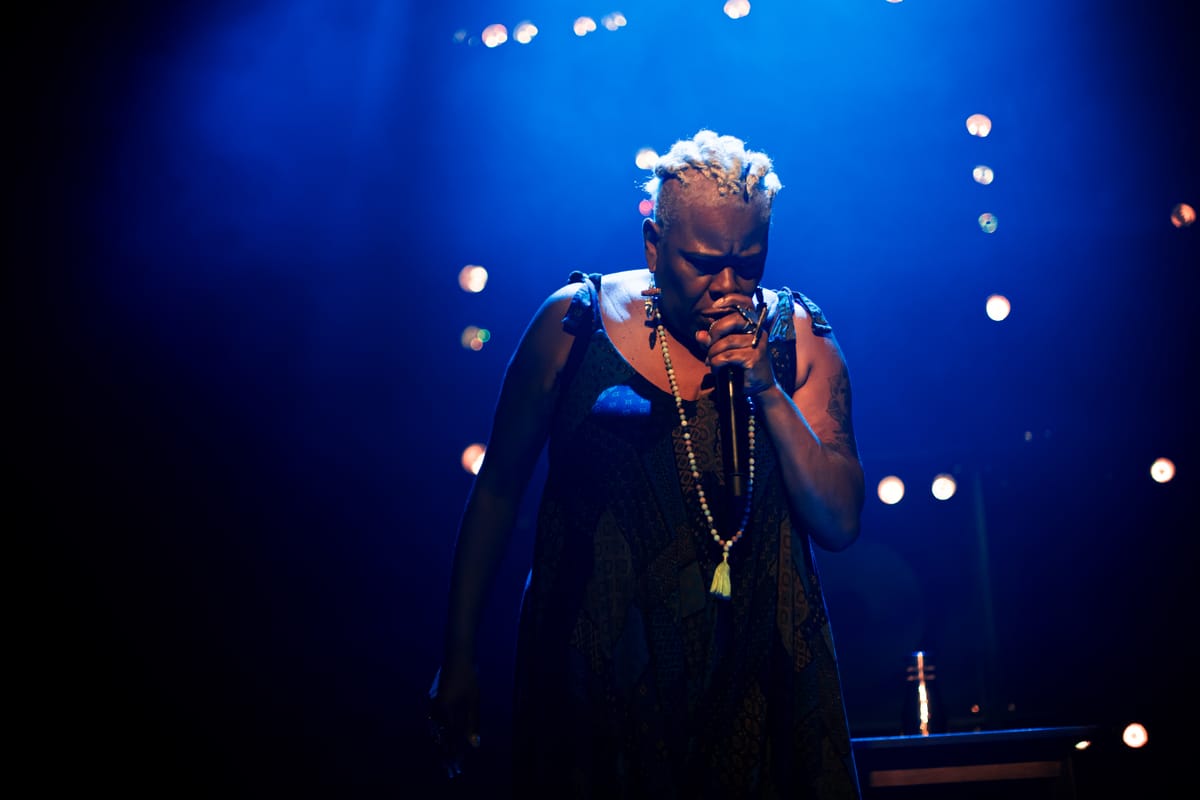
From sound system to stage: in conversation with Sutara Gayle
Epigram interviews Sutara Gayle (AKA Lorna Gee) on storytelling, sisterhood, and the spirit of reggae
I spoke with Tom, a graduate of the University of the West of England who has lived in Bristol for over six years.
How has Bristol’s identity appealed to you?
Tom: Everywhere you look there are hidden references to Bristol culture. For example, ‘The Bearpit’ is an area that has experienced many changes, but it used to showcase a sculpture called ‘Ursa the Bear’ until it was removed by the council in 2019. It still holds a cult following, however, and appears in street art around the city as well as being sold as a souvenir in independent shops.
He also spoke about the culture of street parties in Bristol:
Tom: As somebody who used to deliver food, I would stumble across these parties all the time. The most notable one, for me, was under the M32 Bridge in Easton where it was common to experience raves, parties, street performers and the monthly market.
‘I have seen Stokes Croft constantly under threat from gentrification’
How has Bristol changed since you began studying here 6 years ago?
Tom: I have seen Stokes Croft constantly under threat from gentrification. Blue Mountain was a key venue in the area, but was demolished to build student flats despite locals best efforts to prevent it – squatters at one point protesting. The constant discourse of redevelopment and the paving over of Turbo Island’s bonfire, that hosts extensive groups of different people, is a public space that flexibly transforms by the day, yet I fear for its staying power as the council clamps down on it.
Speaking with Tom, someone who was inspired by the city’s music scene to pursue his passion of DJing, showcases what makes Bristol’s communal identity so special and the importance of rallying against forces that try to muffle its voice.
Featured image: Audley Evans mural | Epigram / Ella Heathcote
Do you see subcultures in Bristol, or are they dying out?