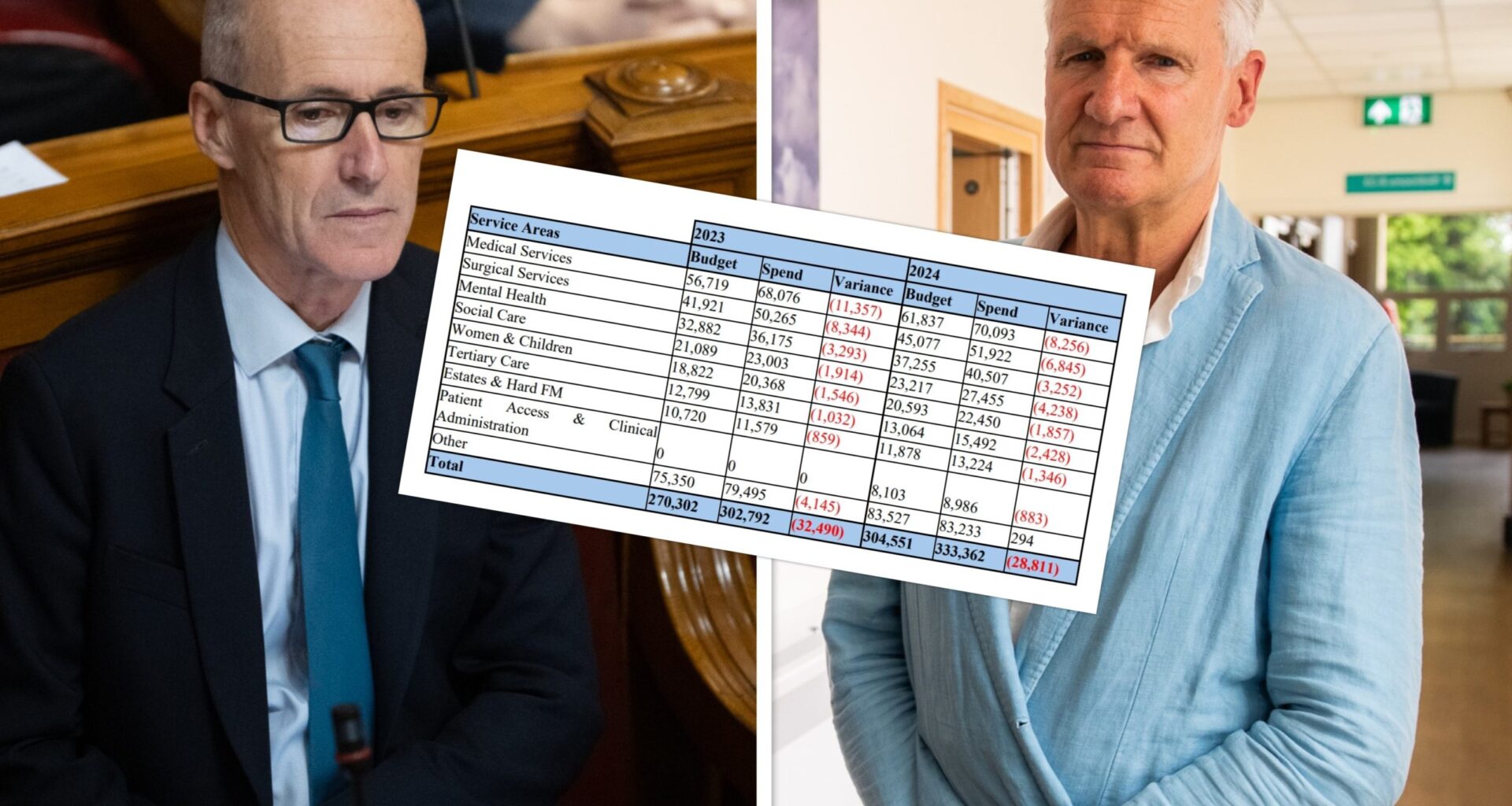
Overspending within Jersey’s mental-health service stood at more than £3 million in both 2023 and 2024, it has emerged – with the cost of off-island care placements sometimes exceeding £1,000 per day.
The data was provided in response to a written question submitted to Health Minister Tom Binet by Deputy Jonathan Renouf, who is vice-chair of the Health and Social Security scrutiny panel.
Deputy Renouf asked Deputy Binet to outline which areas of the Health Department had overspent in each of the past two years and by how much.
His question comes in the wake of major scrutiny over the overall Health deficit, as well as plans to improve the department’s financial position through the government’s intended 2026-2029 Budget, with £381m of spending on healthcare next year – a rise of almost a fifth on 2024.
Of the nine areas listed in the Minister’s response, medical and surgical services exceeded their budgets by the largest amounts.
This was followed by mental health, which saw overspends of nearly £3.3 million in 2023 and 2024.
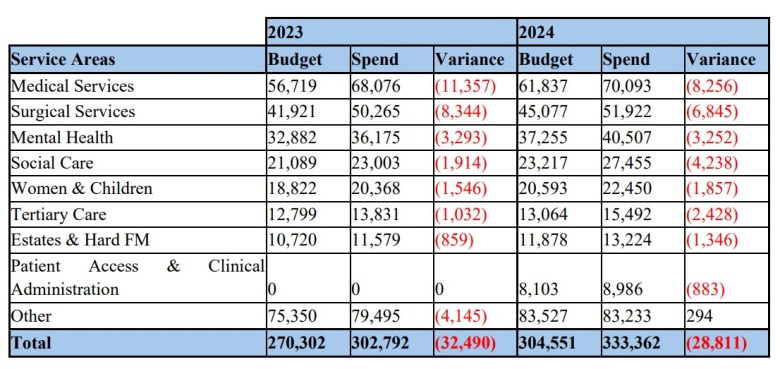 Table: Mental health saw overspends of around £3.3 million in each of the last two years. (Government of Jersey)
Deputy Binet also addressed the rising cost of off-island mental-health and social care placements, which Mental Health Director Andy Weir had previously said was driven by an increased number of patients with “very specific needs that required a high level of intensive nursing care”.
The Health Minister explained that mental-health and social care placements in the UK peaked in 2024 with 27 placements.
 Pictured: Deputy Tom Binet.
He explained that average day rates for such placements had increased from £533 in 2017 to £761 per day in 2024.
“Cases exceeding £1,000 per day have occurred in 2023 and 2024,” Deputy Binet said.
Mental-health care in Jersey reached around £1.9m in 2023 and £1.6m in 2024, according to the Minister.
The overall cost of mental-health placements was listed as more than £10 million and £11 million in 2023 and 2024 respectively.
“Expenditure on purchase of healthcare has continued to increase over a sustained period,” added Deputy Binet.
“Much of healthcare activity and purchasing is need driven, not discretionary or budget driven.
“Small shifts in patient need can create large swings in cost, especially in a small island system, where volatility is amplified due to unavoidable reliance on off-island providers.”
Related