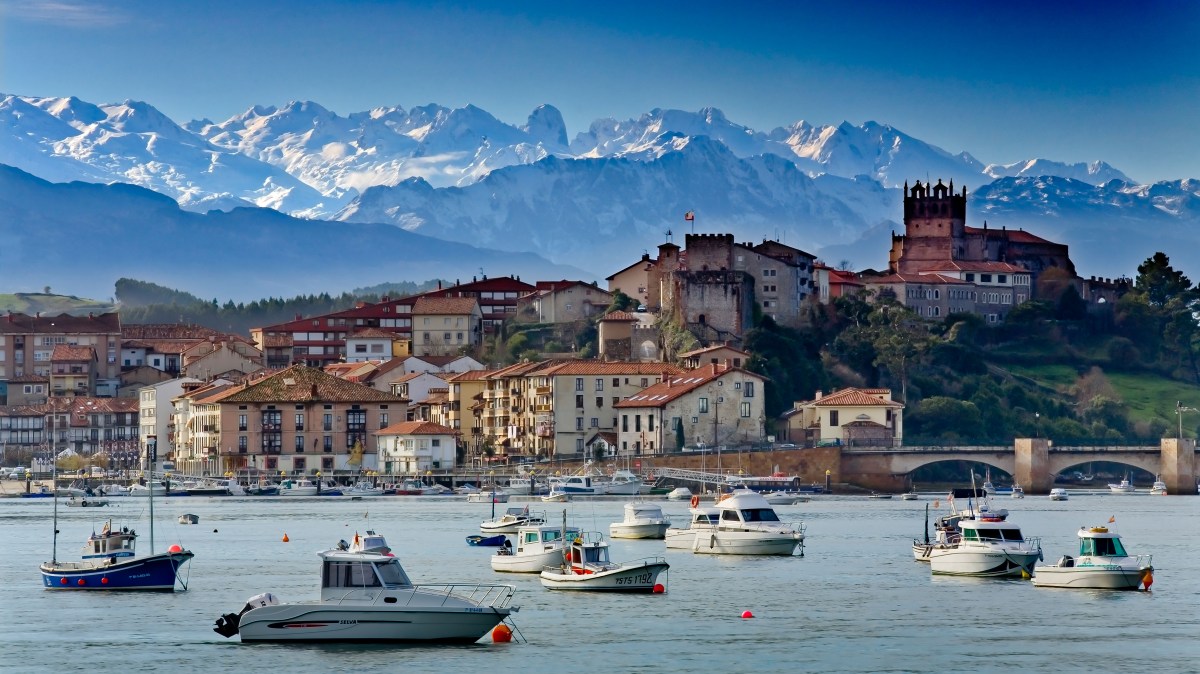
You’d be forgiven for not being able to situate it precisely on a map. But that in itself tells you something about Cantabria. For years this verdant region on Spain’s north coast has kept its head down as a destination, eclipsed by the two larger and better-known regions (Asturias to the west, the Basque Country to the east) on either side of it. Brits taking the car ferry to Santander, the regional capital, usually waste no time in hurrying south towards the Costas as soon as they roll off the boat. With the result that Cantabria’s glorious coastline, the undulating pastures and soaring peaks of its interior, are still little visited.
That could be about to change. A branch of Madrid’s Reina Sofia museum, due to open next year in a former bank HQ in downtown Santander, and displaying the 130,000-strong Lafuente collection of 20th-century art and artefacts, will surely increase the region’s cultural cachet. It will complement the city’s prime attraction, the Centro Botin art centre and gallery, with its curvilinear design by the architect Renzo Piano, which opened on the seafront in 2017.
Hearing that the region’s best hotel, the sublime country house Helguera Palacio, half an hour southwest of Santander, had teamed up with its best restaurant, the three-Michelin-starred Cenador de Amos — to promote themselves together as the perfect combination and to draw attention to the excellences of the region — I booked myself in at the hotel and planned a long weekend. Down in the Spanish south the month of October had left the landscape exhausted by record-breaking temperatures and nary a drop of rain. Arriving in Cantabria from my home in Extremadura was like entering a magical new world, lush and green but bathed in a golden autumn light.
What you need to knowWhere is it? The hotel is 30 minutes’ drive southwest of SantanderWho will love it? Foodies who appreciate a colourful, characterful stay over minimalismInsider tip After your visit to the Centro Botin, order a plate of Santander’s famous rabas (crisp-fried calamari strips) in any of the popular taverns around the old town’s Plaza Cañadio (Cañadio and Taberna Cachalote are reliable choices)
This northern enclave, one of Spain’s smallest “autonomous communities”, packs a great deal of charm into a modest surface area. Its monumental beaches, fanned by cool Atlantic breezes, are perfect for those tired of grilling themselves like gambas a la plancha on the burning sands of the Med. Strung out along the Cantabrian coast are seaside towns both grandly historic (Santillana del Mar) and bustlingly maritime (San Vicente de la Barquera) — not to mention a salt-flecked harbour town, Santoña, whose sensational cured anchovies fully deserve their place in the Spanish gastronomic firmament. Behind the so-called Valles Pasiegos, a county of rolling pastureland with a rich dairy culture to match, loom the glittering peaks of the Picos de Europa, among which Torre Blanca is Cantabria’s highest point at more than 2,600m.
• 10 of Spain’s best cities for food

The indoor swimming pool at the Helguera Palacio
Green Spain’s noble roots
Ironically, given its under-the-radar status, this was the site of my first full-on experience of Spain and Spanishness. In Santander I once spent a crazy summer as a backpacking student, falling in with a fast crowd of posh kids from Madrid. We’d roar around town at night in someone’s papa’s flashy sports car, frequenting the discotecas and feasting on fresh seafood in neon-lit restaurants on the harbourside.
My recent, long-delayed return to Cantabria would be a rather more sedate affair. Helguera Palacio stands in the foothills of the Pasiego valleys, a four-square Renaissance mansion built in stone the colour of café con leche, with arched porticoes and an ornate coat of arms affixed to its grand façade. In the formal gardens surrounding the house, gravel paths meander between banks of hydrangeas and fountains trickling into moss-covered basins. The Palacio was originally built in the 17th century as the country seat of the Count of Santa Ana, right-hand man to the viceroy of colonial Peru. After passing through the hands of various well-to-do owners it was bought by the Madrid-based designer Malales Martínez Canut and her husband, José Antonio Revuelta, who have spent £1.7 million converting the house into a sumptuous 11-room hotel. (It opened in 2021.)
• Explore our full guide to Spain
Its unashamedly maximalist interiors, combining rich fabrics, classical statuary and antique furniture (much of which turns out to be for sale) breathe an air rather more of an English country manor than a Spanish hacienda. My Duke of Wellington suite rejoiced in Venetian chandeliers, a canopy bed and a gold-framed portrait of the great man himself. Even the indoor swimming pool had a fireplace, lit on chilly winter evenings — a detail I couldn’t recall having seen in a hotel before. My first-night dinner at the Palacio’s in-house restaurant Trastamara combined local ingredients with touches of Latin America, in such dishes as fresh crab ravioli with a creamy huancaina potato sauce. (The chef, Renzo Orbegoso, appropriately enough, hails from Peru.) I’d always believed that Cantabria was the only Spanish region producing none of its own wine — so a bottle of Mar de Fondo, an aromatic white made from a blend of Galician, Basque and German grape varieties, brought me properly up to speed.

The three-Michelin-starred Cenador de Amos
.
A taste of the region
If the Palacio is one half of Cantabria’s newest hospitality power couple, the other is Cenador de Amos, without doubt the region’s finest restaurant and, since 2020, one of 16 in Spain with a trio of Michelin stars. I made the 20-minute journey there for a lavish Sunday lunch courtesy of the chef Jesus Sanchez, who specialises in “interpretations” of traditional Cantabrian dishes executed with the precision and refinement of a pastry chef.
• 17 of the best hotels in San Sebastian for your next city break
The restaurant occupied an 18th-century mansion at the centre of the sleepy Villaverde de Pontones (population about 300), a palimpsest of traditional Cantabrian architecture with art deco modernista and contemporary additions. Similarly, the dishes of Sanchez’s signature desde la raiz (“from the roots”) menu had soul and heft as well as surface sparkle. His version of salpicon, a popular shellfish salad, was rendered as a delicate miniature in pointillist dots of colour. A tranche of hake came with the two great sauces of northern Spain: pil pil (an emulsion) and a salsa verde made even more vibrantly green with lettuce and seaweed. A pigeon breast was cooked with cacao nibs and pine nuts. This was 21st-century high-tech cuisine, exquisite yet without pretension, and that long lunch was among the best I could remember from three decades of eating in Spain’s most celebrated restaurants.
Afterwards I sat in the garden over coffee and petits fours with Marian Martínez, director of Cenador de Amos (and wife of the chef). A card-carrying Cantabrian, Martínez was happy to give me her tips for the crème de la crème of her home region. For culture, the Centro Botin, poised at the edge of Santander harbour like a child’s vision of an alien spacecraft, was a no-brainer, as was El Capricho in the seaside town of Comillas, a whimsical pavilion in multicoloured fantasy style and one of Antoni Gaudí’s few commissions outside his native Catalonia. Cantabria’s unique heritage of paleolithic cave art, of which Altamira (dating from 35,000-10,000BC) is often said to be the Sistine Chapel, extends to some 60 sites across the region.
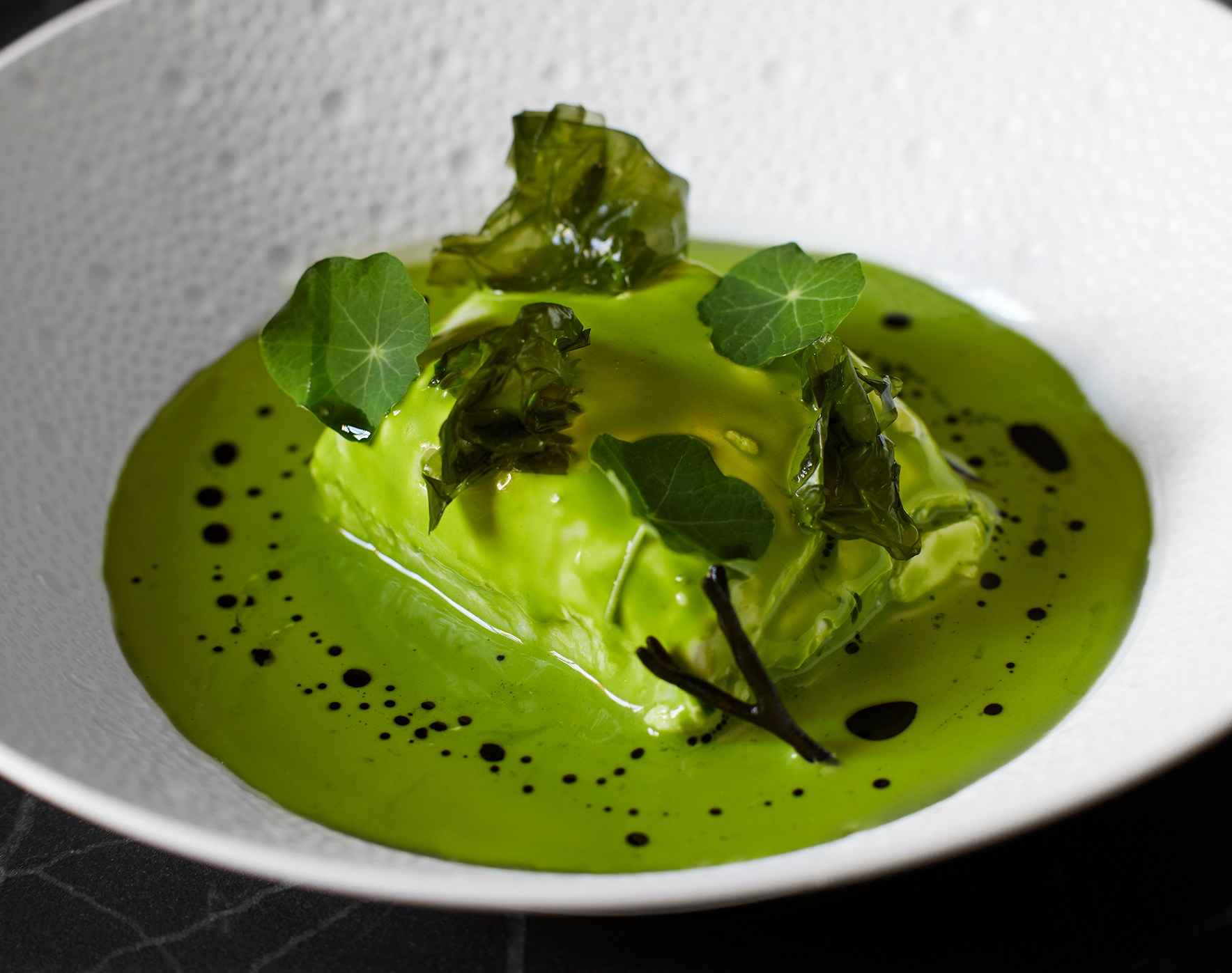
Merluza en Salsa Verde at Cenador de Amos
.
Cantabria’s natural larder
In terms of edibles I should stock up on La Lleldiria cow’s milk cheese and sobao pasiego, a miniature sponge cake made with the luscious butter of the Pasiego valleys. But if there was one Cantabrian product I shouldn’t miss on any account it was the Santoña anchovy. If you’re a fan of this paragon of salty, juicy fishiness laced with umami, the town of Santoña — up on the coast about 40 minutes’ drive from Helguera Palacio — is nothing less than a pilgrimage site.
• Discover San Sebastian
Taking Martínez at her word, on Monday afternoon I made my way there. The anchoa is the glory of this hard-working, if unprepossessing, harbour town and most of Spain’s big producers are here, from Ortiz and Consorcio to Angelachu and, arguably the best of them, Conservas Emilia. On a tour of a canning factory I watched the time-honoured process by which a team of local women (and they are all women) prepares anchovy fillets previously cured for up to a year in salt, laying them neatly in shallow tins and anointing them with olive oil.

The palaeolithic paintings of the Cueva de El Castillo complex
GETTY IMAGES
The day was darkening as I returned to the Palacio, stopping en route for a guided visit at the Cueva de El Castillo, a cave complex whose interior is adorned with palaeolithic paintings of a simple yet bewitching beauty: hand prints, animal shapes and enigmatic abstract forms. Deep inside the cave, the light of a torch illuminated a small deer’s head picked out in a single line of red, as strikingly modern as anything by Picasso. “Undiscovered” Spanish regions have come and gone over the years, but 2026 looks like it might just be Cantabria’s turn in the limelight.
This article contains affiliate links that will earn us revenue
Paul Richardson was a guest of Helguera Palacio Boutique & Antique, which has B&B doubles from £342 (palaciohelguera.com), and Cenador de Amos (15 courses from £260pp; cenadordeamos.com). Fly or take the ferry to Santander