
The areas are readily accessible across the city region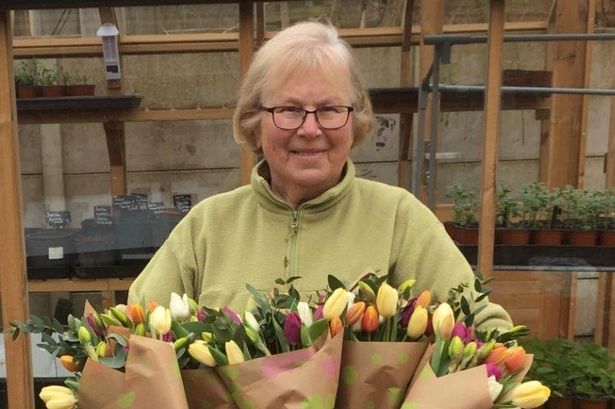 Jean Beesley, 78, with flower bouquets made by volunteers at the Wonky Garden(Image: Sarah Parker)
Throughout the city of Liverpool, people are repeatedly turning back to the same idea – spending time in nature is not only a peaceful and calming experience, but is collectively transforming and enhancing the mental wellbeing of the society in which we live today.
As the winter months approach and the nights grow longer, supporting positive mental health is becoming increasingly important, and a proven way to promote a sense of positive mental wellbeing is incredibly simple, and readily accessible across the city region.
From city parks and gardens, such as Sefton Park and Calderstones Park, to the riverfront green space of Otterspool Promenade, Liverpool has an abundance of urban green areas, that have been scientifically proven to improve mental wellbeing.
It is a well-established, and well researched concept that spending time in green spaces and being exposed to a natural environment offers many benefits, from an improved mood to a clear mind.
Amy Dooley, 22, is a recent psychology graduate from the University of Liverpool, and throughout her time studying found “nature can provide us with benefits, such as fresh air, peaceful sounds, and aesthetic scenery.”
She said: “It can have a strong effect on mental health because nature makes us feel good by boosting our mood, and it gives us a break when life gets too busy and loud.”
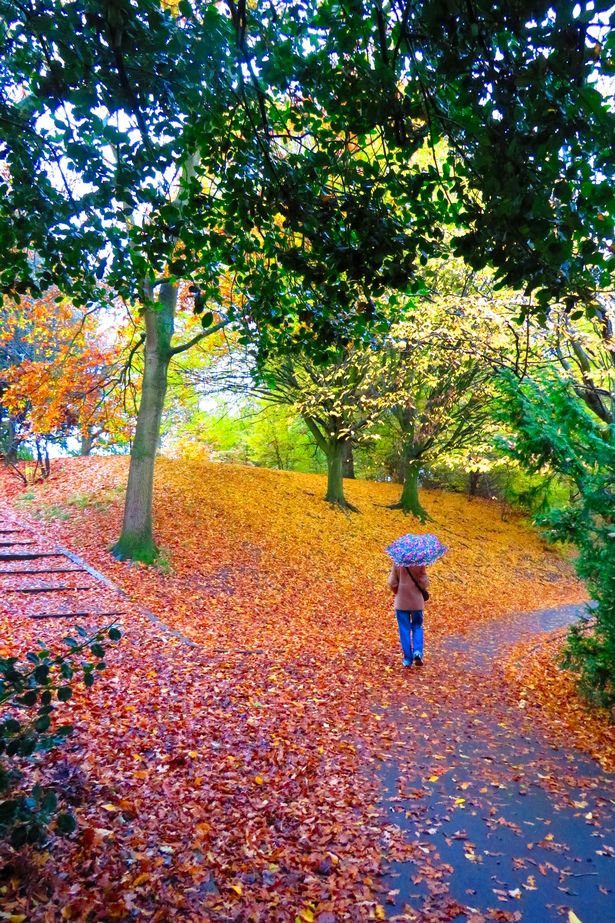 Sefton Park during the autumn months(Image: Sophie Sinnott)
During her years as a student, Amy recalls the stressful exam periods throughout her studies, and the experience of herself, along with other students on campus, turning to nature to better manage the pressures.
She added: “When I was in university, campus would obviously be a lot busier during exam season and naturally students would head outside to green spaces, such as Abercromby square [on campus] as a way to clear their heads, socialise with friends, and have a proper break in between studying.
“It was a great way to balance the pressure of revising and preparing for exams, but also still prioritising mental wellbeing during such a mentally draining and stressful time”.
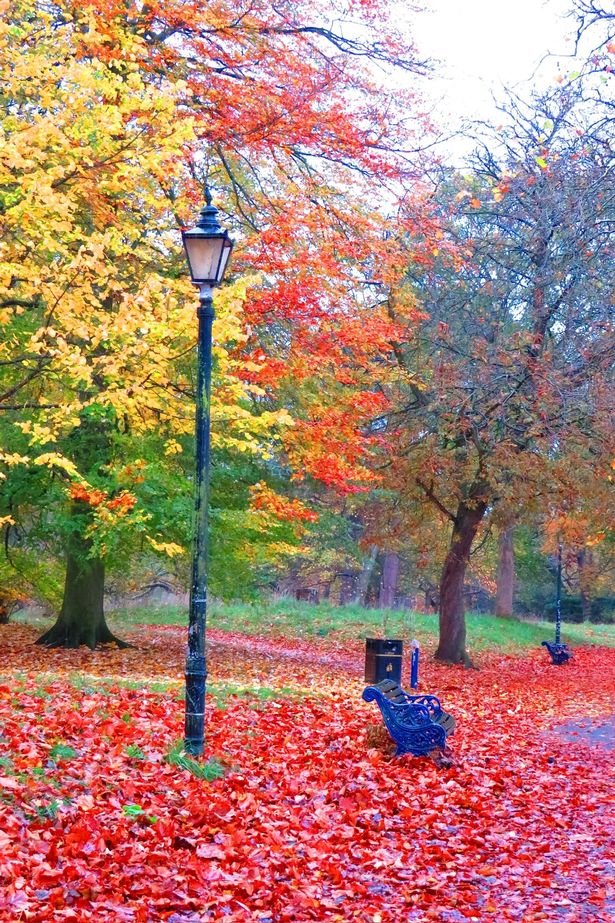 Autumn leaves carpeting the ground in Sefton Park(Image: Sophie Sinnott)
The psychological mechanisms which contribute to an improved sense of cognitive-emotional health are greatly varied; however green environments provide a space in which the mind can slow down.
Holistic wellness practitioner, Jill Roby Hall, 54, further described this, from a holistic perspective.
She said: “It’s actually been scientifically proven many times over that spending time in nature and being around trees, natural bodies of water, and plant life, and the quiet and solitude that is promoted in nature, has actually been found to lower blood pressure, lower heart rate, and reduce levels of hormones such as cortisol and adrenaline.
“And it’s been discovered that it is a benefit to human health to boosting our immune systems and acting like preventative therapy to disease.”
Jill is a yoga teacher, alongside her wellness coaching practice, and she has noticed throughout her years of turning to holistic health approaches and spending time outdoors greatly improves mental wellbeing, especially throughout the darker, winter months.
She added: “If you can sort of set even a short amount of time to go outside, whether it’s your lunch hour and you can go for a walk, maybe to a park if you’re in an urban space or to even just walk in an urban space and see people’s gardens.
“Just some way to move a little bit, breathe a bit of fresh air and actually escape the four walls of the office; I think setting time aside is vital to be able to do that.”
Along with various health benefits, spending time in urban green spaces also lends itself to forming strong social connections, and creating bonds based upon the common interest of spending time outdoors.
Several community gardens have been established across the Merseyside region, aiming to provide for the local areas, but also to create a sense of comradery and a social network for users.
Mary Roberts, 90, is a member of the Wonky Garden in Widnes, and she has found spending time in nature and giving back to the community has greatly improved her mental wellbeing, and brought her many meaningful friendships.
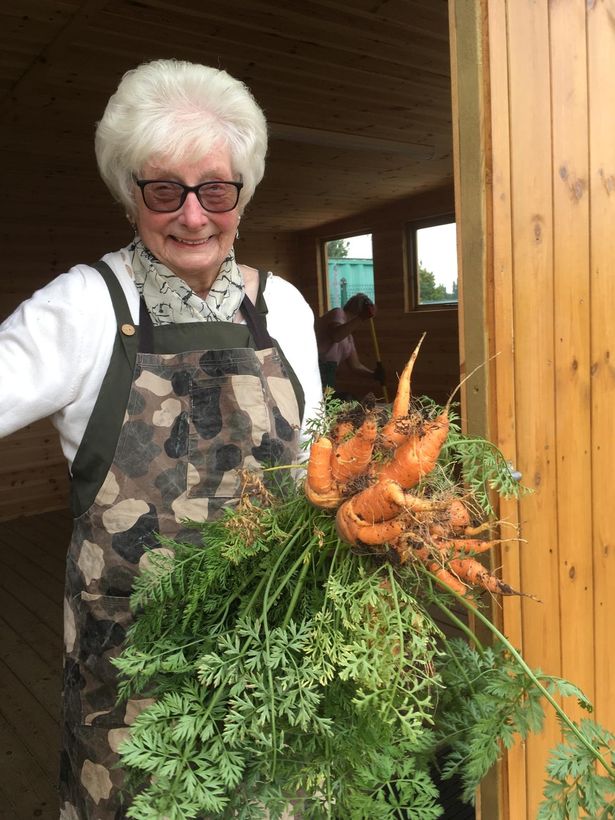 Mary Roberts, 90, with her carrots grown at the Wonky Garden(Image: Jean Beesley)
She said: “I’ve gardened all my life since I was a child, so gardening is not a new thing to me, but it’s not only that. It’s mixing with people.
“I think the social side is very important, but when you’ve lost somebody and you’re on your own, I think you have to decide to get out and about to speak to people and give yourself something to do.”
Community gardens and city parks attract many people, not just for the wellness benefits which come along with spending time outdoors and being surrounded with other likeminded people, but also for the vast amounts of knowledge that can be gained through working in urban green spaces.
Jean Beesley, 78, is another member of the Wonky Garden, but also a former gardener at Calderstones Park.
She said: “I was an apprentice gardener. My first job leaving school was an apprentice at Calderstones Park, when [it] had the most beautiful botanic garden, which they don’t have now.
“I loved it [spending time outdoors], so I wanted to learn about botany and horticulture even when I was just leaving school, when I was about 16.”
Jean regularly attends the Wonky Garden, and finds that spending time in nature, and socialising with other people who are enjoying the natural surrounds has immensely benefitted her wellbeing, and allowed her to focus on her passion for gardening at an older age.
She said: “I think if you’re out and about in nature, obviously, there’s other people there as well, enjoying it. It’s great to, you know, to just recognise what’s lovely around you.”
Spending time in urban green spaces and prioritising positive mental wellbeing through nature exposure can greatly improve mental health and cognition, throughout the colder, darker months.
With a vast variety of parks, gardens and green spaces throughout Liverpool, visiting a natural environment may just be the key to a greater sense of peace and emotional resilience this winter.