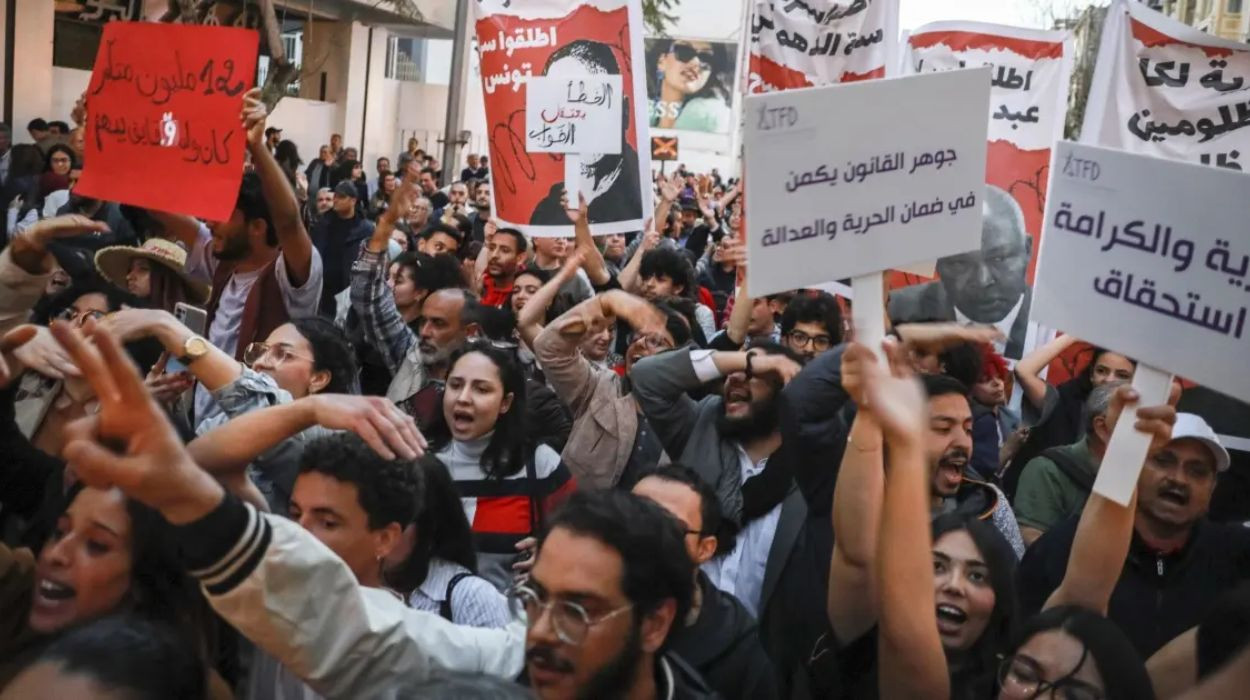
Credit: Ben Ibrahim/NurPhoto via AP Photo
Tunisia’s once-vibrant civil society is now facing an unprecedented crackdown, with authorities systematically dismantling the rule of law and shrinking civic space. The government’s actions have targeted NGOs, human rights defenders, and legal professionals, leading to arbitrary arrests, judicial harassment, and the suspension of vital organizations.
“It is deeply alarming to witness the steady erosion of Tunisia’s once-vibrant civil society, one of the most significant achievements of the 2011 revolution,”
said Erika Guevara-Rosas, Senior Director for Research, Advocacy, Policy and Campaigns at Amnesty International. The repression is part of a broader trend of authoritarian practices, undermining fundamental human rights and freedoms.
Crackdown on NGOs and Human Rights Defenders
The Tunisian authorities have launched a multi-pronged campaign against civil society organizations, opening investigations into their finances and activities. Between July and November 2025, at least 14 organizations, including ATFD, Aswat Nissa, and FTDES, faced 30-day suspension orders, effectively silencing their operations. Security forces have arrested members of organizations providing aid to asylum seekers and refugees, fueling a dire humanitarian crisis. Arbitrary detentions, interrogations, and smear campaigns have become common, with authorities accusing NGOs of being “traitors” and “foreign agents” for their legitimate work.
Impact on Policy and Civic Space
The government’s policy of restricting civic space has severely hampered the ability of civil society to operate freely. Authorities have abused legal and administrative procedures to hinder NGO operations, including suspending their activities, restricting access to foreign funding, and freezing bank accounts. These actions violate Tunisia’s obligations under the Tunisian Constitution and international human rights law, which guarantee freedom of association and expression. The result is a climate of fear, where independent voices are suppressed, and public participation is reduced.
EU’s Role in Protecting Human Rights
The European Parliament has condemned Tunisia’s deteriorating human rights situation, calling for coordinated diplomatic efforts to protect civil society and release political detainees. The EU must act decisively to uphold human rights and support policy reforms that restore civic freedoms.
“Authorities must immediately take effective measures to uphold human rights and allow NGOs to freely carry out their human rights activities, protect human rights defenders and humanitarian workers, lift suspensions and unfreeze accounts,”
said Erika Guevara-Rosas. The EU should leverage diplomatic, economic, and legal tools to pressure Tunisia to reverse its repressive policies and ensure that civil society can operate without fear of reprisal.
The Path Forward for Human Rights and Policy
Tunisia’s descent into authoritarianism is a stark warning to the international community. The government’s actions not only undermine its citizens’ rights but also set a dangerous precedent for the region. The EU and other international actors must prioritize human rights and policy reforms to protect civil society, uphold the rule of law, and restore civic freedoms. This includes suspending financial and diplomatic support to Tunisian authorities until tangible improvements are made. Only through sustained international pressure can Tunisia’s civil society hope to regain the freedoms that were once its hallmark.