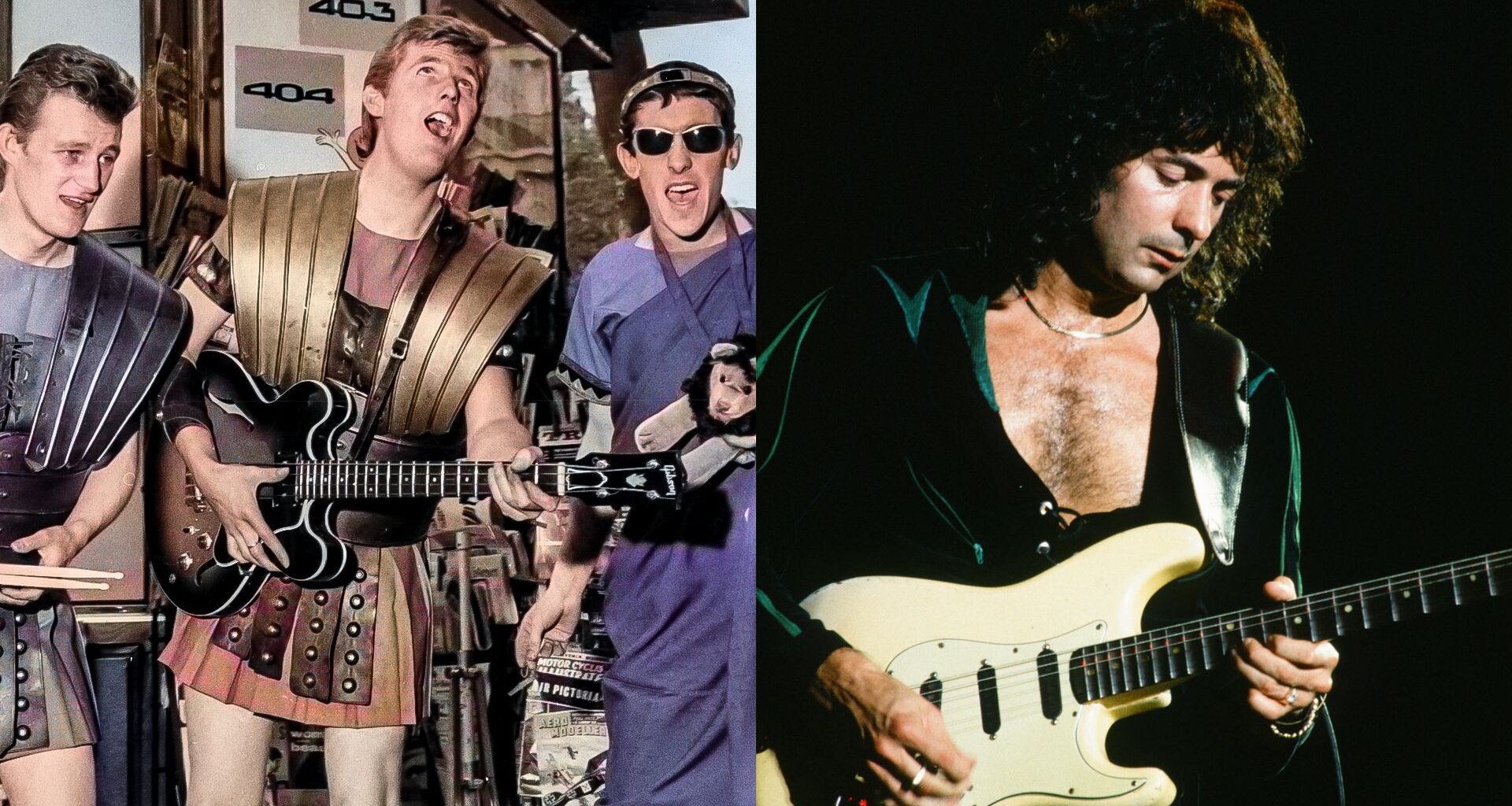
Ritchie Blackmore is widely credited as the man who intertwined the booming rock and roll movement of the late ‘60s with classical music flavors, but he’s moved to dismiss that. He said he got the idea from a gimmick band he saw as a teenager.
His iconic riff for “Smoke on the Water” — arguably the most famous guitar riff in all of rock — is proof of just how well he married the two. He says the riff, which is built off of finger-picked parallel fourths, draws closely from a masterpiece of the classical era: Ludwig van Beethoven’s Symphony No. 5.
“I owe him a lot of money,” the guitarist once joked.
Best picks for you
So while Blackmore’s work with Deep Purple — most successfully with the Mark II era of the band — popularized the fusion of styles and very much made it his own, he doesn’t want to take the credit for the idea.
“When I was 15, there was this incredible band that came to the South Wall Community Center,” he says in a newly uploaded YouTube video. “They were called Nero and the Gladiators, all dressed up as Romans in togas and what have you.”
Formed in 1960 by keyboard player Mike O’Neil, who assumed the role of Nero, the band scored minor hits with rocked-up versions of “Entrance of the Gladiators,” composed by Julius Fučík in 1897, and Edvard Grieg’s 1875 orchestral work “In the Hall of the Mountain King.”
It was the latter that led Blackmore to his epiphany.
“That’s where I got my inspiration from,” he explains. “Some people think that I kind of started that craze, but they were the first. I saw them, and I was just overwhelmed.
“They were great showmen,” he continues. “I’ll never forget that experience. I was open-mouthed watching this rock playing of classical pieces, and to me, it made much more sense than Chuck Berry playing ‘Sweet Little Sixteen’. All of a sudden, it was, ‘Yeah, this is where I want to go.’
“I thought Tony Harvey’s guitar playing was incredible. He was a big influence on me.”
Don’t miss these
Talking to Guitar World in 1991, Blackmore went into more detail about how this revelation helped him find his identity as a guitarist, in particular on electric guitar. As a player, he was coming up in the thick of a huge blues movement in the U.K., but it didn’t quite resonate with him the same as it was for two other local guitarists who would rise to prominence alongside him: Jimmy Page and Eric Clapton, from whom he bought his first Strat.
“I was never sure what I wanted to be,” he reflected. “I found the blues too limiting. Classical, on the other hand, was always too disciplined. I was always playing between the two, stuck in a musical no-man’s land.
“I’m not good enough, technically, to be a classical musician,” he added, “I lack discipline,” hence why he has always seen his sound with Deep Purple as a simplified take on classical tonalities.
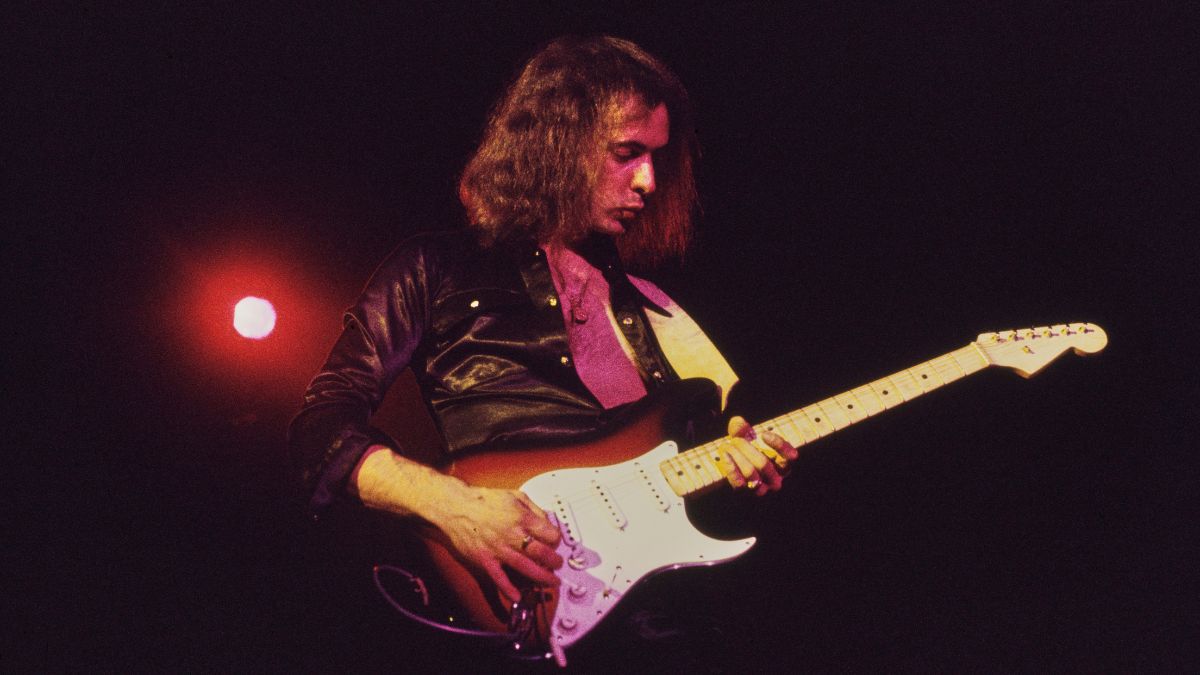
(Image credit: Getty Images)
But his forays into classical guitar, he had told Guitar Player 18 years earlier, taught him things that playing the blues didn’t.
“I learned how to use my little finger,” he explained. “A lot of blues guitarists play with only three fingers, so they can’t figure out certain runs that require the use of their little fingers.
“I would say that it shows up most in the music I write. For example, the chord progression in the ‘Highway Star’ solo is a Bach progression.”
But he wasn’t purely lifting from concertos and overtures. His own personality was embedded in what he coaxed out of his Stratocaster’s fretboard.
“The classical influence is always there, but I don’t intentionally use it that much,” he added. “I play a lot of single notes, and that’s not classical.”
Blackmore is currently at home recovering from a recent health scare that brought an abrupt end to his latest tour with Blackmore’s Night, the renaissance-folk act he performs in with his wife, Candice Night.
Meanwhile, Queen guitarist Brian May has described Blackmore as a “fireball,” saying he affected him like no other player.