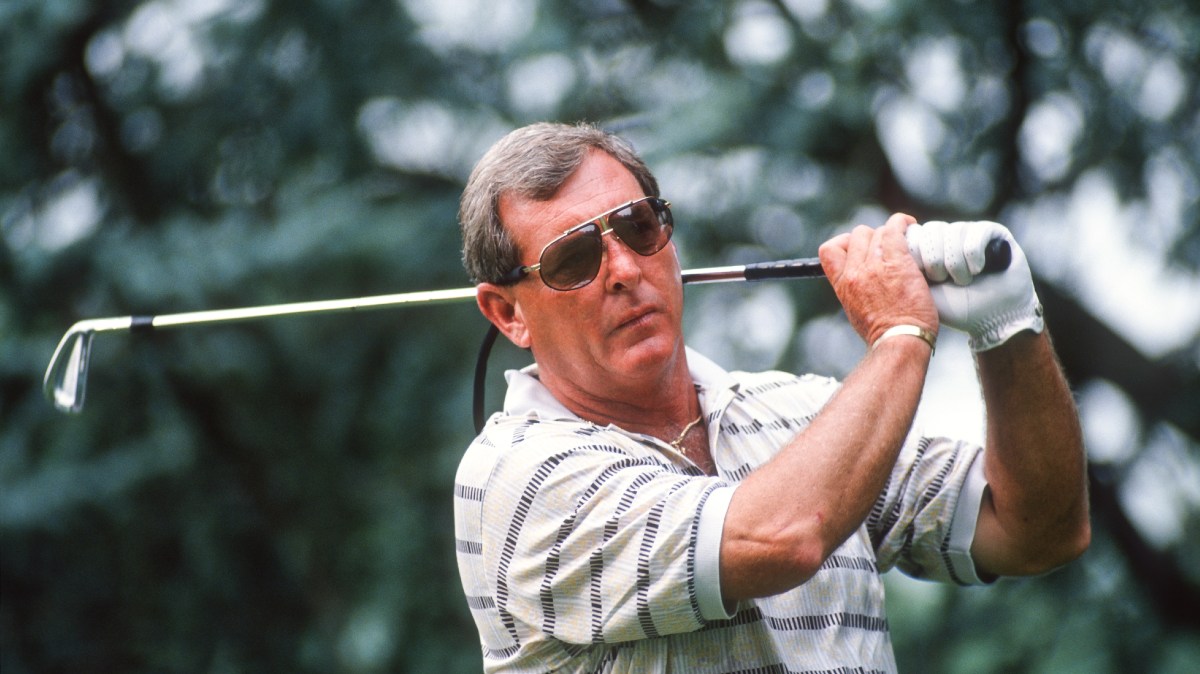
Fuzzy Zoeller whistled while he worked. Grim-faced competitors might look askance as the American golfer with the easy gait cheerfully puckered his lips while walking down the fairways on the final holes of major golf tournaments.
In the best denouements to the big golf tournaments, tension mounts and momentum swings and back forth. The final round of the 1984 US Open at the treacherous Winged Foot course in New York was no different.
Zoeller was already finding it hard to walk because of the back spasms that would plague his later career, but in his own words “kicked all the pain out”. In the final round he had hit four birdies in a row to go seven under par, but then dropped shots on the back nine. The Australian Greg Norman charged. Zoeller’s bogey on the 17th brought Norman level. On the 18th hole Norman holed a miraculous long put from the rough, which Zoeller believed had been for a birdie that would give Norman a crucial one-shot lead.
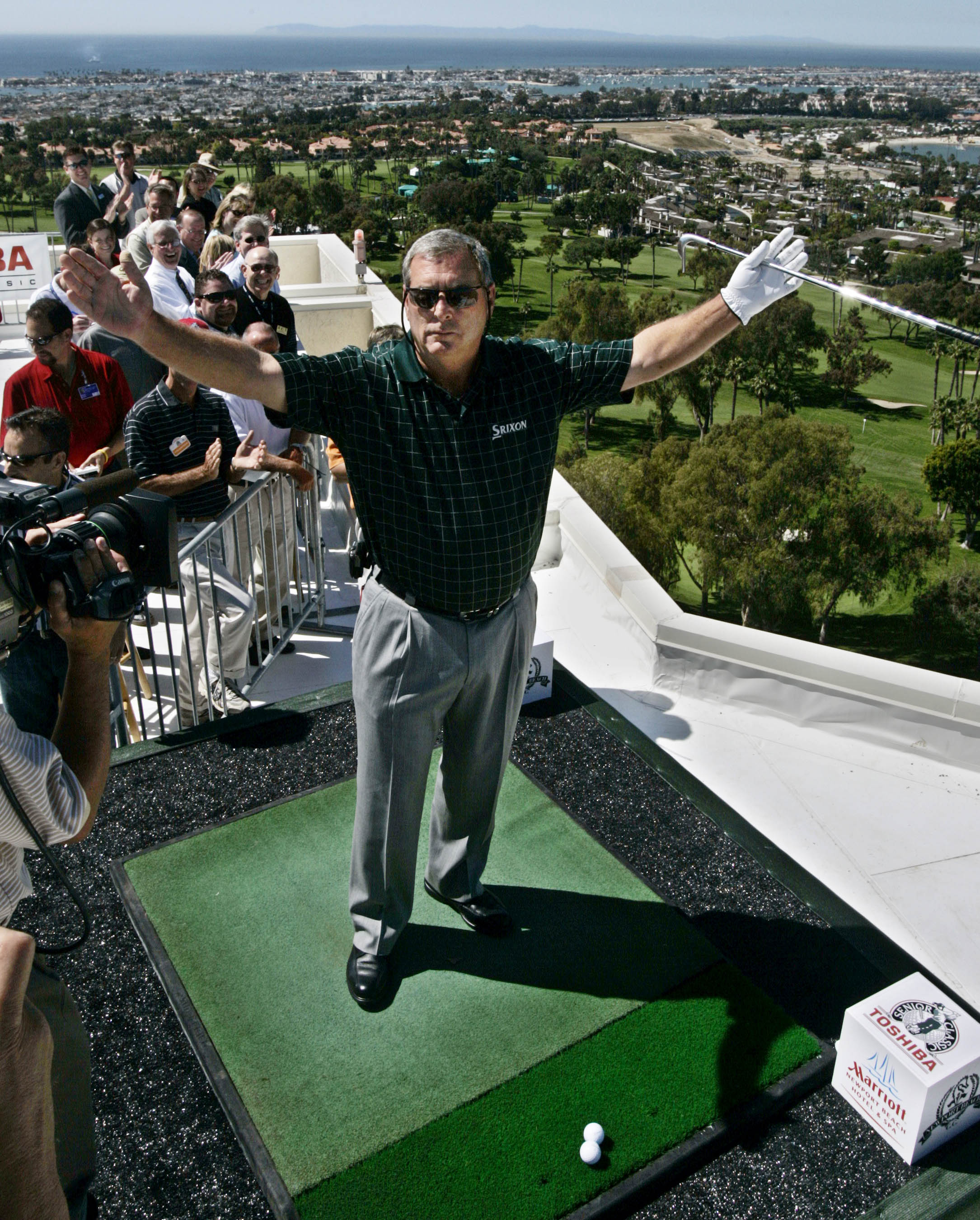
Zoeller was known for his laid-back approach to the game
REED SAXON/AP
It was then that Zoeller realised he was wrong and that he could still win the tournament. It had transpired that Norman had only parred the hole and Zoeller was still level. Zoeller had resigned himself to defeat and later recalled that he waved a white towel as if to say: “Come on Greg, give me a break. You’re making me stay here one more night and live to fight another day.”
Back the next day for an 18-hole play-off, Zoller was ahead by five strokes after nine holes. This time he did not let it slip, hitting a round of 67 to win by eight strokes. Norman exemplified the sportsmanship of the duel by waving his own white towel on the 18th green.
Five years earlier, Zoeller had announced himself as one of the world’s best by becoming the first player to win the Masters on debut since Gene Sarazen in 1935. As well as upsetting the odds, the 27-year-old broke with the traditional restraint of champion golfers by jumping for joy and throwing his putter high into the air after sinking a winning eight-foot putt in a sudden death play-off with Ed Sneed and Tom Watson.
Sneed had played immaculate golf all week to go into the final round six shots ahead of Zoeller. When Sneed bogeyed the last three holes, it looked like Jack Nicklaus would benefit until he bogeyed the 17th hole.
Zoeller thought himself a “damn good player but not a great one”. He was a big driver with a cute short game, but it was his temperament that often made the difference, such as his ability to shrug off poor shots. “Hell, you’ve got to accept that you are going to make bogeys,” he said.
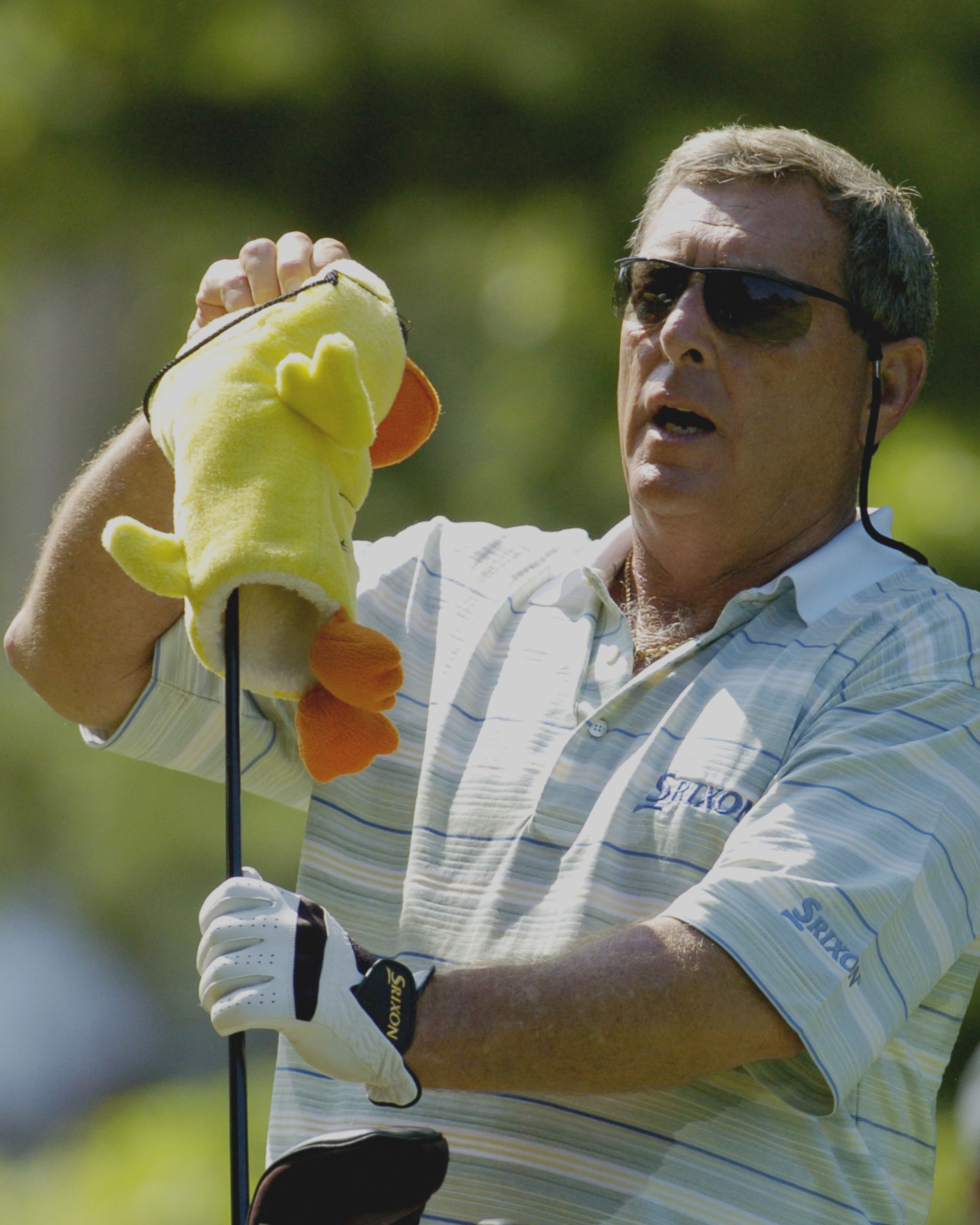
Zoeller brought a sense of fun to the fairways
A. MESSERSCHMIDT/GETTY IMAGES
Above all, he did not overthink shots and believed in playing quickly because rhythm was all-important. “You gotta keep the pedal to the metal if you’re trying to win,” he said. “Once you get it off that gas pedal, it’s hard to get it back down.” Above all, he proclaimed that he was in the entertainment business, stopping to interact with the crowd in the galleries where there were plenty of “Fuzzy fans” willing him to win.
Friendly, loquacious and never short of a wisecrack, Zoeller took a similar quickfire approach when it came to giving his opinions on the game. He always made himself available to reporters and often spoke without engaging his brain first.
When Tiger Woods caused a sensation as a young black man who was clearly on the way to winning the Masters in 1997, Zoeller was sought out for his opinion by CNN. As Woods calmly played his final round 12 shots ahead, Zoeller was generous, gracious and complimentary about the rising star in golf, whose race was notable in a sport dominated by white men.
Then Zoeller joked about the fact that as well as getting to wear the coveted green jacket, Woods would also get to choose the menu at the champions’ dinner the following year. “You know what you guys do when he gets in here? You pat him on the back and say congratulations and enjoy it and tell him not to serve fried chicken next year. Got it? … Or collard greens, or whatever the hell they serve.”
Though not malicious, Zoeller’s racist and patronising remarks were a warning to sports stars everywhere that such inappropriate jokes would no longer go unpunished. Zoeller’s offence was compounded by the fact that his comments were repeated on news networks all over America. He lost lucrative sponsorship deals but more importantly, his reputation as a doyen of the fun and sportsmanship of golf was destroyed.
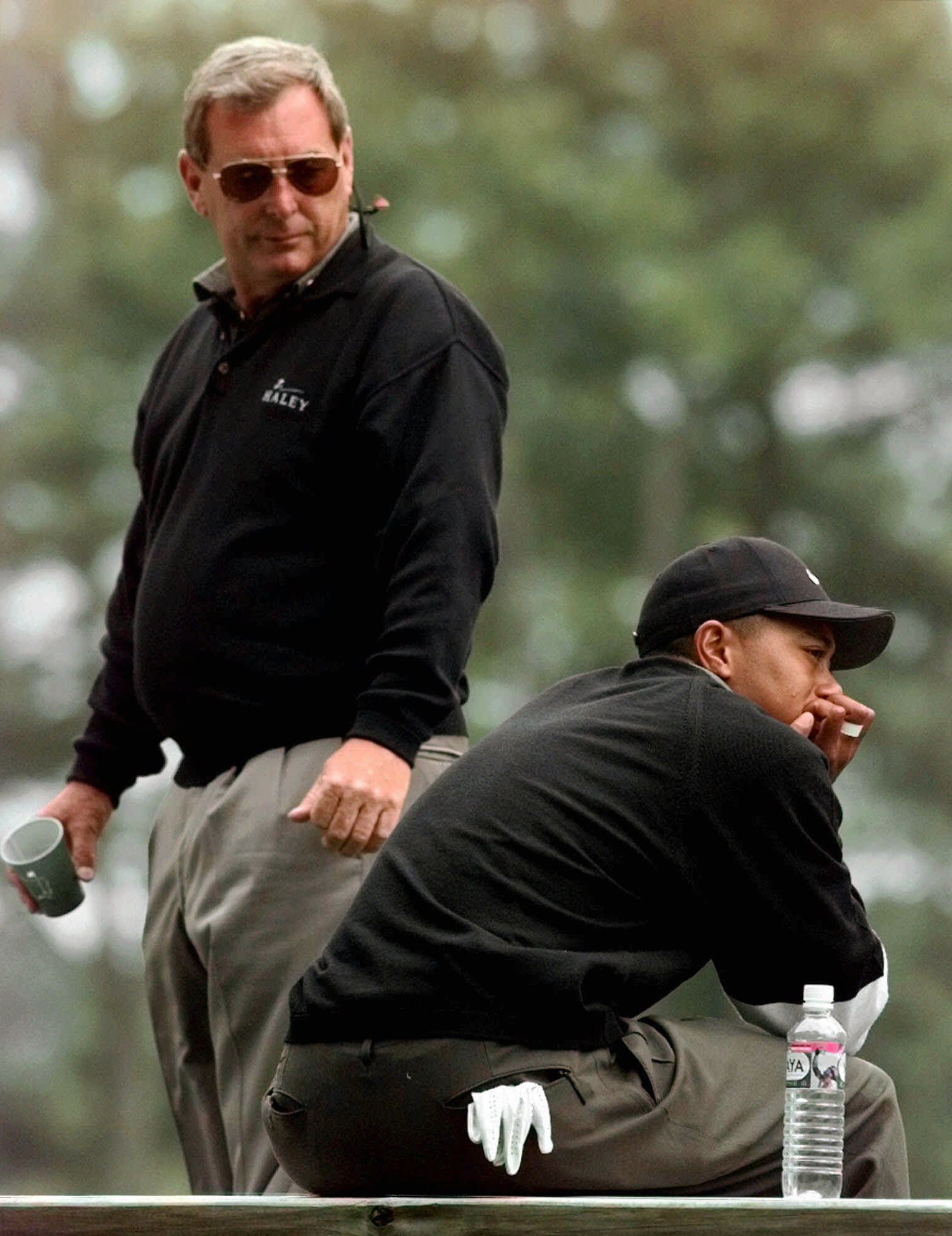
Zoeller and Tiger Woods
ELISE AMENDOLA/AP
Woods accepted Zoeller’s unreserved apology when they met, but Zoeller acknowledged that he never fully recovered from his gaffe. “I’ve cried many times,” he said. “I’ve apologised countless times for words said in jest that just aren’t a reflection of who I am. I have hundreds of friends, including people of colour, who will attest to that. Still, I’ve come to terms with the fact that this incident will never, ever go away.”
Frank Urban Zoeller was born in the town of New Albany, Indiana, in 1951. His father, Frank, was a club pro golfer. Frank Jr, who became known as Fuzzy after his initials FUZ, showed promise at golf while attending New Albany High School. He continued to develop his game at Houston University and turned professional in 1973, but meteoric progress was hampered by his lifestyle. He earned $7,300 on his first year on the tour, spent long before the end of it. “I had wild hair, burnt the candle at both ends and I’ll be the first to tell you I wouldn’t do it over,” he said.
By the Nineties he was carrying more weight and a persistent back injury limited his chances of winning more major golf tournaments, though Zoeller always insisted that he still had it in him to beat young players, or “flat bellies” as he called them.
He almost fulfilled that promise at the 1994 Open Championship at Turnberry. Sharing the lead going into the final round after shooting a third round of 64, he agonisingly missed an eight-foot putt on the 18th that would have tied the record for the best ever round in the tournament. Zoeller finished third overall. He stepped back from the pinnacle of the game with ten titles on the PGA Tour in all, having also represented the US in three Ryder Cups.
By the new millennium he was playing mainly in senior tournaments with some success and designing golf courses. He continued to live on a farm in New Albany, where he bred cattle. Zoeller enjoyed hunting and his stag head conquests would stare out impassively from the walls of the room where he kept an array of guns. His wife, Diane, died in 2021. He is survived by their children, Gretchen, Sunny, Heidi and Miles.
If he never lived down the Tiger Woods controversy, Zoeller was grateful for fulfilling his dreams. Looking at the US Open trophy, he once said: “It’s one of the greatest thrills in the world when you’re on that trophy with all the superstars of the game. You dream about things like that. And then suddenly your dream comes true and here is the history book. They can’t take that dream away from me.”
Fuzzy Zoeller, golfer, was born on November 11, 1951. He died of undisclosed causes on November 27, 2025, aged 74