28.11.2025 18:40
source: StadiumDB.com; author: Jakub Ducki
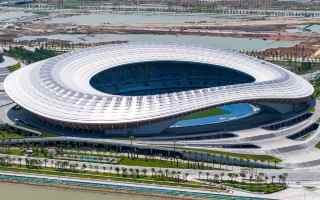
On 5 December 2025, the Greater Bay Area Sports Centre will open in Guangzhou. Located in a 70-hectare park on the banks of the Pearl River Delta, it combines a main stadium, a 20,000-seat arena and an aquatics centre with an Olympic-size pool.
Stadium, arena, aquapark – heart of complex
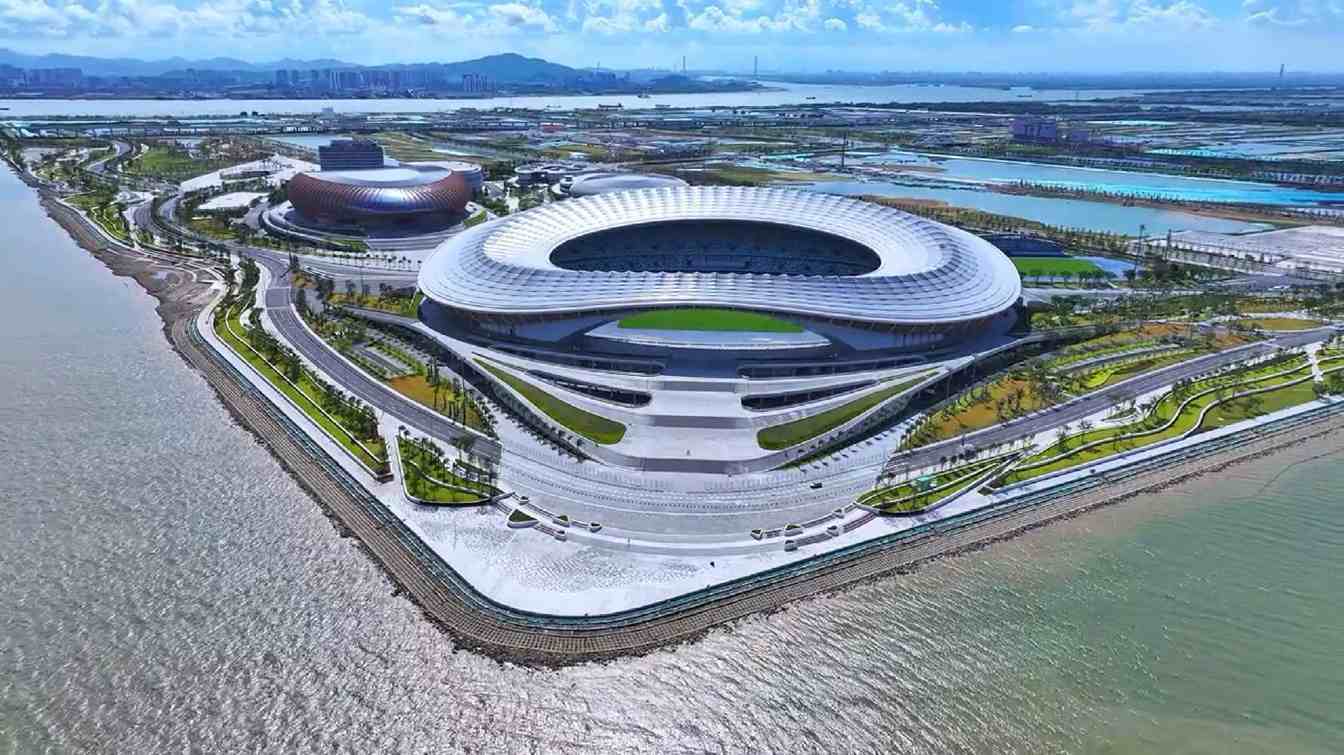
Greater Bay Area Sports Center Stadium has been built in the southern part of Nansha District, on the western bank of the Pearl River, as a key element of the growing Guangzhou–Hong Kong–Macau conurbation. The complex is integrated with Metro Line 18 and the new Shenzhen–Zhongshan Bridge. The project is part of a broader strategy to create a new urban, business and residential district in the heart of the Greater Bay Area.
The central venue is a 60,000-seat stadium with reconfigurable stands that can be adapted for athletics, football and concerts overlooking the Pearl River. Its curved volume rises above the ground, forming an arched opening that draws in cool air from the river’s estuary and frames views of the water. Alongside the stadium sit a 20,000-seat indoor arena and a 4,000-seat aquatics centre with a 50-metre pool and diving tower, designed for top-tier competition.
The complex is complemented by outdoor training pitches, running tracks and on-site accommodation for athletes, all intended to support the development of local schools and sports clubs. The scheme has been conceived as a truly multi-purpose venue – from everyday training to major international events and four sold-out concerts scheduled for opening night on 5 December 2025.
 © 永恒飞翔 (www.douyin.com)
Architecture like a ship’s hull and a fan
Zaha Hadid Architects, working with Guangdong Architectural Design & Research Institute, drew on motifs rooted in local heritage. The fluid, curved forms of the buildings echo the hulls of traditional Song Dynasty sailing ships, reinforcing the project’s waterfront character. The stadium roof recalls a pleated Chinese folding fan – a layered structure wrapping around the seating bowl, protecting spectators from rain and sun while allowing warm air to escape naturally.
Vertical louvres emphasise the buildings’ curves and limit heat gain inside, while extensive covered walkways inspired by Lingnan architecture provide shade and airflow in the subtropical climate. The stadium’s distinctive arched opening in the façade serves both as a strong visual gesture and as a climatic device, channelling cooler air into the spectator areas.
The design takes advantage of Nansha’s mild winters, prioritising outdoor training and passive thermal comfort strategies. Natural ventilation, digitally optimised shading, the layered roof and the orientation of the volumes all work with prevailing summer winds from the South China Sea, reducing the need for energy-intensive cooling systems. Surrounding wetlands form a key part of the site’s flood protection and water retention strategy in the face of fluctuating sea levels.