 © Federico Cairoli
Share
Share
Or
https://www.archdaily.com/1036429/from-legal-constraint-to-local-craft-four-adaptive-projects-by-messina-rivas-in-cunha
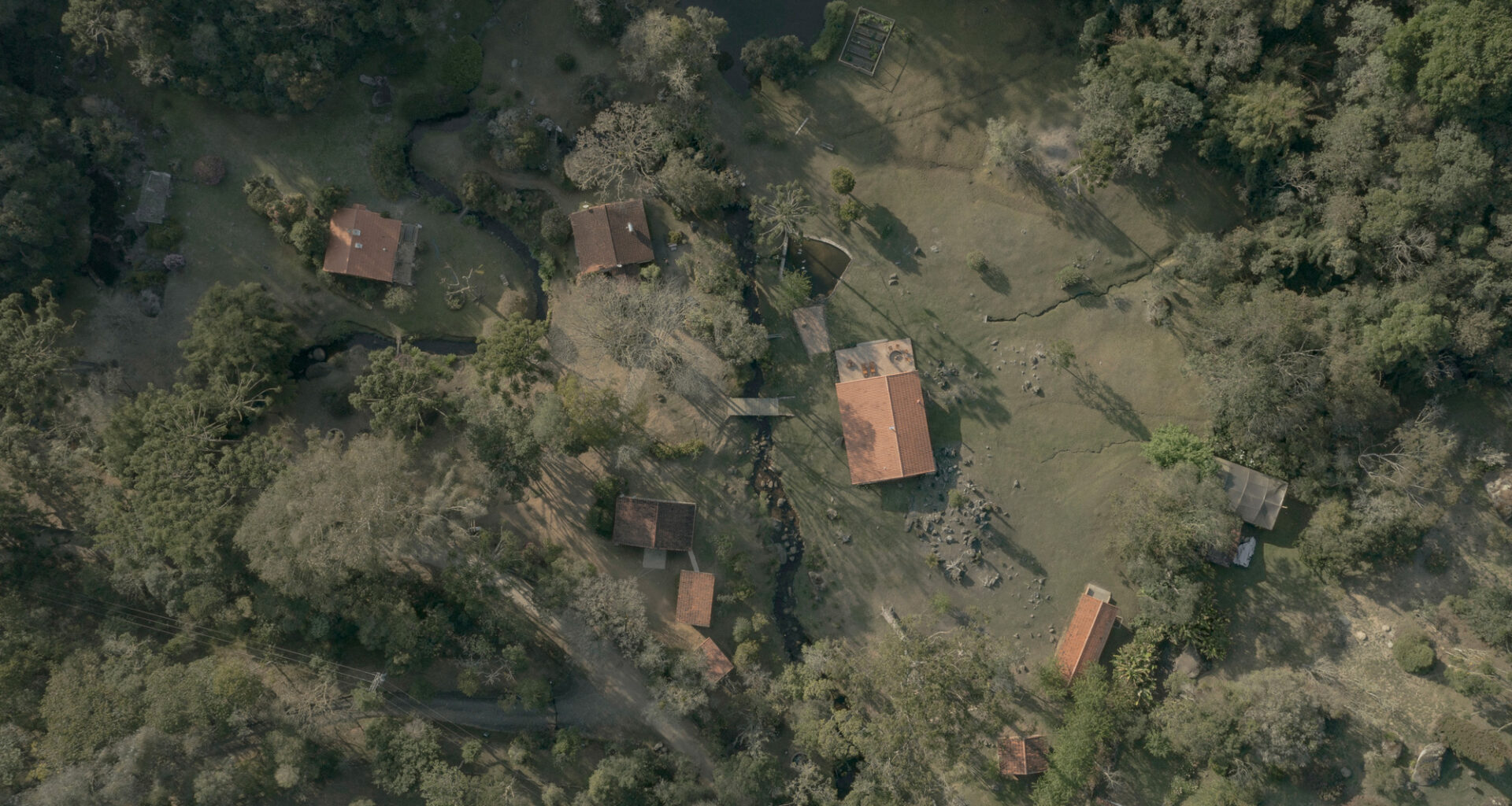
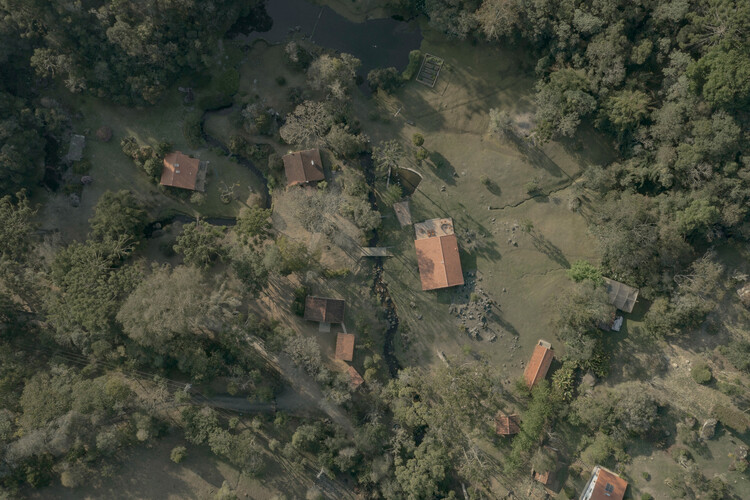
The municipality of Cunha, located in the state of São Paulo, Brazil, is a region known for its inland landscape, hilly terrain, and, especially, a major production of nationally renowned ceramics. It is within this context that the office messina | rivas has been working since 2017, with a set of projects located on a farm. Their work, which integrates design and construction in an indissociable manner, results in interventions that reveal a sensitive approach to pre-existing conditions and their surrounding environment.
The relationship between the office, led by architects Francisco Rivas and Rodrigo Messina, and the site began with a small renovation of a guest house for hosting friends. The project resulted in the transformation of two existing bedrooms into suites and the creation of an external kitchen. Since then, growing demands and the need to adapt existing buildings have driven the design of other projects distributed across the same site.
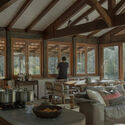
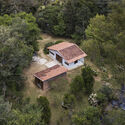
This article seeks to weave together some relationships that permeate four projects carried out for the farm: Nica House, the Laundry Room, the Chicken Coop Studio (Ateliê Galinheiro), and the Main House. As buildings located on the same site and designed for the same client, they share characteristics that delineate their design processes, such as acting upon pre-existing structures. The existence of a creek, for example, imposes a 30-meter Permanent Preservation Area strip, according to Brazilian Forest Code, which prevents the construction of new buildings in that area. Thus, the projects start from pre-existing constructions, demonstrating ways to address growing demands without the necessity of building from scratch.
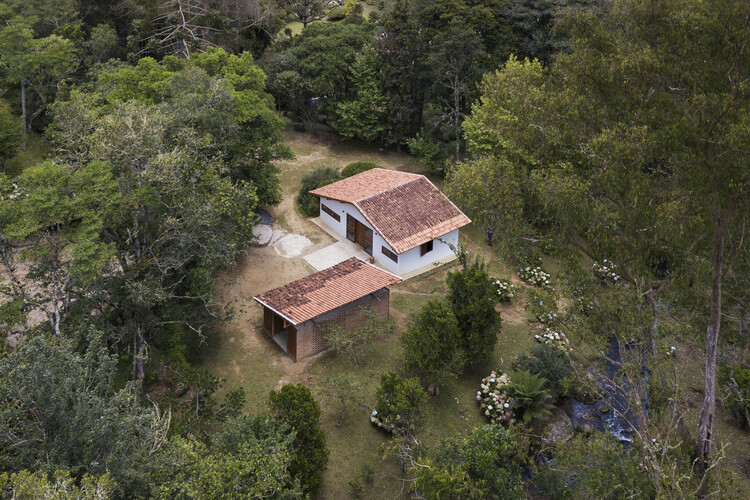 Nica House and Laundry Room. Image © Federico Cairoli
Following the initial two internal renovations for pre-existing houses, the office carried out the design for Nica House in 2018. The need to rebuild deteriorated walls with infiltration points led to the solution of enveloping the construction with a new masonry layer. The removed bricks were reused to reconfigure the internal partitions, which adopted the Paraguayan typological pattern Culata Jovai [1]. This spatial arrangement avoids the use of corridors by placing the bedrooms at the extremities and the living room in the center between them, resulting in a more efficient spatial distribution. The reused bricks were kept exposed in the internal divisions, retaining traces of paint from the preceding use.
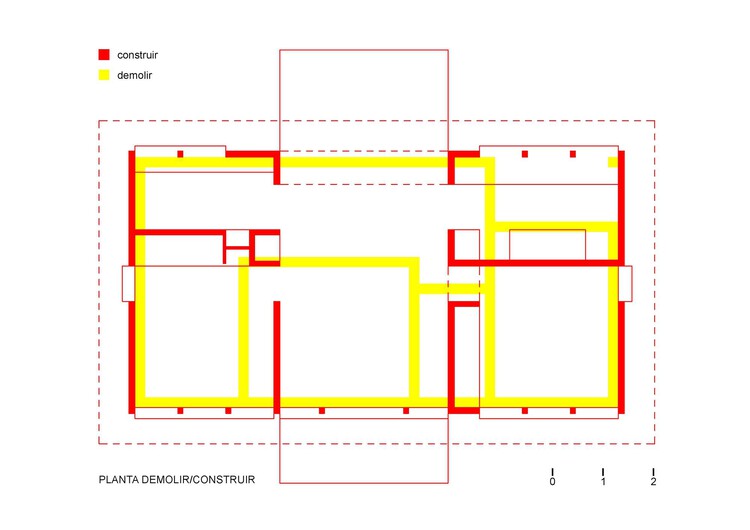 Plan demolition and construction – Nica House
The construction of the Laundry Room took place parallel to that of Nica House. With the alterations to the floor plan and room distribution in Nica House, the laundry room, which was part of the house’s program, was transferred outside, where there was previously a vegetable garden. The project maintained the existing volume, in compliance with local regulations, as was done with Nica House. The foundation of the preceding structure was maintained, but part of the new construction is raised off the ground — a strategy to prevent the accumulation of moisture and the entry of animals. In this project, the office worked with the potter Burrico, who has decades of experience handcrafting clay bricks in the Cunha region [2]. These bricks form the walls, featuring sections in a weave pattern that provide the necessary ventilation for drying clothes.
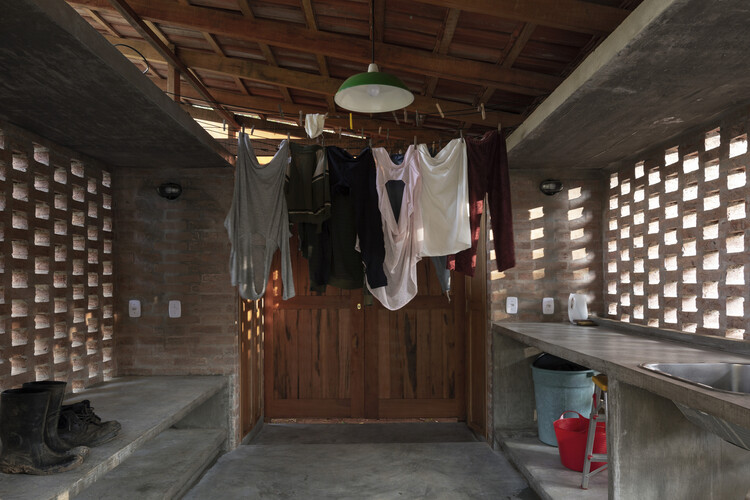 Laundry Room. Image © Federico Cairoli
While Nica House and Laundry Room projects share a direct relationship regarding the chronology of the works and the materiality of the designs, the Chicken Coop Studio and the Main House also share similar connections. Initially, there was a pre-existing chicken coop near the creek, and the clients intended to utilize and transform that structure into the main house of the site, which had previously occupied one of the houses now designated for guests.
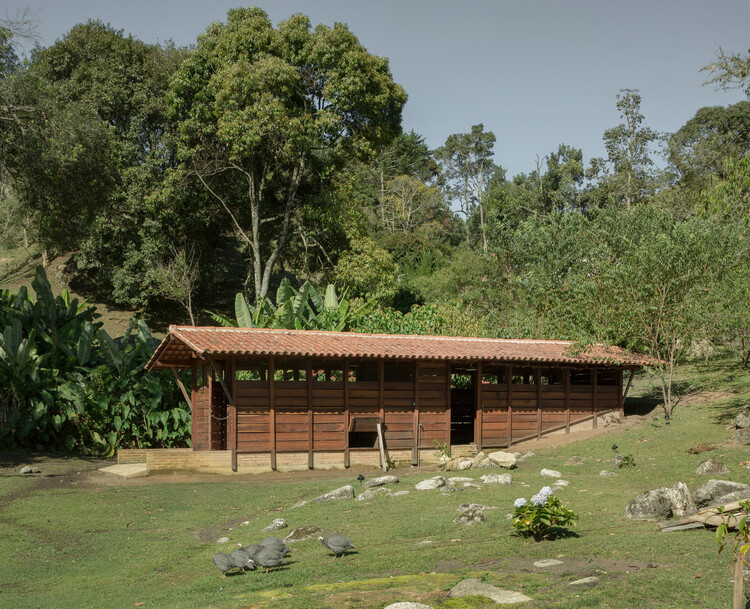 Chicken Coop Studio. Image © Federico Cairoli
Thus, the Chicken Coop Studio was built at a distance that respected the limits required by legislation, utilizing eucalyptus cuts sourced directly from the site itself as raw material. The architects report that upon arriving at the location, environmental agencies were cutting down eucalyptus trees at risk of falling onto nearby residents’ homes. Since there are many specialists in cutting this species in the region, this situation was transformed into an opportunity: the most robust pieces, coming from the central portion of the eucalyptus section, were used in the structure of the Main House, while the thinner pieces, taken from the perimeter portion of the trunk, were adopted for the Chicken Coop Studio.
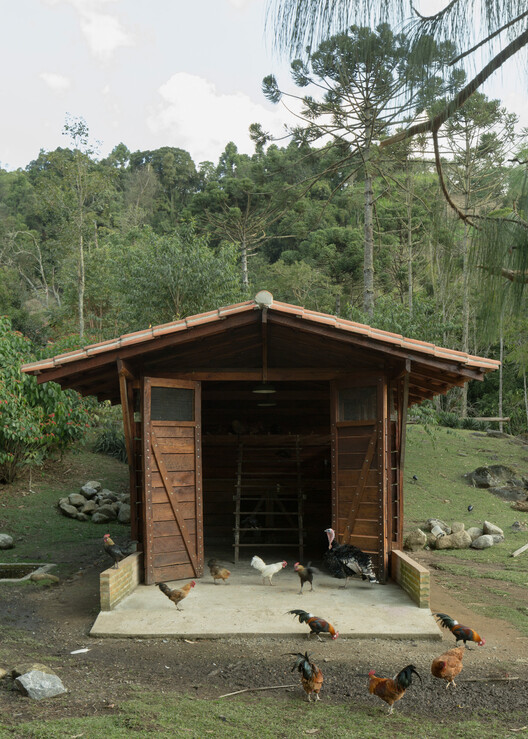 Chicken Coop Studio. Image © Federico Cairoli
The office’s approach of understanding and engaging fully with the problem, rather than distancing itself from it, allowed for the construction of new relationships and openings to deal with different construction techniques and local professionals. The potter Burrico worked on the Nica House and Laundry Room projects, while the wood specialist Leco worked on the Chicken Coop Studio and the Main House. In the latter, there was an even greater confluence of techniques and resources: the office also worked with the builder Carlinhos — whose repertoire included rammed earth (taipa) and wood — and the potter Zé Taubinha. This mutual collaboration can be observed in the constructive variety, such as the Dutch-style wooden doors, the rammed earth countertop in the kitchen, the wooden roof structure, and the masonry walls.
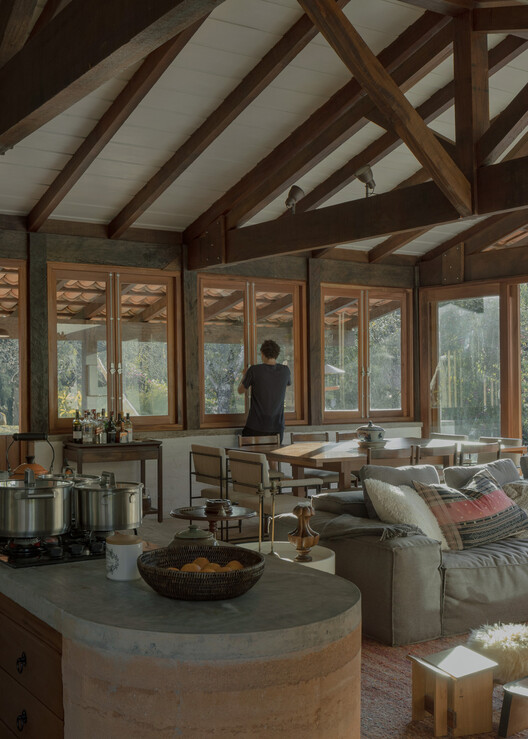 Main House. Image © Federico Cairoli
The projects for the farm in Cunha deal with different forms of pre-existence, be they tangible — such as resources, volumetry, constructive elements, structures, and foundations — or intangible, such as uses, local labor, and techniques. Designing based on pre-existence requires, in a way, understanding the logic and dynamics in which it was embedded so that it can be re-signified through this new operation.
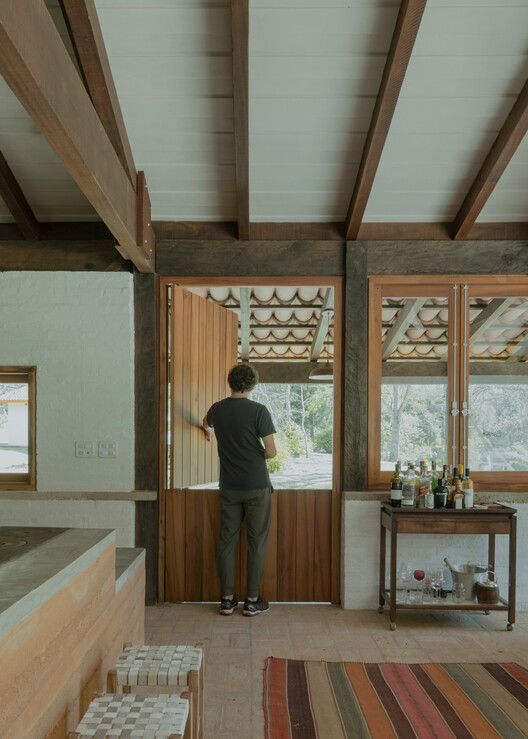 Main House. Image © Federico Cairoli
While there are a series of factors that bring the projects together — such as the client and the fact that they are set in the same location — each one also holds specificities, such as the materials and techniques used, which have complemented a mode of operation guided by the place. Strategies that seek resource efficiency and the adoption of local materials and techniques help us understand that building less does not mean not building at all, but rather building with purpose and attention to the context.
“Projetar pelo meio” (“Designing by the Midst/Context”) is a phrase brought up in a previous interview with the office and is particularly significant for understanding their general practice, not only in the projects on the farm in Cunha. In Portuguese, the word meio holds a multiplicity of meanings that make it particularly interesting for understanding this design approach. Meio can mean “half” — that is, acting upon something that has already begun, being “halfway there” — but it can also mean “context” or “surrounding environment” — it appears in the word meio ambiente (environment), for example.
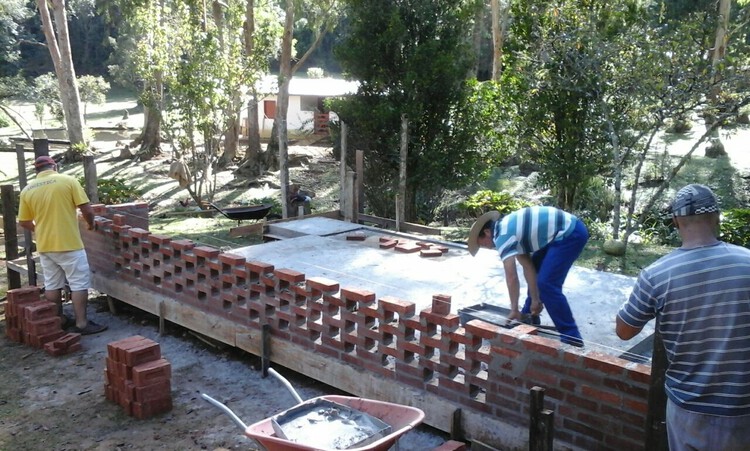 Laundry Room – Construction process. Image Courtesy of messina | rivas
In the first sense, there is an idea of continuity marked by the temporal dimension. In the second, there is an idea of designing by taking into account what surrounds, where the spatial dimension predominates, though not exclusively: the context can also be symbolic. At the farm in Cunha, it meant designing based on environmental legislation, client demands, and local materials, techniques, and professionals.
But there is yet another highly relevant meaning of the word meio, which is “manner,” “mode,” “procedure,” or “method” — the means to achieve something. In this case, “Designing by the meio” can be interpreted as self-referential — learning through one’s own experience, a particularly meaningful reading when considering the experience at the farm in Cunha, where it was possible to deal with different demands, materials, and techniques, but also many shared methods. The office learns from this way of designing and applies it as a conscious, sensitive method across its projects.
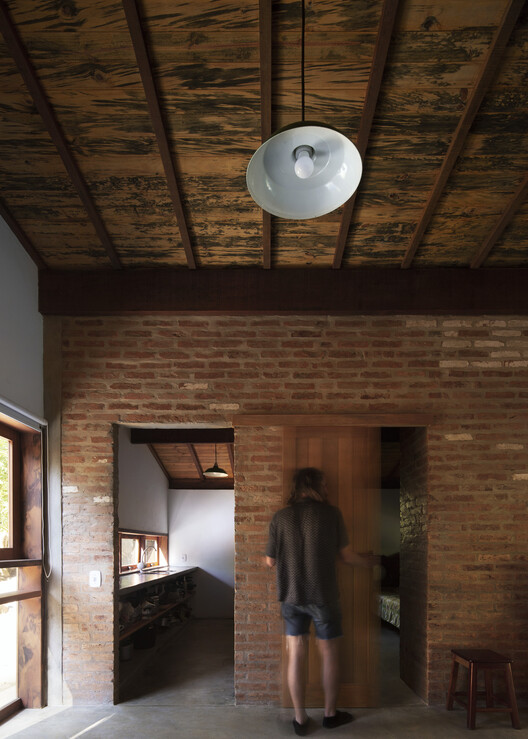 Nica House. Image © Federico Cairoli
Notes:
[1] Francisco and Rodrigo met in Paraguay and both worked at Solano Benítez and Gloria Cabral’s Gabinete de Arquitectura, an experience that preceded the creation of the office and guided their way of designing and building.
[2] In 2019, as part of the 12th São Paulo International Architecture Biennial, under the theme “Todo dia” (“Everyday”), the offices AR Arquitetos, Arquipélago Arquitetos, and messina | rivas, together with photographer Federico Cairoli, presented the work “Terras”, which reveals the procedures of transforming earth in the work of potters Zé Taubinha and Burrico.
This article is part of the ArchDaily Topics: Building Less: Rethink, Reuse, Renovate, Repurpose, proudly presented by Schindler Group.
Repurposing sits at the nexus of sustainability and innovation — two values central to the Schindler Group. By championing this topic, we aim to encourage dialogue around the benefits of reusing the existing. We believe that preserving existing structures is one of the many ingredients to a more sustainable city. This commitment aligns with our net zero by 2040 ambitions and our corporate purpose of enhancing quality of life in urban environments.
Every month we explore a topic in-depth through articles, interviews, news, and architecture projects. We invite you to learn more about our ArchDaily Topics. And, as always, at ArchDaily we welcome the contributions of our readers; if you want to submit an article or project, contact us.
This feature is part of an ArchDaily series titled AD Narratives, where we share the story behind a selected project, diving into its particularities. Every month, we explore new constructions from around the world, highlighting their story and how they came to be. We also talk to the architects, builders, and community, seeking to underline their personal experiences. As always, at ArchDaily, we highly appreciate the input of our readers. If you think we should feature a certain project, please submit your suggestions.