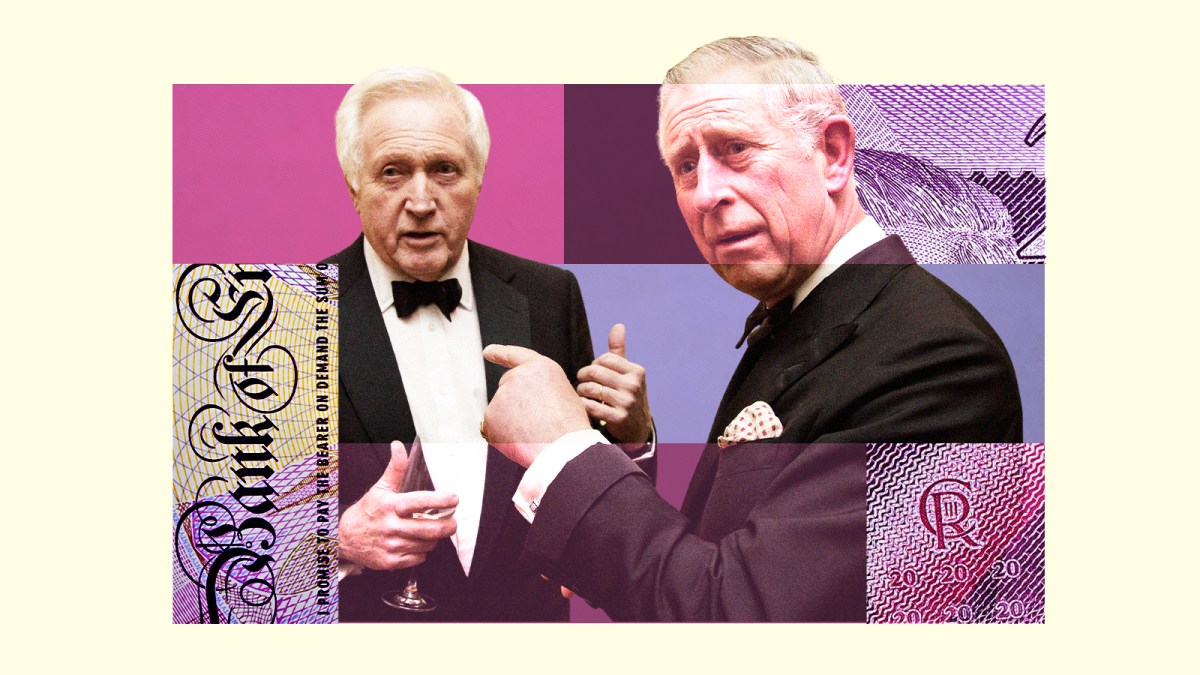
David Dimbleby believes it is a “terrible misfortune” to be born into the royal family. The BBC elder statesman, who spent decades guiding the nation through monarchical pomp — weddings, state openings, jubilees and funerals — says he never envied life inside the palaces he described.
He doesn’t know what the King “thinks his job is”, believes the Prince of Wales must haul the institution into the modern age and says Prince George — “poor boy” — faces an even tougher battle for relevance.
He thinks the Duke of Sussex was wise to head for the Montecito hills. “Making a clean break instead of being the second son in that position makes absolute sense,” he says. “Anyone in their right mind would leave if they could.”
Speaking over Zoom before the release of his three-part BBC1 series What’s the Monarchy For?, Dimbleby, 87, is as effervescent as ever. He reckons he has been a broadcaster longer than anyone else, having guest-presented his first radio programme, Family Favourites for the BBC, when he was 12. Many journalists grow jaded, but Dimbleby still has that twinkle in his eye.

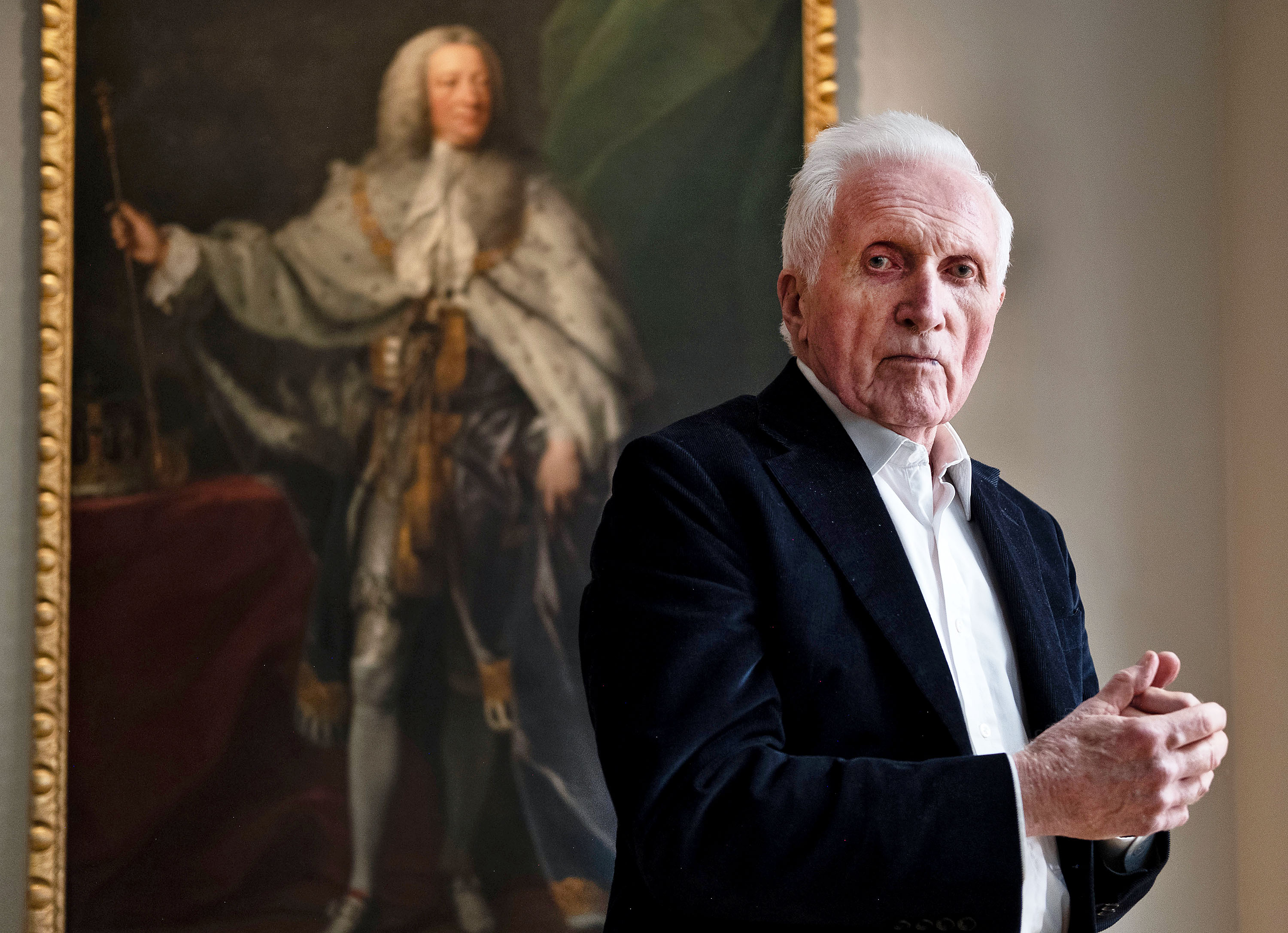
Presenting an instalment of Family Favourites aged 12 and, below, in front of a Shackleton portrait of George II
WILLIAM VANDERSON/GETTY IMAGES
He is the nation’s “hereditary broadcaster”, and with this series is examining our hereditary sovereigns — a running joke at his expense throughout. Broadcasting is the family business: his father, Richard, was a BBC war correspondent, reporting from the ruins of Hitler’s bunker, and his younger brother, Jonathan, used to present Any Questions? on Radio 4.
Dimbleby joined the BBC after studying PPE at Oxford and went on to anchor ten general elections and present Question Time for 25 years. He emerged from (semi) retirement three years ago for Queen Elizabeth’s funeral. The handover to Charles sparked the idea to do an “audit of the monarchy”, examining the Windsors’ power, wealth and place in British life.
“I’m interested in whether the monarchy is fit for purpose for the UK in the 21st century,” he says. “When the late Queen was on the throne, she was part of the structure of the UK. But Charles was kicking his heels all those years, full of ideas about how Britain should be — everything from architecture to climate change and homeopathy … His whole life, he’s been proselytising and suddenly he’s meant not to.” As Prince of Wales, Charles wrote about 2,000 letters a year, many to ministers about policy issues. A former aide suggests in the documentary he may still be sending some.
Dimbleby is also fascinated that, in February, the King took Sir Keir Starmer and Angela Rayner on a tour of his housing project in Cornwall. “He’s the first monarch ever to take a prime minister on a tour of something that he was keen to demonstrate and argue for,” he says. “It’s a breach of what is thought to be the role of the King.”

The King visited Newquay Orchard with Angela Rayner and Sir Keir Starmer
LEON NEAL/PA
The second episode of Dimbleby’s programme examines the royal family’s fortune, much of it derived from the duchies of Cornwall and Lancaster, vast property empires that fund the heir and sovereign respectively. It was George VI, Elizabeth’s father, who persuaded the government of the day that the monarch should no longer pay income tax; his daughter voluntarily resumed paying it in 1993. But the duchies still do not pay corporation tax, and Dimbleby says the household is “defensive” when questioned about the family’s opaque financial affairs.
“Charles is the first billionaire to take the throne,” says Dimbleby. “Why don’t they pay capital gains tax or corporation tax?” Unlike his father, William does not disclose his tax bill. (The Sunday Times Rich List puts the King’s personal net worth at £640 million.)
• How much does the royal family really cost the British public?
‘Fierce secrecy is damaging’
Since 2011, the scandal of Andrew Mountbatten-Windsor’s friendship with Jeffrey Epstein has weighed heavily on the family. Dimbleby calls it “a disaster”, not least because of the Palace’s sluggish handling of the crisis, though he thinks it is “slightly tempered” by many families having a troublesome relative or two. What struck him most, though, was the late Queen’s response. “She did that extraordinary thing, after the disgrace had almost fully played out, of taking him to the Duke of Edinburgh’s memorial service as her escort,” he says. “Whether that was two fingers to public opinion or simple maternal affection is interesting.”

SUNDAY TIMES PHOTOGRAPHER RICHARD POHLE
Dimbleby has also been struck by Prince William’s recent declaration that “change is on my agenda”. What should William do? “I’d try to put myself in the same position as any other citizen and say: ‘I’m here on a hereditary basis, but I don’t need privileges for that; I don’t want people bowing to me. I want a much simpler role, and that will give me time to go around meeting people, talking about homelessness and poverty. So I’m seen not to be living a lavish lifestyle, but as perfectly comfortably off, looking after my family and doing my bit — almost behaving like an elected president might behave.’”
Dimbleby thinks the royal family should be much more transparent too. “I think their secrecy about things that seem to be unacceptable privileges, and the fierceness with which they defend them, is damaging.” It emerged yesterday that the King’s brother, Prince Edward, pays only a peppercorn rent for his Surrey mansion, Bagshot Park near Bracknell, having paid £5 million upfront for a lease of 150 years. Dimbleby also points to the exemption the monarch has from the Equality Act, which prevents employees pursuing complaints of sexual and racial discrimination.
The series touches too on the relationship between the monarch and the BBC, which is described as the “royal ringmaster” for its role in showcasing the pageantry. Dimbleby had his fill of that long ago. “I got so bored of Trooping the Colour I stopped doing it,” he says. “It seemed mainly to consist of whether you could recognise how many buttons the guardsmen had. And I stopped doing the state opening [of parliament] because I got bored of it too, really.”

Trooping the Colour at Buckingham Palace in June
TOLGA AKMEN/EPA
Today the corporation has troubles of its own. This month its director-general, Tim Davie, and head of news, Deborah Turness, resigned over Panorama’s misleading edit of President Trump last year. Trump has threatened to sue for up to $5 billion. Dimbleby is unconvinced: “I don’t think Trump’s going to sue the BBC. He’s out of time in the UK to take a libel claim, and there’s no evidence it was seen in America.” He notes that when other broadcasters such as CBS have settled with Trump, it often appears to be for wider business reasons rather than the strength of Trump’s claim.
A secondary row soon followed when the Dutch historian Rutger Bregman called Trump “the most openly corrupt president in American history” in the BBC’s annual Reith Lectures, only for the line to be edited out. The BBC says it acted on legal advice.
“I would have said that if he wanted to say that, he would have to prove it in the Reith lecture,” says Dimbleby. “It’s easy to say he’s corrupt, but [Bregman] should have explained what his thesis was, [rather than] just insulting him.”
‘Bloody George Osborne’
Dimbleby, who applied to be director-general once and chairman twice, says what the BBC needs now is “firmness of purpose”. He adds: “If it sticks to its guns, it’ll come through. There are constant attacks on the BBC, mainly from the right, and some of them may be justified, but I think a robust defence will win through.”
He backs the return of a deputy director-general to keep problems in check, and says that they or Davie’s successor must have “journalistic experience”. The new director-general will have to negotiate the renewal of the corporation’s charter, which determines its funding and governance for the next decade. Dimbleby would like to see the regressive licence fee — a “big, big problem” — replaced with something more like Germany’s radio tax, which is a household levy, but his idea is to base the cost on the value of the licence holder’s property.
He also wants the World Service to be fully funded by the Foreign Office again: “It used to be, until bloody George Osborne, who gave the royal family their biggest bonanza payout ever, while telling the BBC it had to pay for the World Service.”
What the BBC most needs now, he says, is urgency. “They need to get cracking, choosing new bosses. It’s a vast organisation to have nobody running it.” He smiles, admitting that the job he was once passed over for still has an allure — even if few others see it. “It’s not the most attractive job on earth, except to broadcasters like me, who really love the BBC and think it’s the cat’s whiskers.”
What’s the Monarchy For? begins on Tuesday at 9pm on BBC1 and iPlayer