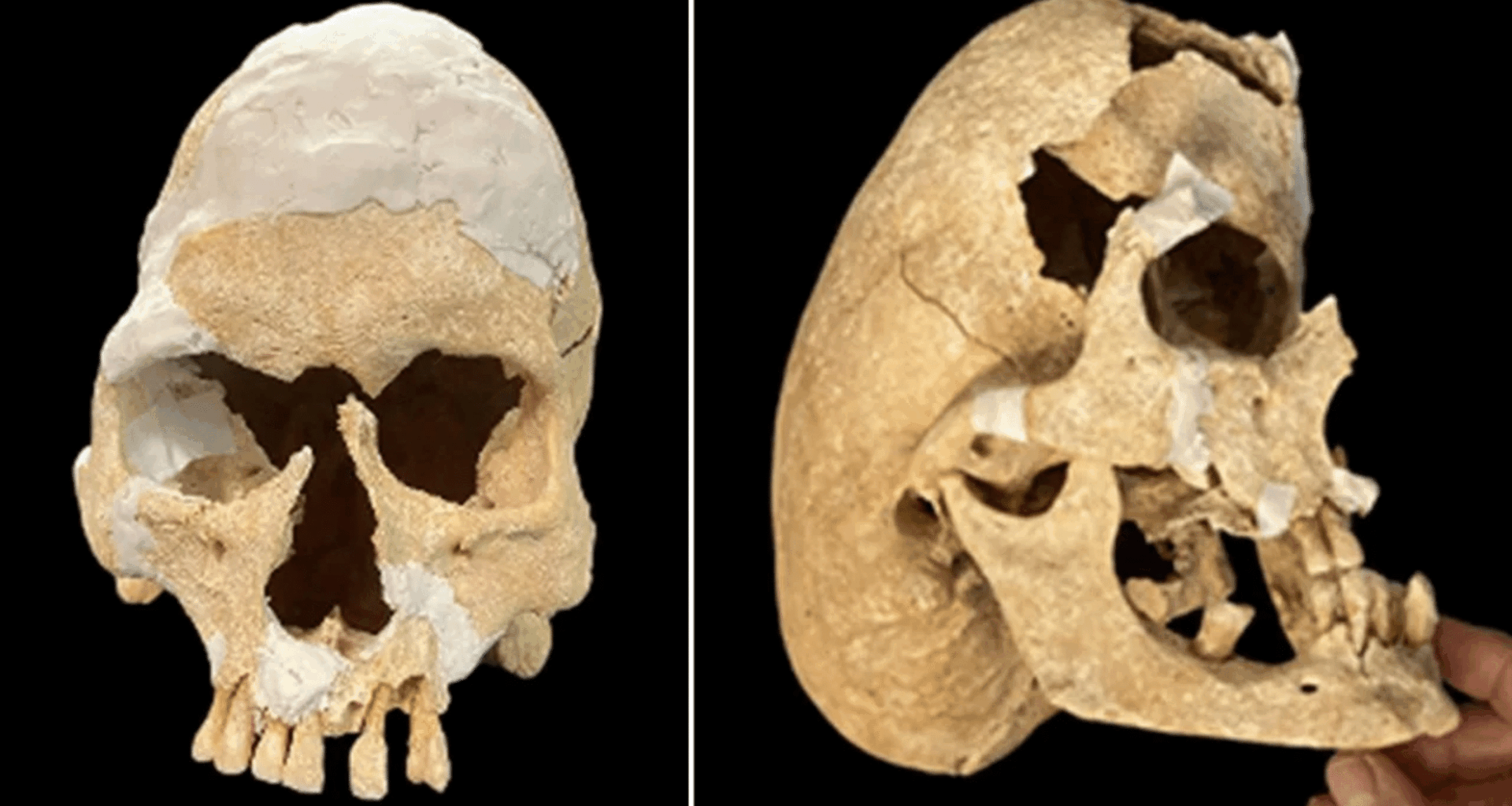
A remarkable discovery has been made at the medieval fortress of Zorita de los Canes in central Spain, where archaeologists uncovered the skeletal remains of a middle-aged man with an extreme skull deformity. Published in the journal Heritage (2025), the study offers new insights into the life of a warrior-monk who likely belonged to the Order of Calatrava, a military-religious order active in the 13th to 15th centuries. The individual’s long, narrow skull, resulting from a rare condition called craniosynostosis, provides a rare glimpse into the challenges faced by those living with genetic disorders in medieval Europe, as well as the physical demands and violent nature of life within military orders.
Unveiling a Medieval Mystery: A Warrior-Monk’s Extreme Skull Deformity
The discovery, published in Heritage, represents a rare archaeological find, shedding light on the life of a man who overcame significant physical challenges in medieval Spain. The individual’s skull exhibited a dramatic elongation and narrowing, a condition that immediately caught the attention of archaeologists. Upon further examination, it became clear that the man suffered from craniosynostosis, a rare genetic disorder that causes the skull sutures to fuse prematurely. In this case, it’s believed that the condition was likely Crouzon syndrome, which impedes normal skull growth and can result in brain pressure and developmental delays. Despite the severe nature of the deformity, this warrior-monk survived into his mid-40s, a rare feat given the conditions of medieval medicine and the challenges such a disorder would impose.
The archaeological team, led by Dr. C. Rissech and colleagues, was able to gather vital information about the individual’s life and death, adding to our understanding of how individuals with such conditions may have lived, fought, and died in the harsh world of medieval military orders. This discovery offers not only a glimpse into medical history but also a deeper understanding of how those who may have been seen as “other” were integrated into the religious and martial fabric of their societies.
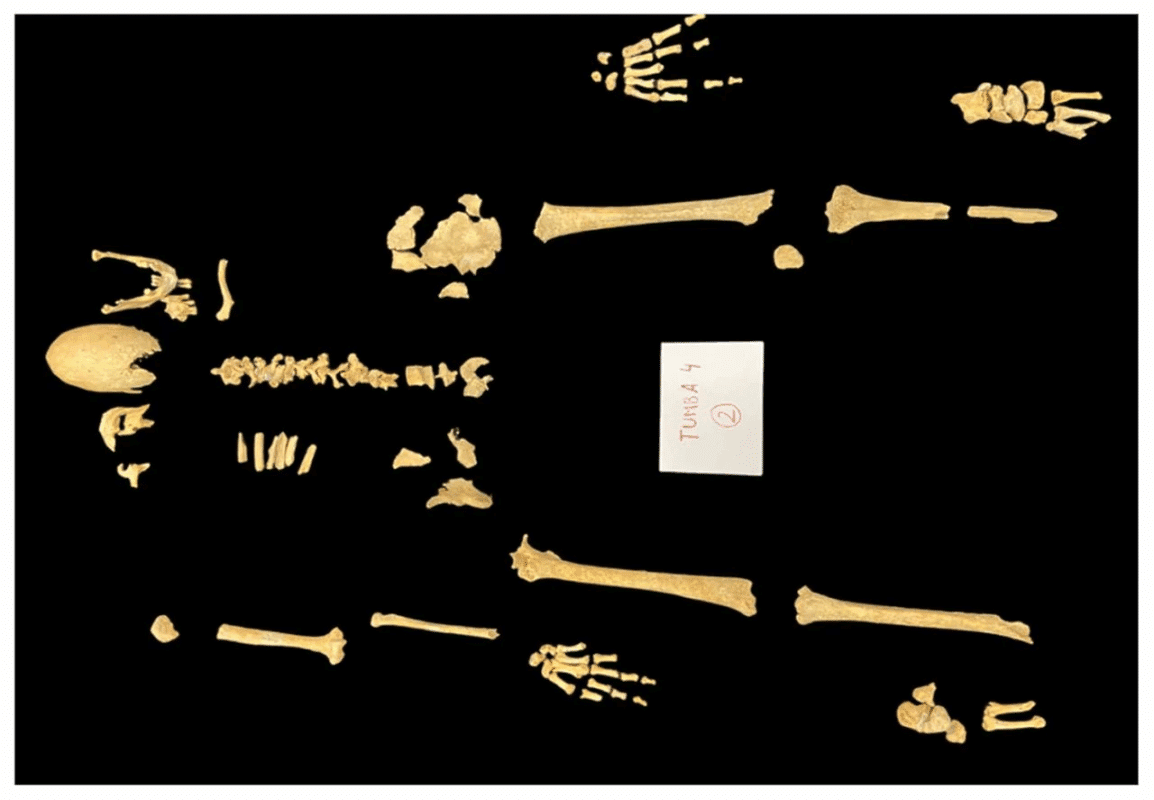 Surviving parts of the skeleton T4.2 from the Counts’ Courtyard cemetery in Zorita de los Canes castle. (Heritage)
Cranial Deformities: A Glimpse into Medieval Medicine and Survival
What makes this find so striking is not only the deformity itself but the fact that the individual survived into adulthood despite the condition’s significant impact on his life. Craniosynostosis, especially when left untreated, can be a severe condition, placing immense pressure on the developing brain and causing developmental disabilities. In modern times, this can be addressed with surgery, but medieval Europe lacked such medical advancements. Consequently, individuals with conditions like Crouzon syndrome were often at a high risk of death in infancy. The fact that this man survived into his 40s suggests he had a degree of resilience and adaptation that was remarkable for the time.
Interestingly, the study notes that the skull deformity did not appear to impede his ability to lead an active life. On the contrary, the man’s postcranial skeleton revealed signs of intense physical activity. Strong muscle attachments on his bones suggest he participated in regular physical exertion, likely in the context of his role within the Order of Calatrava. Despite the challenges posed by his condition, he would have been required to maintain physical strength, discipline, and combat readiness—key traits of any knight within the order.
Life on the Battlefield: Violent Death of a Warrior-Monk
This warrior-monk’s life was not only defined by his rare condition but also by the violent realities of medieval warfare. The skeleton showed signs of blunt-force trauma and sharp-force injuries that likely occurred at or near the time of his death. A deep injury to the back of his skull and another at the left temple suggest that he met a violent end, possibly on the battlefield, in a manner similar to many of his contemporaries. Archaeologists also noted a blunt-force injury to his left tibia, which lacked any signs of healing, further supporting the theory that these injuries were inflicted at or near the time of death.
The nature of these injuries links this individual to others buried in the same cemetery, many of whom are believed to have been members of the Order of Calatrava. These knights were often involved in violent confrontations and military campaigns, especially during the Christian Reconquista. The discovery of this warrior-monk’s injuries adds to our understanding of the dangerous and often brutal lives led by military orders of the time.
The Order of Calatrava: A Unique Military and Religious Identity
The man’s possible affiliation with the Order of Calatrava adds an intriguing layer to this discovery. This order, established in the 12th century, was a military-religious group founded to protect Christian lands from Muslim forces. Members of the order were not only warriors but also monks who adhered to a strict religious code. The life of a Calatrava knight was marked by both spiritual devotion and martial prowess. These knights were tasked with defending territories, engaging in battles, and fortifying castles and strongholds. The discovery of this warrior-monk’s remains in a cemetery associated with Zorita de los Canes castle strongly suggests that he was part of this order.
The existence of such a warrior, who faced the dual challenges of his deformity and the violent demands of his role, brings to light the complex intersection of religion, military duty, and personal resilience in medieval society. His ability to survive such extreme conditions for so many years exemplifies the mental and physical strength required to live in this unique social context.