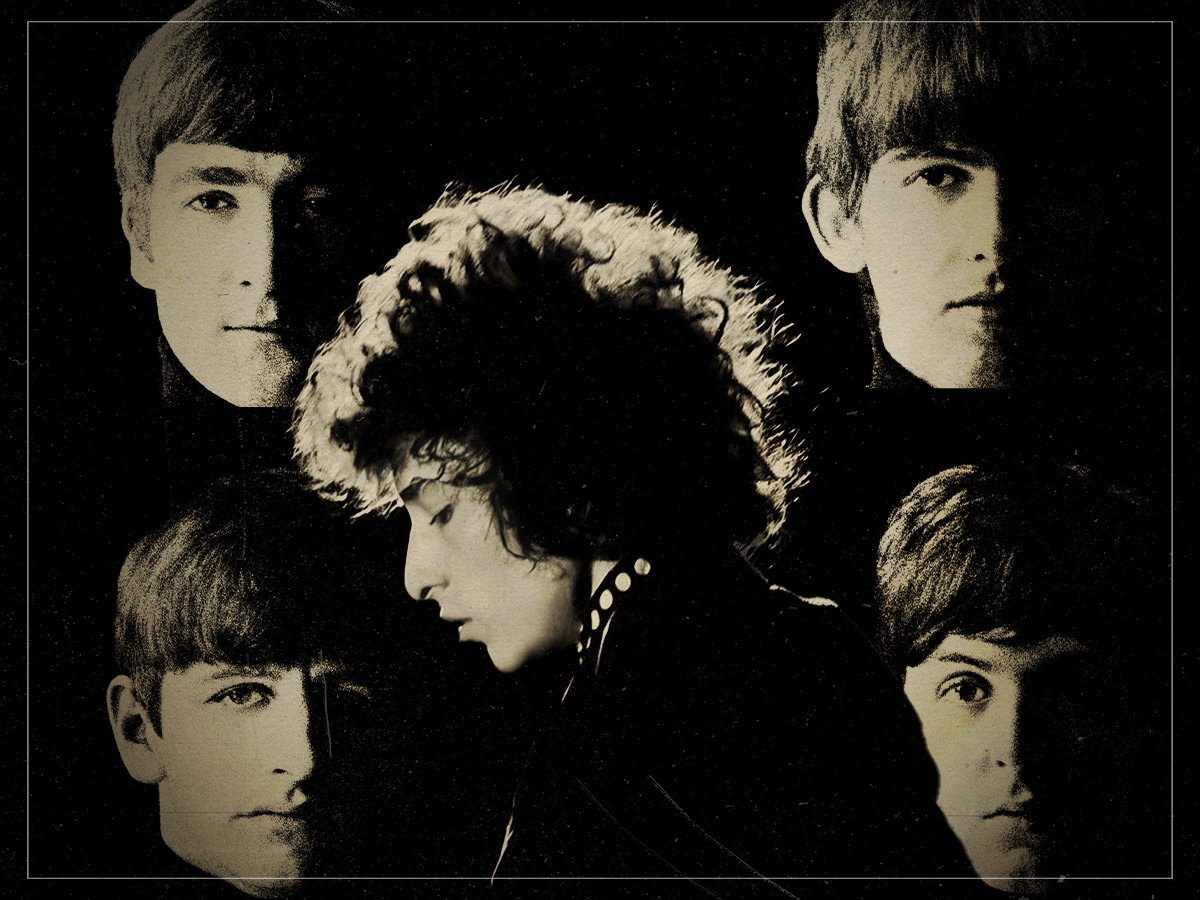
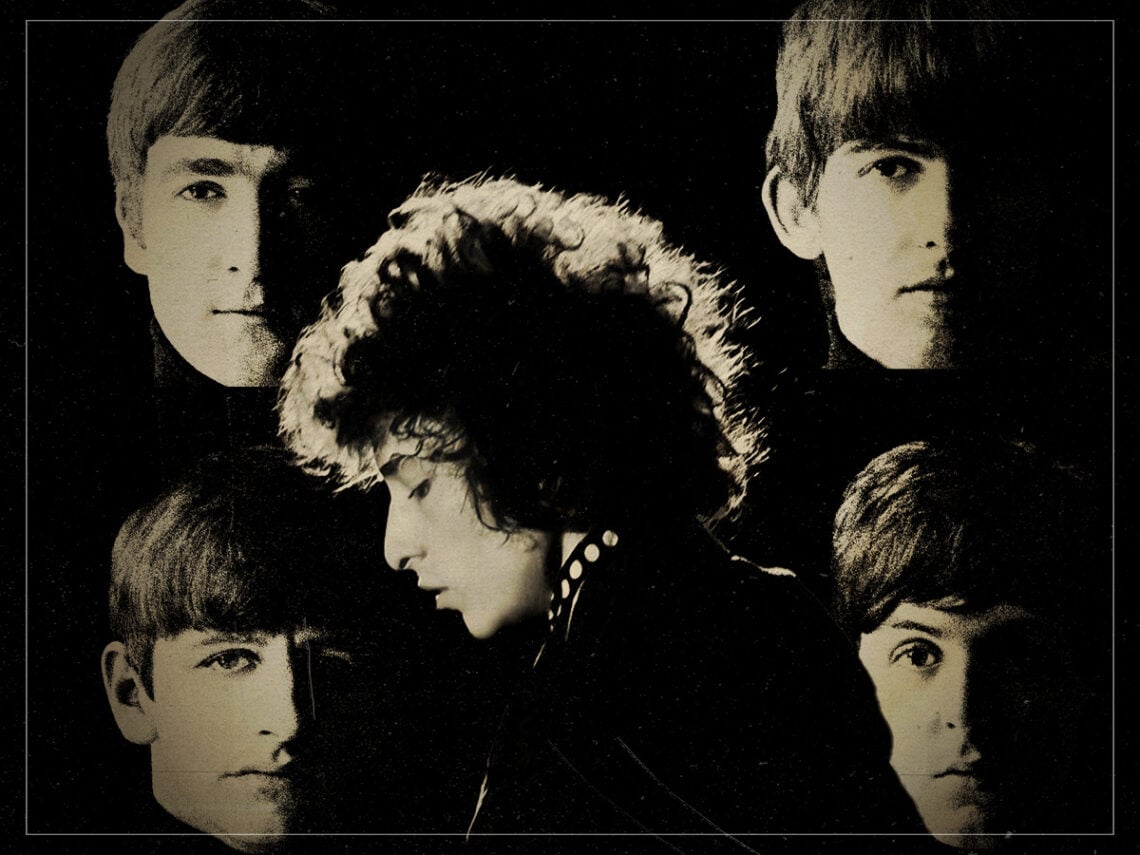
(Credits: Far Out / Bent Rej / Apple Corps LTD)
Sat 29 November 2025 16:00, UK
It’s a testament to just how titanic Bob Dylan’s songsmith stature is in the popular music canon that a thumbs-up for even the lauded likes of The Beatles counts for something.
They were worlds apart way back in the early 1960s, when the world wasn’t quite prepared for the countercultural explosion that awaited. In August 1963, Beatlemania was beginning to rumble in earnest with the UK release of ‘She Loves You’, a gloriously euphoric rush of Merseybeat pop that stood as their strongest single yet and practically rubbed its hands in anticipation of the national chart conquer to come.
Over in New York that same month, Dylan was cementing his presence amid the Greenwich Village folk revivalism with the stirring protest poem ‘Blowin’ in the Wind’. The two practically inhabited different universes: Dylan charting a course of stirring acoustic strumming amid the engulfing Civil Rights struggle, the young troubadour would be heralded by the folk community as the most important voice since Woody Guthrie.
Then 1965 happened. As well entrenched in music lore, Dylan plugged in his guitar, ‘went electric’, and triggered accusations of heresy by the folk purists, incensed at his supposed commercial sell-out. The fact is, rock and roll was just as essential a formative lightning strike to the young Dylan as much as anyone else in his generation, as well as harbouring a quiet admiration for the pop numbers unleashed by the new Fab Four hit factory from across the Atlantic.
The road to ‘Subterranean Homesick Blues’ and ‘Like a Rolling Stone’ was paved with some help from Liverpool’s finest, once stating, “I dug what The Beatles were doing, and I always kept it in mind from back then.”
Having crossed paths in 1964, Dylan had introduced the band to marijuana and the subsequent shift in direction across Help! and Rubber Soul’s more mature and introspective moments. Likewise, The Beatles’ electric whirlwind prompted Dylan to shake off expectations of the lonesome poet act and grab a slice of pop, albeit in his own idiosyncratic fashion, for himself.
The hook was stuck in Dylan upon first hearing the early Please Please Me number ‘Do You Want to Know a Secret’, primarily written by John Lennon but gifted to lead guitarist George Harrison as vocalist. “The radio was on from beyond a wall, and the sound was coming through in static,” he recalled on 2004’s Chronicles: Vol 1. “They were so easy to accept, so solid. I remembered when they first came out. They offered intimacy and companionship like no other group. Their songs would create an empire. It seemed like a long time ago. ‘Do You Want to Know a Secret’. A perfect ’50s sappy love ballad, and nobody but them could do it. Somehow, there was nothing wussy about it.”
He wasn’t wrong. In several dizzying months, The Beatles would be beamed to middle America on their The Ed Sullivan Show debut, and US, then global, domination would continue. Even today, The Beatles still sit as a monolithic institution, for better or worse. Dylan, too, would sail to the celebrated peaks of the 20th-century music behemoth, often compared by his fans as possessing a more profound and culturally essential lyrical pen.
Apples and oranges, however. When asked by NME in 2015 as to his favourite Fab Four moment, Dylan shot straight for The Beatles at their most pop frothiest. “’I Want to Hold Your Hand’…They were doing things nobody was doing. Their chords were outrageous, just outrageous, and their harmonies made it all valid… I knew they were pointing the direction of where music had to go.”
Related Topics
The Far Out Beatles Newsletter
All the latest stories about The Beatles from the independent voice of culture.
Straight to your inbox.