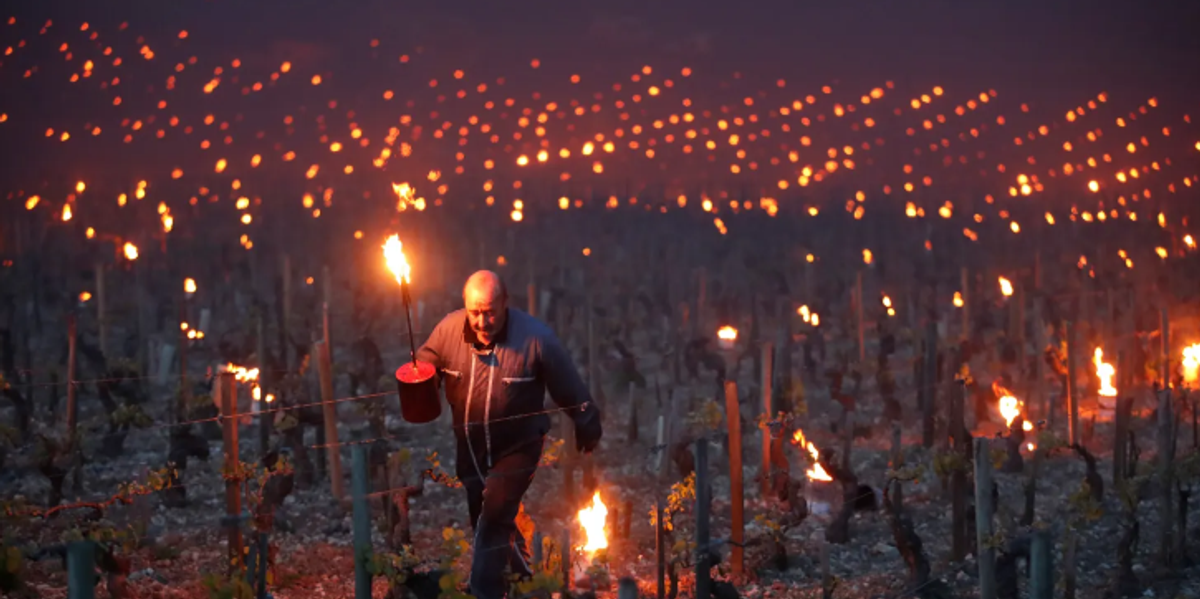
France says it is “determined” to save its wine industry from a crisis, but could this plan backfire?
France has turned to the European Union for help after it allocated additional funds to save its deteriorating wine industry, reports say. euronews.
Earlier this week, the French Ministry of Agriculture confirmed that it has allocated 130 million euros to finance a new, permanent plan for the felling of grape vines, with the aim of “reallocating supply” and “restoring the viability” of farms facing difficulties in the most vulnerable regions.
This process involves uprooting and extracting grapes from the ground, usually using specialized equipment – such as deep plows – and can cost around 1000 euros per hectare, the Telegraph reports.
Minister Annie Genevard has also asked the European Commissioner for Agriculture and Food, Christophe Hansen, to fund the distillation of surplus stock that cannot be sold. This is the process where excess supply is converted into alcohol for industrial purposes, rather than for consumption.
What is behind the vineyard crisis in France?
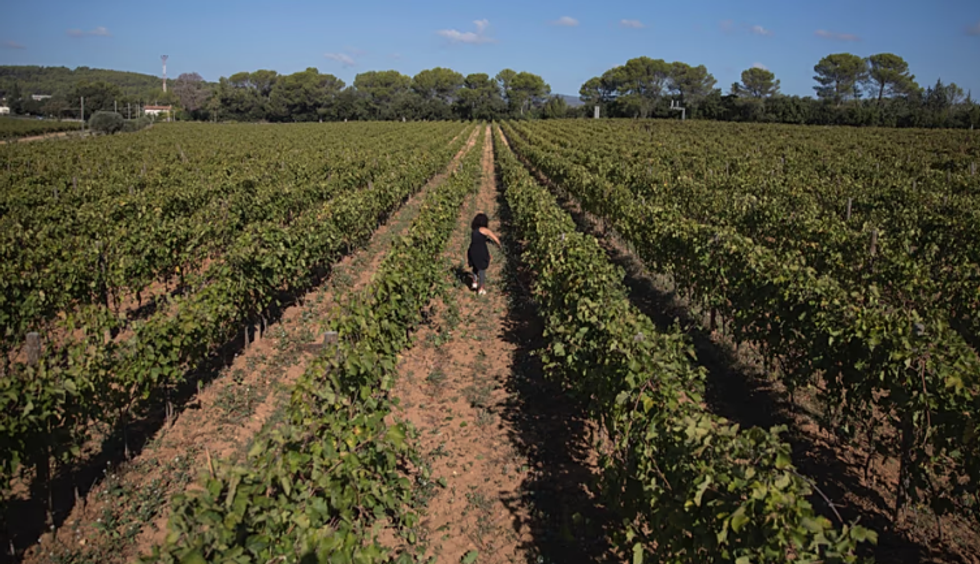
Genevard says the country, which is one of the world’s largest wine producers and has 11 percent of global vineyards, has been facing a “continuous” crisis for several years. In a statement on November 24, she blamed a trio of problems, including “major geopolitical tensions.”
This follows US President Donald Trump’s threat to impose a 200 percent tariff on European alcoholic beverages earlier this year, a move that was quickly withdrawn. However, a few months later a 15 percent tariff was announced on exports to the US, a key market for the French wine industry.
The continued decline in wine consumption, especially red wines, has also contributed to the vineyard crisis in France.
Last year, global wine consumption fell to its lowest level in more than 60 years, while several surveys showed that Generation Z (those born between 1997 and 2021) is avoiding alcohol altogether.
Furthermore, Genevard argued that the sector’s suffering has been exacerbated by climate change, which “has repeatedly affected harvests” for several years.
“This significant new financial effort, despite a particularly difficult budgetary context and pending the approval of the finance law, demonstrates the government’s determination to save our wine industry in the long term and allow it to recover,” says the minister.
“This is not another emergency plan to correct a structural imbalance, it is an investment in our wine sector and in the farmers in these production areas,” she added.
Experts fear that the tariffs, together with currency exchange rates, could reduce annual revenue from French wine and spirits sales by around 1 billion euros.
What is root cutting of grapes?
The idea of removing vineyards is not new. It is thought to have originated in the 1st century, when the Roman Emperor Domitian ordered the felling of 50 percent of the grapes in Gaul (an ancient region of Western Europe roughly corresponding to modern-day France) for fear that they would compete with Roman wines. Since then, subsidies for felling vineyards have been introduced several times, and it is now considered a more economical measure than distilling or storing the surplus.
“Today’s issues are overproduction of wine and a huge drop in consumption, especially of red wines, mainly in the entry-level sector,” Pierre Metz, partner at the Domaine Alain Chabanon vineyard in Terrasse du Larzac, in the south of France, tells Euronews Green.
“Younger consumers typically drink less wine, which pushes retailers to lower prices, which then lowers prices at the producer level as well,” he added.
Metz explains that producers will now only receive around 0.80 euros for a liter of “generic” Bordeaux wine.
“The solution proposed by the producer lobby groups is to reduce production. An unproductive vineyard still costs money to maintain and to avoid the spread of diseases, as there are actually fines to pay if you don’t maintain your vineyard,” he stated.
There are two different ways to remove grapes: temporarily or permanently. The temporary method has the benefit of allowing vineyard owners to reproduce heat-resistant varieties, adapting to rising temperatures, but it still reduces production for several years.
The risk of wildfires

Permanent felling of vineyards has its own risks, including disturbing wildlife and hindering fire prevention.
Europe is facing more fires than ever before as droughts and rising temperatures driven by climate change make many regions of the continent more vulnerable. According to the European Commission, the area at risk of fires in France alone is expected to increase by 17 percent by 2040.
However, well-maintained vineyards could be part of the solution, as research shows that grape plots can act as “fire barriers” by creating spaces in the fuel and slowing the spread of flames.
“Studies in fire-prone areas show that, often, wildfires stop at the edges of well-maintained vineyards — as long as the space between the rows is not covered by flammable vegetation,” adds the EU Department for Agriculture and Development.
Metz explains that the risk of fires can be reduced by planting thorns, grazing wild vegetation and carrying out general maintenance. However, this would come at high costs, which vineyards that choose to cut back their grapes may not be able to afford.
Pruned vineyards can also be replaced by cultivating vegetables and grains, but most choose to leave the land fallow, as this also requires upfront costs.
How is climate change affecting the wine industry?

“Climate change is a daily topic for vineyard owners,” says Metz, pointing to the “multiplication” of hot spells that are being driven by global warming.
This summer, many parts of France were put on high heat alert, as temperatures reached 43 degrees Celsius in some areas of Charente and Aude. The high temperatures were identified as one of the main causes of a large fire that burned 160 square kilometers in Aude.
“This series of heat waves also creates a water problem, as there is less rain and groundwater reserves are lower every year. Some of the large production areas can only survive with irrigation, which is becoming increasingly expensive due to water shortages,” he added.
In June, the European Drought Agency classified a third of Europe as affected by drought, while 10 percent of Europe was in a state of crisis. In France, more than 30 residents of communes experienced water supply disruptions.
Unlike mass producers, Metz chooses not to water the vineyards or use fertilizer, which, according to him, forces the plant to “activate its survival instinct” and “push its roots deep into the soil to seek water.”
He argues that good winegrowers do not need protection and should be able to adapt to the changing environment.
“The real help would be to encourage an increase in quality by reducing the yield per hectare,” adds Hetz, arguing that cutting down vineyards will be like “a drop of water on a hot stone for most producers.” /Telegraph/