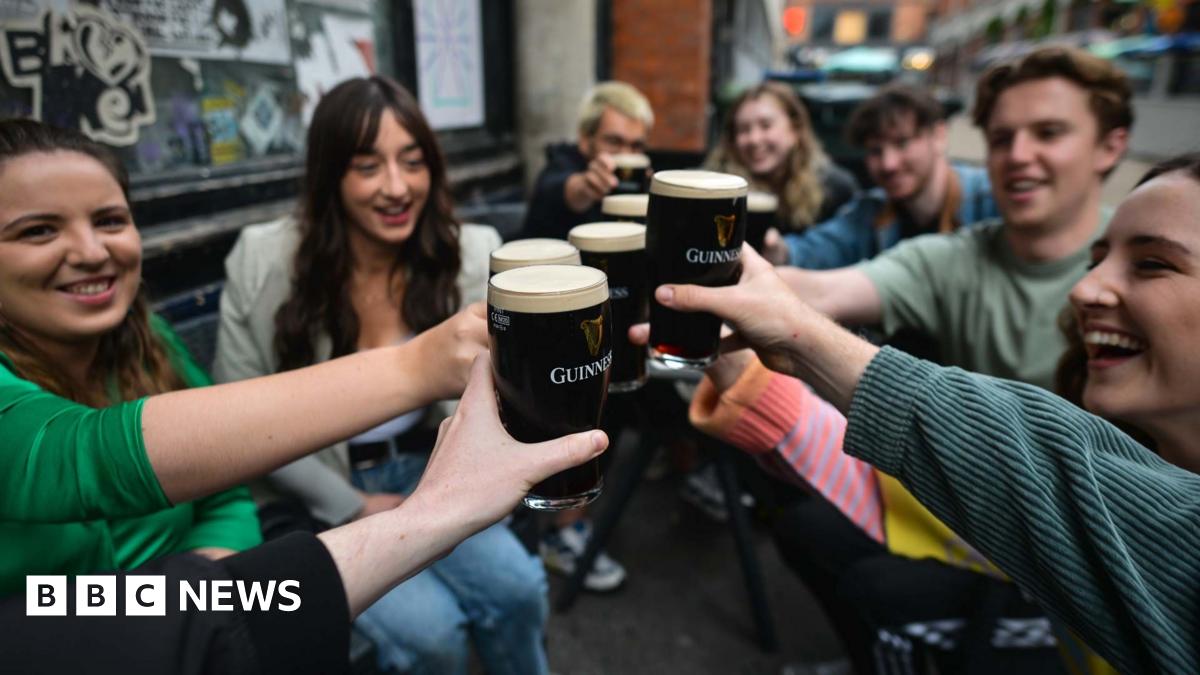
Jack likes a drink and a standard night out will probably involve several pints at his local.
“If you have three pints, that is easy, easy going,” the 29-year-old says. “Probably a heavy night, casually, would be like six-plus pints.”
Jack grew up in County Galway where, he says, young people often start drinking at 14 or 15, “usually in a field with a horrendous can of cider”.
“And then, when you’re 17, your dad brings you to a pub, buys you your pint of Guinness, and that’s where it takes hold.”
Ireland has a complex relationship with drinking and many see alcohol and socialising as inextricably linked, part of the social fabric of everyday life.
Pubs tend to be the focal point of communities where there’s often live music, and many traditional songs celebrate or speak of the harms of having one too many. Huge brands such as Guinness and Jamesons are major exports.
Since 2020 supermarkets and corner shops across the country have had to erect physical barriers between sections selling alcoholic drinks and general products, while some bottles and cans of alcohol now carry among the strongest warning labels anywhere in the world.
First signed into Irish law in 2023, products with the new labels – which state drinking causes liver disease and is linked to fatal cancers – are already on sale in pubs and supermarkets across the country.
But in a move condemned by public health advocates, the Irish government has delayed their compulsory introduction until 2028, blaming uncertainty with world trade – which some believe is the result of lobbying by the drinks industry.
For its part, the industry body, Drinks Ireland, said it did look to the Irish government to give some “breathing space” on health warning labels and that it believes they should be agreed on an EU-wide level.