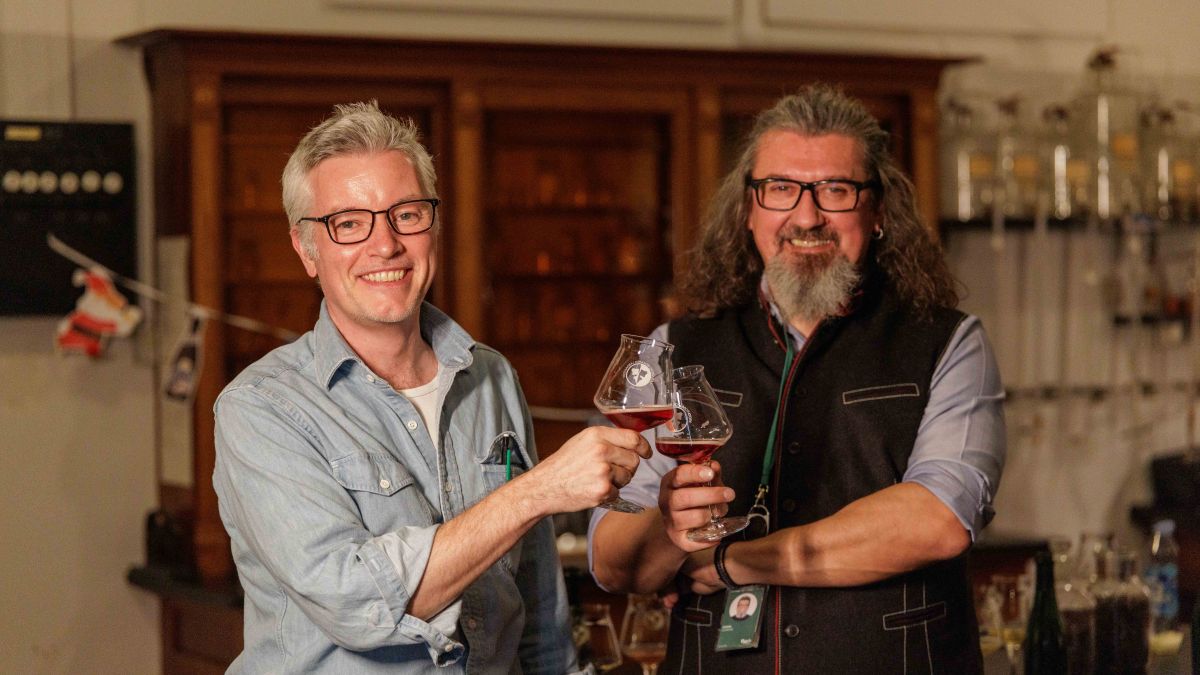
Zoran Gojkovic lifts the glass to the light as if inspecting a rare Burgundy. The liquid glows an improbable, luminous red. Around him, a group of beer experts lean in. None of them has seen anything quite like this before.
The experimental brew is called Rubedo, after the “red” stage in medieval alchemy said to precede the transmutation of base metals into gold. It is made from a unique variety of red barley developed at Carlsberg’s research laboratory, where Gojkovic is director of brewing science.
“It’s not just a beer,” he says. “It’s my life’s work.”

Rhys Blakely tests Carlsberg’s experimental brew
DANIEL URHØJ ANDERSEN/CARLSBERG GROUP
It is also, I can report, delicious: dry, fruity and, at 12 per cent alcohol, dangerously drinkable. A 750ml bottle, if it ever reaches the UK market, will cost about £300.
Would I pay that, when I already wince at £7 for a pint? Probably not. But Gojkovic’s larger point — that brewers must rethink how they do business — is hard to argue with.
Beer consumption is plummeting across Europe and the United States as younger drinkers drift towards cocktails, canned spritzes and kombuchas — or, increasingly, they simply abstain altogether. In Britain, a once-frothy artisanal beer sector has gone flat; more than 100 breweries went bust last year.

Carlsberg’s research lab
DANIEL URHØJ ANDERSEN/CARLSBERG GROUP
Rubedo is one possible response. Fresh from a trip to Shanghai where he says it attracted enthusiasm, Gojkovic argues there is room for “haute lagers”, designed for pairing with food. He believes that beer, pushed far enough, can force its way into settings normally reserved for fine wine.
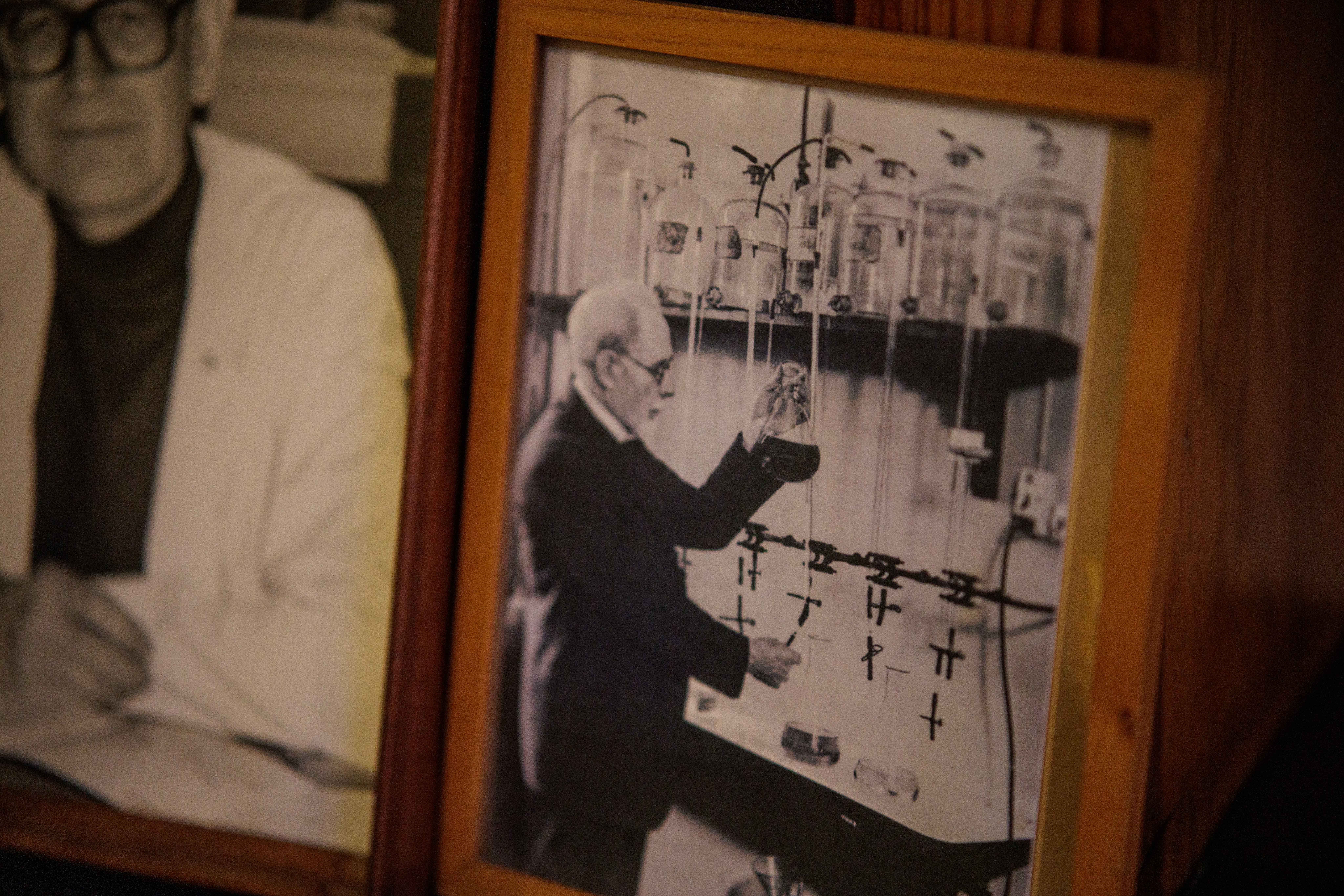
Historically, the Carlsberg lab, where the Rubedo tasting was held, has been enormously influential. A short walk from the brewery’s headquarters in Copenhagen, it is where the pH scale — a measure of acidity beloved of GCSE chemistry teachers — was invented in 1909. In 1883, in the same building, Emil Christian Hansen isolated the first pure culture of brewing yeast, Saccharomyces carlsbergensis, now known as S. pastorianus.
DANIEL URHØJ ANDERSEN/CARLSBERG GROUP
What happened next remains unusual in corporate science. Under the charter of the Carlsberg Foundation, which controls a majority of the brewer’s voting shares, the lab’s discoveries must be given away. Hansen’s yeast, which transformed industrial brewing by shutting out the wild strains that often spoiled beer, was duly handed to rivals. Variants are now used by almost every big brewer.
Gojkovic’s team is now working on new yeasts that would have bemused their predecessors: strains that ferment without producing alcohol, channelling their metabolic energy into creating aromas instead. The hope is that these will make 0.0% beers that smell and taste convincingly beery, rather than like malt-flavoured pop.
• I tested the milder spirits taking over London — and stayed sober(ish)
They are also preparing for a warmer world. Barley, the backbone of European brewing, dislikes drought. So the lab is exploring grains better suited to the century ahead.
Some scarcely register in western diets. Sorghum, a staple across Africa, thrives in heat and dryness that wilt wheat and barley. Sorghum beers have had a reputation for being thin with unpleasant “off flavours”. Yet on Gojkovic’s tasting table sits a 100 per cent sorghum beer that earns murmurs of approval. The experts detect hints of a flinty Sancerre white wine or even sake.

DANIEL URHØJ ANDERSEN/CARLSBERG GROUP
Then comes the £300-a-bottle Rubedo. Even to an untrained drinker, it’s clearly an unusual drink. A rich strawberry-like aroma rises from the glass — a product of the red barley, which was bred from a handful of grains collected decades ago from the Himalayan foothills. When the experts invited to taste it learn that no hops and no fruit have been added, they look shocked. Its complexity, they say, is unexpected. “My mind has been blown,” said Don Tse, a Canadian beer blogger who has tasted more than 30,000 brews.
• The six best strong beers — and how to avoid a hangover
He described it as “sublime … This beer was brewed as a proof of concept, what it ended up proving is that we have yet to find the limit of beer flavours.”
Even now, the strawberry notes pose a scientific puzzle: the compounds responsible appear to be new to brewing science.
Gojkovic explains this with the air of a man who very much enjoys his work. The beer universe already runs from crisp pale pilsners to black imperial stouts. “We’re stretching it even further,” he said.
Tasting notes: RubedoThis high-end beer glows bright garnet in the glass and smells of earthy strawberries (writes Anthony Gladman, award-winning drinks journalist and author). This fruitiness is balanced on the palate by acidity plus a subtle sparkle of carbonation. It finishes bone dry.You might also taste rhubarb, honey, peach and jasmine. None of these are in the beer. It contains no fruit at all despite its vibrant colour, nor any hops.The strawberry aroma is a mystery: the classical compounds responsible for its scent aren’t present, so some novel compound must be triggering that perception. Carlsberg are still researching what it actually is.The beer is made from unmalted red barley and fermented with a yeast isolated from a 1972 Tokaji wine. The barley’s colour is water-soluble. Gojkovic discovered this when he first tried to malt the grain, which involves steeping it in water. This stripped its colour away completely.Brewing with unmalted grain means its sugars are harder for the yeast to access. To get any beer from it at all is technically challenging. To get one as delicious, as balanced and as complex as this is harder again (Gojkovic’s solution involved adding a handful of malted wheat, which brought its own brewing challenges).So, is this one of the most accomplished brews in the world? Probably.