Your support helps us to tell the story
From reproductive rights to climate change to Big Tech, The Independent is on the ground when the story is developing. Whether it’s investigating the financials of Elon Musk’s pro-Trump PAC or producing our latest documentary, ‘The A Word’, which shines a light on the American women fighting for reproductive rights, we know how important it is to parse out the facts from the messaging.
At such a critical moment in US history, we need reporters on the ground. Your donation allows us to keep sending journalists to speak to both sides of the story.
The Independent is trusted by Americans across the entire political spectrum. And unlike many other quality news outlets, we choose not to lock Americans out of our reporting and analysis with paywalls. We believe quality journalism should be available to everyone, paid for by those who can afford it.
Your support makes all the difference.Read more
The head of the UK’s special forces (UKSF) knew soldiers had probably committed war crimes in Afghanistan but failed to act and conducted a “fake exercise” to cover it up, according to damning new testimony.
One of the most senior special forces officers in the British Army told the Afghan war crimes inquiry that he first raised concerns that Afghans were being killed unlawfully and that stories were being invented to disguise the deaths in February 2011.
In a new batch of documents released by the inquiry, the senior officer, known only as N1466, said he tried to get the special forces chief to act, but instead, the director conducted a “fake exercise” of a review that did not get to the bottom of what was happening.
He told the independent inquiry in secret evidence sessions: “I will be clear we are talking about war crimes.”
N1466, who was the assistant chief of staff for operations in UKSF headquarters between 2010 and 2011, said he first became concerned about reports of Afghans being killed on operations around February 2011, when the deaths didn’t tally with the number of weapons recovered.
He became further alarmed by reports of Afghans dying in custody after they had apparently tried to make futile attempts to attack their captors, but he said some accounts were “so implausible as to be ridiculous”.
He explained his shock when he was later shown photos of dead Afghans by military police, which showed people with headshot wounds, despite the official write-up of the incident saying they had been caught in crossfire.
He told the inquiry: “If we had got this right, we could have stopped it in February 2011… Me trying to argue the case with the director, who has clearly, in my view, made a conscious decision that he is going to suppress this, cover this up and do a little fake exercise to make it look like he’s done something, that’s a charade.”
open image in gallery
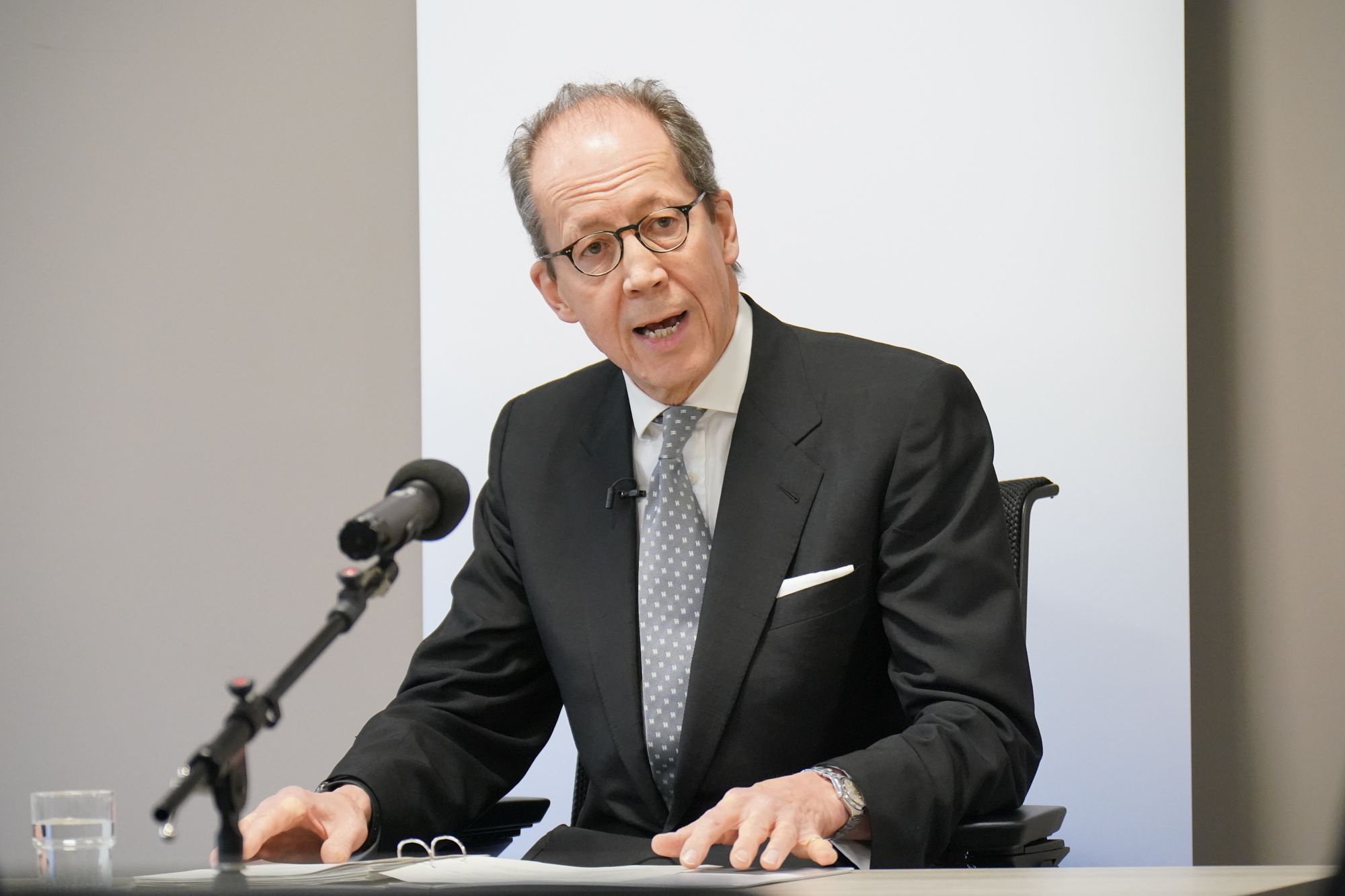
Lord Justice Haddon-Cave, chair of the Independent Inquiry relating to Afghanistan (PA)
The whistleblower said he came to the view in early 2011 that the military’s Special Investigation Branch needed to launch a criminal probe, but that the UKSF in-house lawyer did not provide clear legal advice to that effect.
He said the worrying patterns of deaths were clearly explained to the director of special forces, who “was clearly cognisant back in February that there were things going wrong”.
He accused the director of controlling the information about alleged murders “in a way that I think indicated a desire to keep it low profile”.
He described the director as a “capable, intelligent, astute individual who would have known exactly what was happening”. But instead of referring the incidents to the police, or launching a full investigation, the director commissioned a review into the practice of bringing Afghans with soldiers to search a house after it had been cleared, the inquiry heard.
N1466 said the review “seemed to me to be completely missing the point or, and not necessarily accidentally missing the point”.
In an extraordinary plea to other members of the special forces community to come forward and speak up, N1466 told the inquiry: “It is time to decide what you stand for.”
“We didn’t join UKSF for this sort of behaviour… toddlers to get shot in their beds or random killing. It’s not special, it’s not elite, it’s not what we stand for, and most of us I don’t believe, would either wish to condone it or to cover it up.
“It’s not loyalty to your organisation to stand by and watch it go down a sewer,” he said.
N1466 said that Afghan partner units began withdrawing their support for UKSF in protest at the crimes they believed were being committed. This happened for short periods in 2011 but became more sustained in 2013.
In one incident explained to the inquiry, a soldier from an Afghan Partner Unit pulled out a grenade on the way back from a joint operation with Special Forces Unit 1 and threatened to pull it because he was so unhappy with what he had just witnessed.
In another case recalled by N1466, an Afghan burst into a room with UK special forces colleagues, pulled a pistol from its holster, and pointed at a member of UKSF and said something along the lines of “these guys are all murdering our people”.
Referring to one photo of an Afghan killed by UK special forces, N1466 told the inquiry: “Quite clearly the narrative talks about ‘as they moved towards the target area, two men were seen moving around the guesthouse’. Well, this character doesn’t look like he’s been moving around the guesthouse. He looks like he’s in bed. He’s got a blanket over him and he certainly doesn’t look like he’s running around or engaging anybody with a grenade or about to engage anyone.”
Referring to photos of another incident, he said that “you’re not seeing many other bullet wounds other than head shots”, which didn’t tally with the narrative in the operation reports. He told the inquiry about other casualties: “No one can control a long burst of AK47 fire and put a hole in everyone’s head … It is not plausible and not true.”
He said it didn’t make sense for the individuals to be caught in crossfire, saying: “Why are they all hit in the head?… That really, to me, stood out as being wrong and it doesn’t matter how recently you’ve been to theatre. That makes no difference. That’s wrong.”
He was again concerned about pictures of another incident where dead bodies had weapons laid parallel to them with the stocks up, positioning that “for me isn’t right” if the Afghans had been killed in combat.
Included in the batch of documents released by the inquiry was a summary of an interview between N1466 and the Royal Military Police (RMP).
During the October 2018 interview, he told the RMP of an incident where UKSF1 members sent to clear a compound found people hiding in a room under a mosquito net.
The document read: “They did not reveal themselves, so the UKSF1 shot at the net until there was no movement.
“When the net was uncovered, it was women and children. The incident was covered up, and the individual who did the shooting was allegedly given some form of award to make it look legitimate.”
The Afghanistan Inquiry has released summaries of closed hearings in which members of special forces have given evidence about alleged murders in the wartorn nation between 2010 and 2013.
The inquiry continues.