(Credits: Far Out / Alamy)
Mon 1 December 2025 6:00, UK
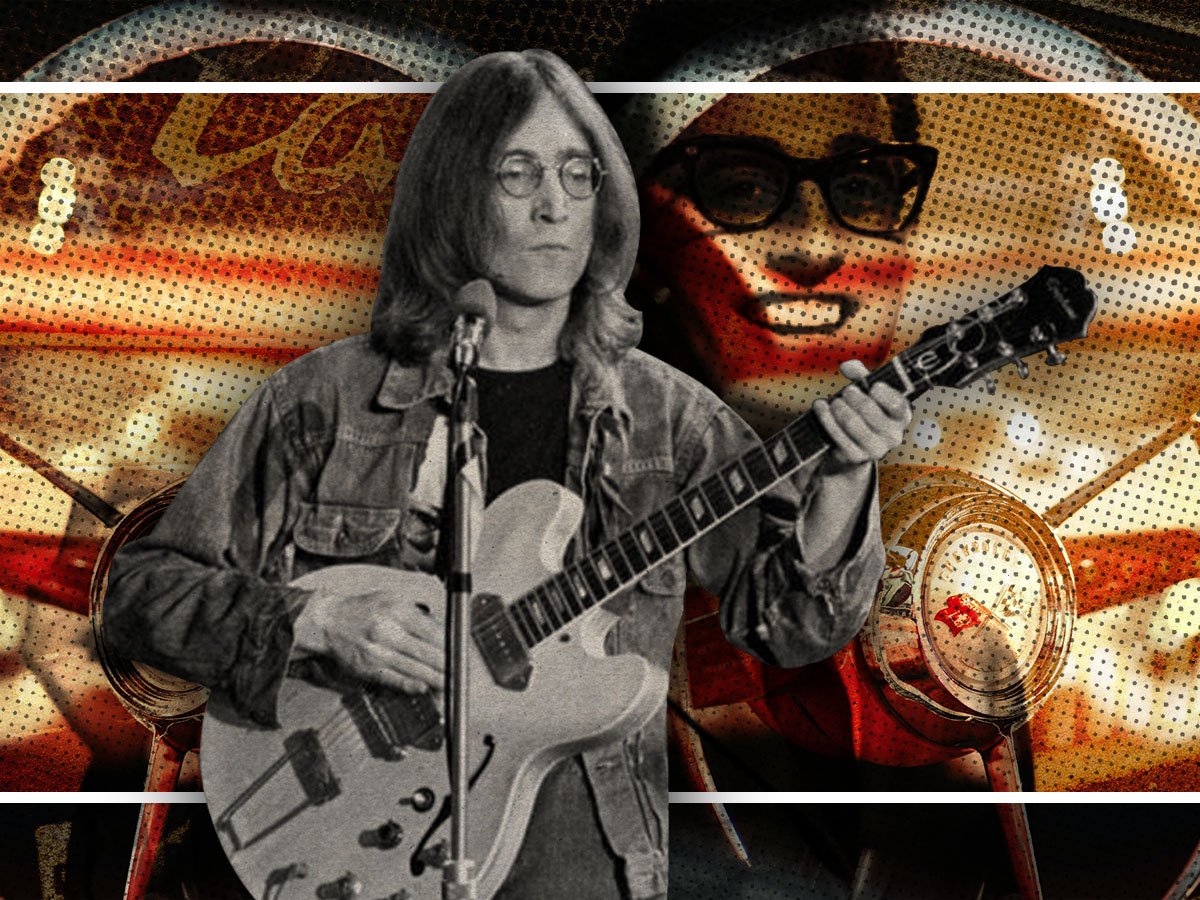
Someone as iconic as John Lennon would typically be too absorbed by their own projects to really take much notice of anyone else.
But in so many ways, both sonically and otherwise, this was a man like no other. Despite having one of the most prolific back catalogues all of history, as well as an equally blazing but enigmatic persona to go with it, Lennon always had his finger on the pulse of not just where music was headed in the future, but the pillars of the past which created it.
In this sense, although his time with The Beatles and his own solo ventures took him into a far more kaleidoscopic land than anyone could have imagined initially, he never forgot those pivotal founding roots of what made him want to become a musician in the first place. This had nothing to do with psychedelia or peace campaigns – this was good old-fashioned skiffle and rock and roll.
From the early days of the 1960s, this had been the original jumping off point from where the Fabs – and before them, The Quarrymen – launched, and although they obviously traversed a long way away from this over the ensuing years, the genre was always the first love Lennon held closest to his heart.
As such, when it came to his 1975 classic covers album Rock ‘N’ Roll, there was only one direction that the record could ever head down. For obvious reasons, this largely revolved around the classics, but there was one Buddy Holly tune included for the specific reason that Lennon knew it “backwards”.
Yet for something he claimed to know allegedly better than the back of his own hand, Lennon admitted that it took a lot of energy to get his own version of ‘Peggy Sue’ down to a tee. “So the last five or six tracks—which sound completely different if you ever check the album out — were all done in about four days, you know,” he explained. “Two a night, like ‘Peggy Sue’ and others I really knew backwards. It cost a fortune in time and energy, and it was the most expensive album I ever made.”
In some ways his intimate knowledge of the tunes must have come as some level of comfort to Lennon and those around him, as elsewhere the process of the album was in freefall. Between lost tapes, alcoholism, and Phil Spector ending up in a coma for a time, it was safe to say that it was all a bit of a mess on the outside.
But inwardly, this was Lennon in his happiest sonic place of them all. No bandmates, no politics, no compromise to have to put up with. It was just him, the microphone, the instruments, and all of his favourite tunes from back in the day. You could look at it far too poetically and get emotional about the symbol of a man revisiting the music that changed his life, but on the other hand, it was just good old rock and roll.
Related Topics
The Far Out Beatles Newsletter
All the latest stories about The Beatles from the independent voice of culture.
Straight to your inbox.