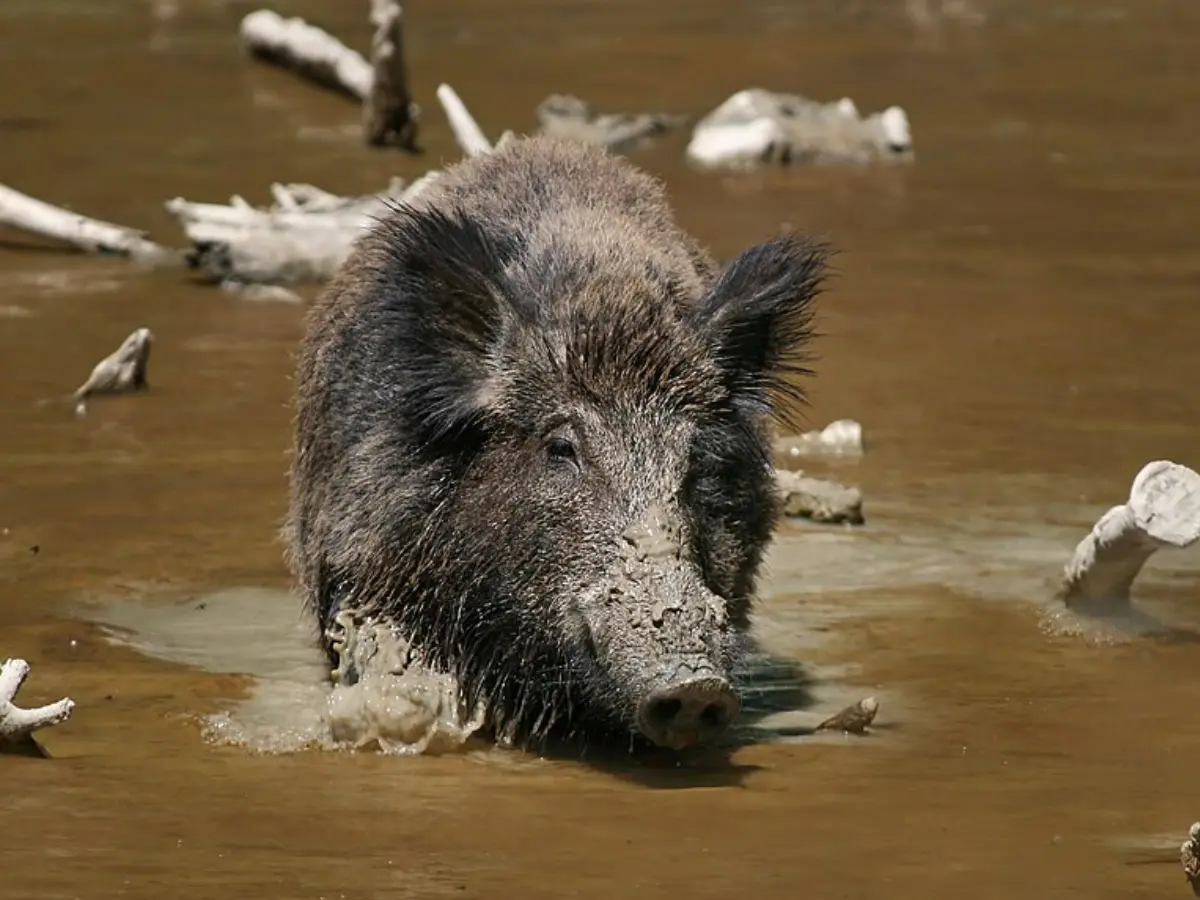
Authorities have raised the alarm after hunters in California found wild pigs with blue insides. They say the flesh is “neon blue”, like blueberry. This led to an investigation, which noted that the dramatic colour change had happened because the pigs were contaminated. Reports suggest that the pigs have turned blue because of rodenticide poisoning. A warning has been issued throughout Monterey County to avoid consuming the meat of such game. The pigs seem to have been exposed to the chemical compound diphacinone, which is found in rat poison. It is dyed blue for easy identification. However, California has restricted its use since 2024. California’s wild pigs are hybrids between domestic pigs and European wild boars.
Pesticide investigations coordinator, Ryan Bourbour from the California Department of Fish and Wildlife (CDFW), warned hunters that “the meat of game animals, such as wild pig, deer, bear, and geese, might be contaminated if that game animal has been exposed to rodenticides.” “Rodenticide exposure can be a concern for non-target wildlife in areas where applications occur in close proximity to wildlife habitat.”
Add WION as a Preferred Source
What is the poison turning wild pigs blue in California?
Diphacinone is commonly used to control the rodent population. It acts as an anticoagulant and causes severe internal bleeding. It reduces vitamin K in the body and causes animal livers to prevent the production of the clotting factors needed to prevent internal bleeding. Diphacinone remains active in the dead animal’s tissues for some time, even after it is cooked. Eating contaminated meat can make other animals and humans seriously ill.
Experts have been raising concerns about the use of diphacinone because it often ends up in non-target animals, either through direct consumption or by feeding on the affected dead animals. This impacts owls, bees and any other animals that prey on them. The CDFW has urged caution while using the chemical, saying that it should be ensured that non-target wildlife are not using the area where the pesticide is to be applied. The wild pigs are omnivores and are surely eating dead rodents.