Catherine Doyleand
Michael McBride,BBC News NI
 PA Media

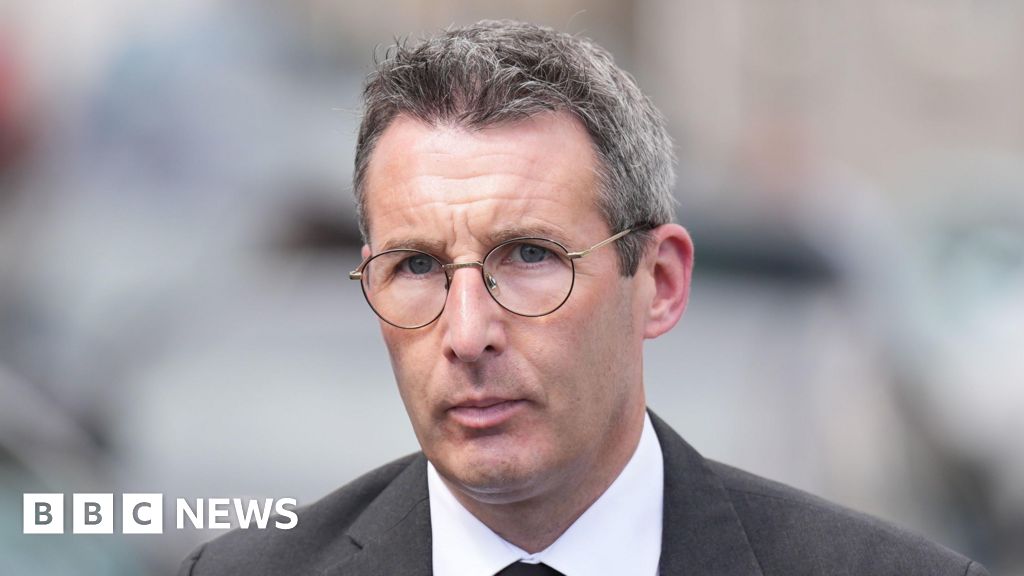
Andrew Muir says “it’s really important to have vigilance around this”
There are “very serious” consequences for the agri-community in Northern Ireland if bluetongue virus gets hold, the agriculture minister has said.
Spread by midges, bluetongue (BTV-3) poses no threat to the public or food safety but can affect cloven-hoofed animals like sheep and cattle.
The Department of Agriculture, Environment Rural Affairs (Daera) said surveillance at an abattoir indicated the presence of the disease in two cows from a farm near Bangor, County Down.
A 20km temporary control zone was put in place at 21:00 BST on Saturday. Minister Andrew Muir said “it’s really important to have vigilance around this”.
He urged farmers to report it urgently and isolate infected animals if they see signs of infection.
“While this does not have an impact on public health and food safety, it has potentially very serious consequences on agri-food and has caused real anxiety within the farming community.”
Speaking on Good Morning Ulster, the minister encouraged farmers to get their animals vaccinated, but added that it was their choice.
“If it was me, as a farmer, I would be taking that up, but it’s for others to make their own decisions on individual circumstances around this,” he said.
“The level of uptake has been relatively low. It’s largely farmers who have got very high value livestock who have decided to use the vaccine.”
Where was bluetongue virus found?
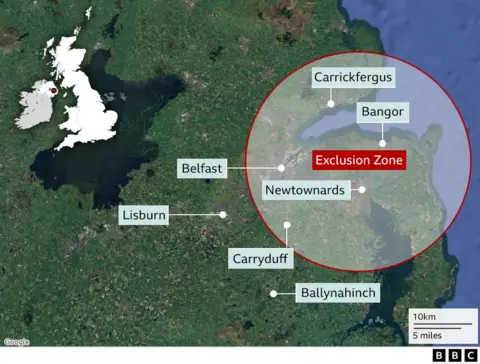
Clandeboye Estate told BBC News NI that “a routine test confirmed the possible presence of the bluetongue antibodies in two animals that had formerly been part of the Clandeboye herd”.
They said Daera was notified immediately and they were “working closely with their veterinary team to carry out further investigations”.
“The bluetongue virus does not affect humans and has no impact on dairy products or food safety generally,” they said.
“Consistent with our continued commitment to the highest standards in terms of both food production and the welfare of our animals we will be carrying out further testing over the next few days.”
‘This is a threat to our agri-food industry’
On Monday afternoon, Muir told the assembly that the best way to secure the future of agrifood industry against the bluetongue virus is by “moving fast and hard” against it.
The minister was asked about compensation and said it would be considered on a “case-by-case basis”.
He added that if bluetongue-positive animals were culled, compensation would be paid at 50% of market value.
“This is a threat to our agrifood industry and it’s important we respond accordingly,” he said, pointing to a control zone now in place.
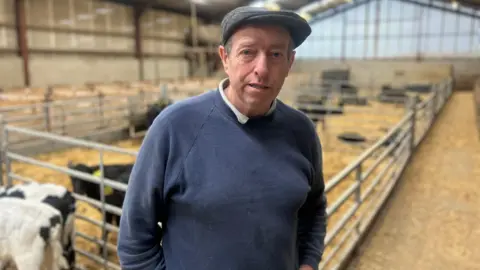
Farmer Ian Buchanan says he hopes “that it can be contained”
Ian Buchanan, a sheep, beef and dairy farmer based outside Dungiven, County Londonderry, said there was “a state of shock” among the farming community.
“With the cold weather here at the moment and there being few midges around, we hope there isn’t much spread and that it can be contained,” he said.
Mr Buchanan told BBC Radio Foyle’s North West Today programme that sheep would be very seriously affected by this disease.
“Sheep can die from it, and in the Netherlands a lot of sheep died in 2023, which was the first outbreak in Europe for quite some time,” he added.
How will bluetongue affect farmers?
William Irvine, from the Ulster Farmers’ Union, said they were very concerned.
“We were hopeful that we had escaped it for the season, but just on the last lap it has appeared and all precautions now need to be taken,” he said.
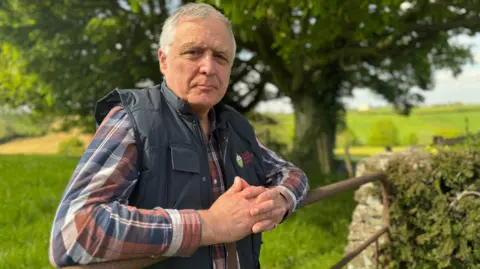
William Irvine, from the Ulster Farmers’ Union, said they are “very concerned”
Mr Irvine said that the vaccination has not been widely taken up by farmers and is “quite expensive”, but added that this is a “game changer now”.
“Now that it’s on the island of Ireland, they are very concerned, and I imagine they will be organising the availability of vaccines for their farmers,” he said.
Moves of species susceptible to bluetongue on or off premises within the TCZ are prohibited while officials carry out further investigations.
A general licence is available that allows animals to cross the boundary if they are going directly to slaughter.
Vaccines cost ‘about £2.50 per dose’
Dr Mike Reynolds, a senior clinical director at CVS Farm Vets NI, said there is a “real and present” danger following the discovery.
“I think it shouldn’t be underestimated that level of anxiety within the farming community,” he told BBC Radio Ulster’s Evening Extra programme.
“Because these outbreaks do result in prolonged restrictions on movement and trade, and obviously have financial impacts on business, but also has to be taken into consideration farmer’s concerns for their livestock and the disease incursions.”
He said that vaccines cost about £2.50 per dose, and encouraged livestock farmers to “consider and discuss” their use.
The Chair of Medicines at Veterinary Ireland Conor Geraghty told RTÉ that he’s concerned about bluetongue spreading to the Republic of Ireland.
“The theory is that if it’s not contained in Northern Ireland, it would spread during the fly season late next spring and early summer,” he said.
He added that the vaccine is not currently available in the Republic.
Ireland’s Minister for Agriculture Martin Heydon said it could have “potentially serious implications” if the virus spreads across the border.
“If the disease becomes established in one part of the island, it will be that much easier for it to spread, with consequences for animal health and welfare, and financial and emotional stress for farmers.”
What is bluetongue virus?
Bluetongue virus affects cattle, goats, sheep, deer and camelids such as llamas and alpacas.
It can cause ulcers or sores around the animal’s mouth and face, difficulties swallowing and breathing, fever and lameness, foetal deformities and stillbirths.
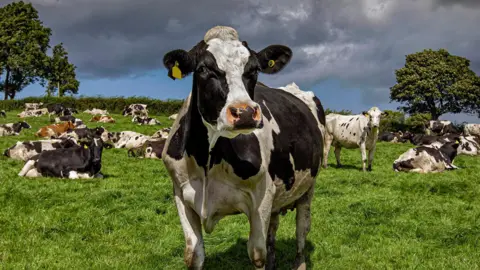 Getty Images
Spread by midges, bluetongue , poses no threat to the public or food safety
The latest outbreak began in the Netherlands in 2023, where tens of thousands of sheep died, and midges blown over from the continent began infecting livestock in the south-east of England too.
But the impact of BTV-3 seems to vary considerably across different regions, with some animals showing little sign of infection and managing to recover.
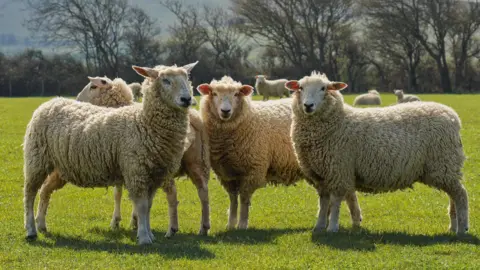 Getty Images
Sheep, cattle, goats, deer and camelids such as llamas and alpacas are affected by the disease
In July, pre-emptive vaccination permission brought Northern Ireland into line with the rest of the UK.
It is a notifiable disease so anyone suspecting their animals may have it must report it to a vet, local divisional veterinary office or to Daera directly.
Biting midges are most active from April to November and the potential for spread depends on climatic conditions and wind patterns with lower temperatures significantly reducing the risk, the department said.