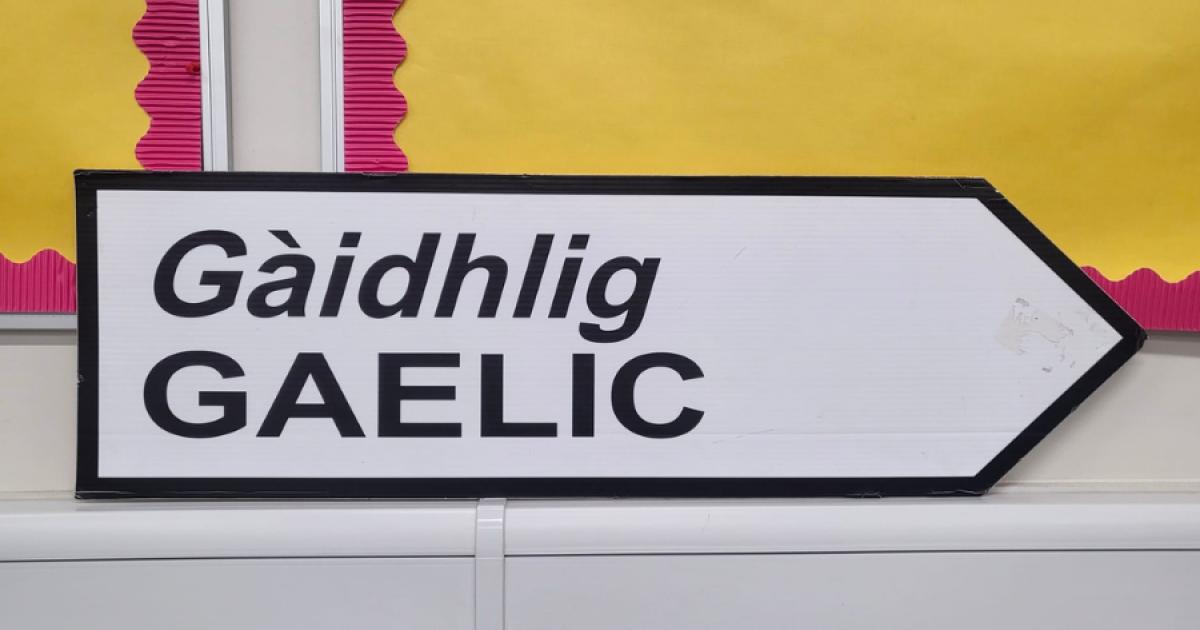
The Opening the Well project, which will launch on Tuesday, looks to ensure the Gaelic language “thrives in the digital age” by expanding the written and spoken examples of Gaelic available for automatic speech recognition.
It comes after both Gaelic and Scots gained official status in Scotland on St Andrew’s Day, in what has been hailed as a “historic milestone” for the two languages.

Experts from Edinburgh University say the new research project will help computers to understand the language and turn it into text and other digital projects, “enriching Scotland’s cultural heritage and bolstering research for Gaelic learners and hearing-impaired users worldwide”.
Organisers are looking for Scottish Gaelic-speaking volunteers to take part in the “ambitious” project, where they will be asked to transcribe archival recordings of traditional folklore into text.
Two archives will be involved in the research, both of which are available on the Dualchais/Kist o Riches web portal: the School of Scottish Studies Archives, which contained 1500 hours of Gaelic storytelling recordings based at Edinburgh University, and The Canna Collection, which is in the care of the National Trust of Scotland (NTS).
READ MORE: Martin Compston on ‘stepping out of comfort zone’ for new TV series
Researchers say the transcriptions will “open up thousands of pages of history, traditions and stories” – which will then be used to create a large body of Gaelic language data which can generate an automatic speech recognition system for media, education and research.
The research will also help to create datasets of Gaelic words, sentences and audio clips which can help AI systems to learn the patterns of the language.
Lead researcher Professor William Lamb said: “By turning spoken heritage into fully annotated, searchable text, the project not only safeguards Scotland’s intangible cultural legacy but also generates the vital data needed to advance Gaelic speech recognition and other forms of language technology.
“With just a broadband connection and an interest in language and heritage, anyone can contribute – and in doing so, take part in a tangible act of cultural revitalisation.
“Opening the Well brings the Gaelic community together with academia and technology to unlock the voices of the past and power the future of the language.”
University of Edinburgh (Image: Wikipedia Creative Commons)
Flòraidh Forrest, project director of Tobar an Dualchais – Kist o Riches, commented: “We’re delighted to working in partnership with the University of Edinburgh and the NTS on the Opening the Well project. This will add significantly to the number of transcriptions available on the Tobar an Dualchais/Kist o Riches website, which in turn will allow greater access to our shared Gaelic heritage.
“Drawing on the expertise of Gaelic speakers to transcribe recordings is also something we’ve been interested in developing for some time, we look forward to supporting those who are keen to get involved.”
Ian Riches, corporate archivist – collections management of the NTS, said: “This is a really worthwhile and exciting project which will only serve to enhance access to the wonderful collection of sound recordings undertaken by John Lorne Campbell of Canna.”