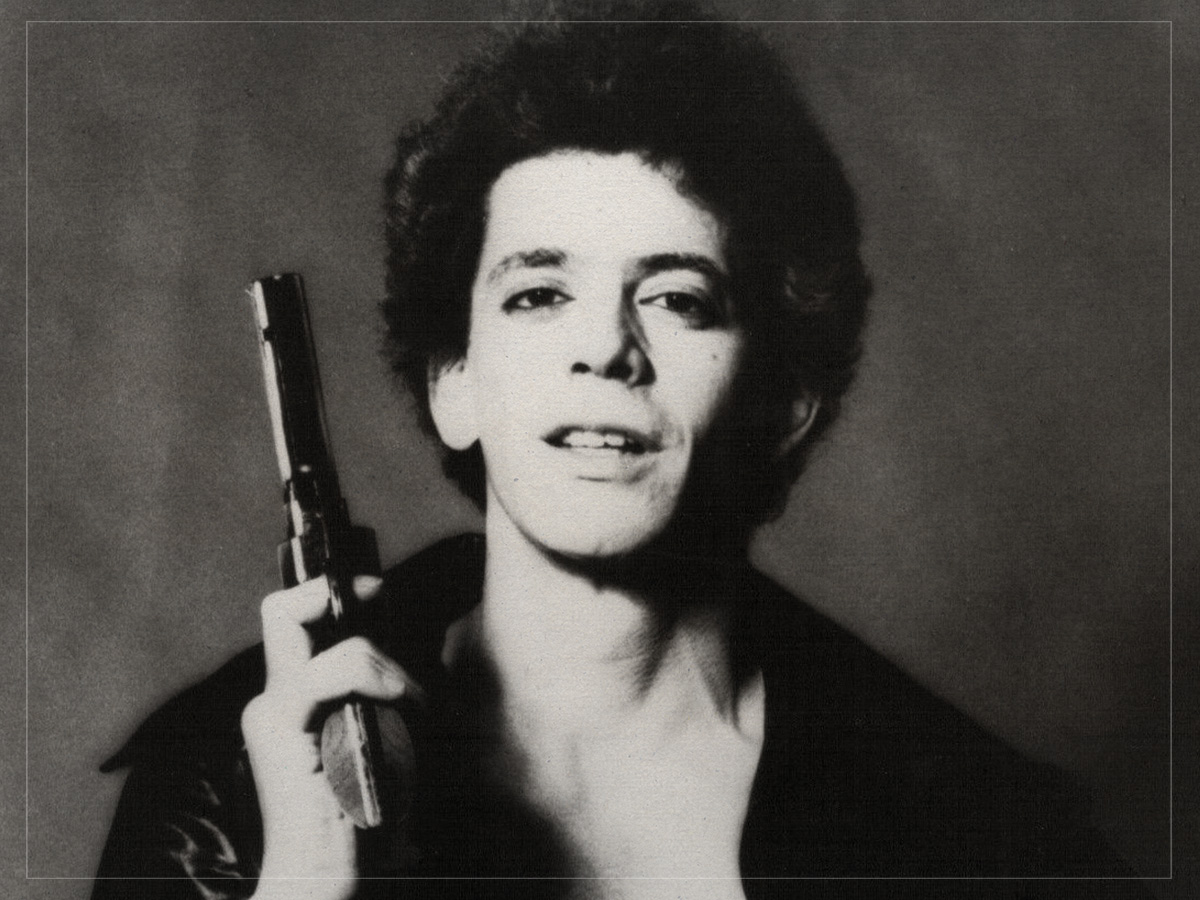
(Credits: Far Out / Arista Records / Mick Rock)
Mon 1 December 2025 21:00, UK
Whether it’s Keith Moon leaving a trail of demolished hotel rooms in his wake or Liam Gallagher escalating his sibling rivalry with the aid of a flying tambourine, the music industry has never been any stranger to violence.
There was a point, though, where it all became too much, even for the abrasive archetype of Lou Reed.
Rooted in the underground world of 1960s New York, Reed wasn’t exactly surrounded by sunshine and flowers over the course of his musical journey. The Velvet Underground and Nico, for instance, bottled the grimy concrete surroundings of 1960s New York, but their discussion of sadomasochism, dodgy drug dealings, and Sunday morning hangovers hardly reflected the flower power optimism being pumped out by virtually every other band at the time.
Reed always seemed to gravitate towards that world of darkness, both with The Velvets and throughout his extensive solo career. Even outside of his music career, in fact, the songwriter seemed to revel in a sense of impending violence and unpredictability – as you will know if you’ve ever encountered one of many clips of him laying into various bewildered music journalists for his own personal enjoyment.
Still, none of that stopped Reed from becoming slightly more mellow as he grew older and with that came a move away from the violence of his youth. What’s more, he was able to partake in the usual older person’s tradition of complaining that modern music is far too violent – a cry which has echoed through the ages, attached to everybody from Little Richard to Kneecap.
Back in 2003, Uncut posed the rather bizarre question of whether or not Lou Reed listened to Eminem, to which he responded, “He’s very funny – and maybe it’s not fair to say this, but he is young and maybe as he gets older he might change. I just don’t like people advocating violence against other people.”
Although it could certainly be argued that Reed’s view of Eminem tends to fall in line with the older generation dismissing modern music as being too violent, it is also difficult to dispute the violence inherent in Slim Shady’s output.
Take the opener of his The Marshall Mathers LP, unambiguously titled ‘Kill You’: over the course of the track, the rapper claims he “invented violence”, in the midst of lamenting “bitches”, “sluts”, and “whores”, and even including a verse about raping his own mother.
Lou Reed might have been no stranger to violence, but at least he approached topics of violent abrasion with a sense of subtlety and deeper meaning – the violence itself was rarely the main topic of discussion. Even if it had been, though, the Velvet Underground songwriter would never reach the violent depravity of Eminem and tracks like ‘Kill You’, which helped to put him on the musical map back in the early 2000s.
Regardless of Slim Shady’s tendency towards violence, though, it was unlikely that Reed would ever be a huge fan of his output. After all, the Velvet Underground songwriter always prioritised authenticity, honesty, and a sense of integrity within his musical manifesto, and while he did have a natural affinity for certain aspects of the hip-hop landscape, Eminem didn’t seem to offer much in the way of nuance or intrigue for Reed.
Related Topics