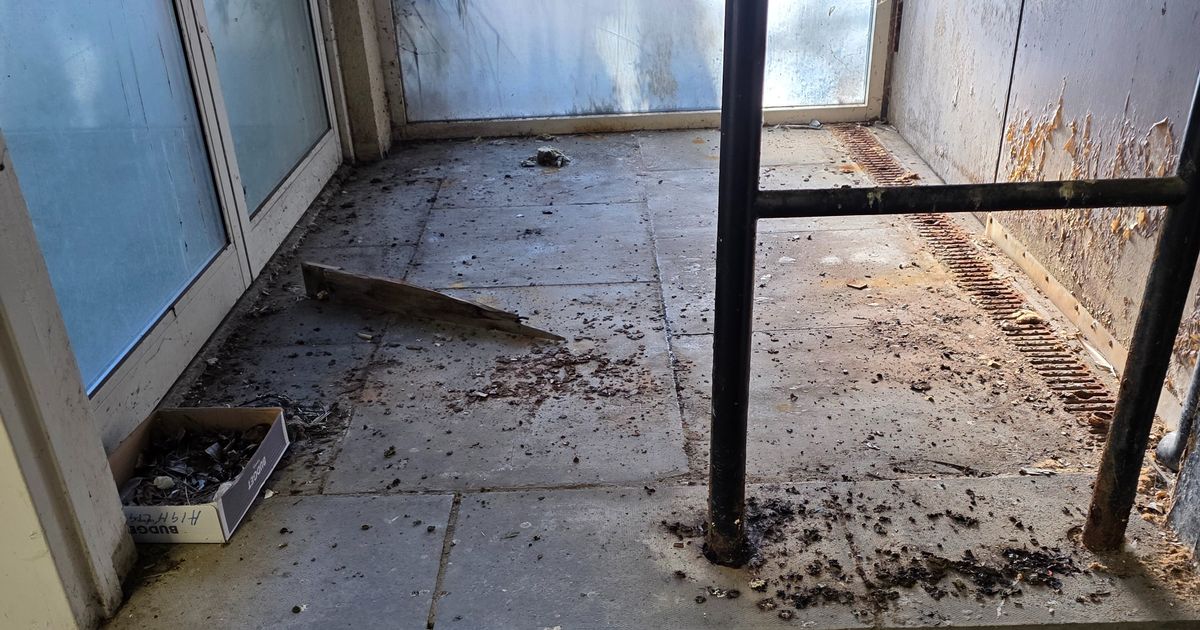
‘The tunnels were wet, flooded in places, and there was bird faeces everywhere’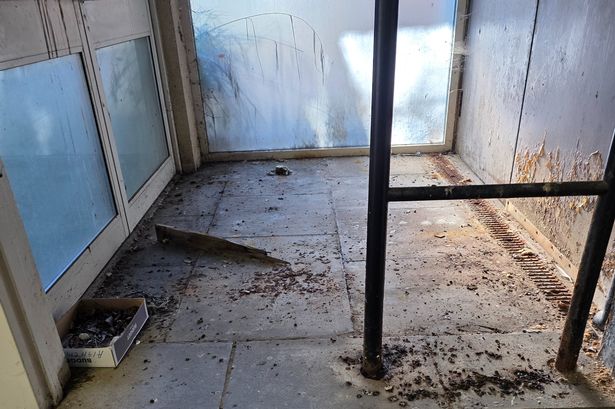 Filthy conditions at Cardiff’s University Hospital of Wales
A 77-year-old emphysema patient shivering after a heating failure. An 80-year-old in his final hours, wet from the dripping ceiling of a pigeon-infested tunnel. A despairing staff member who says working at Wales’ biggest hospital has become “an absolute nightmare”.
These are some of the alarming descriptions of Cardiff’s University Hospital of Wales that we have heard in the fortnight since we revealed almost 300 consultants had sent bosses a letter stating staff morale was at an “all-time low”. Many of the problems raised in the letter had to do with the dilapidated state of the hospital, which is plagued by sewage leaks and water damage.
After publishing the letter we were contacted by a hospital employee who said: “The place is just full of pigeons nesting in what we call the catacombs, the underground tunnel. On the first floor there are buckets everywhere to catch the water coming through the roof. The whole hospital is an absolute nightmare.”
They shared with us pictures of a walkway carpeted with pigeon droppings and a corridor where a “disgusting liquid” was dripping through a collapsed ceiling. It comes after a scathing report on the hospital’s operating theatres recently found there had been “several occasions when pigeons were found in trauma theatre or on the theatre corridor”.
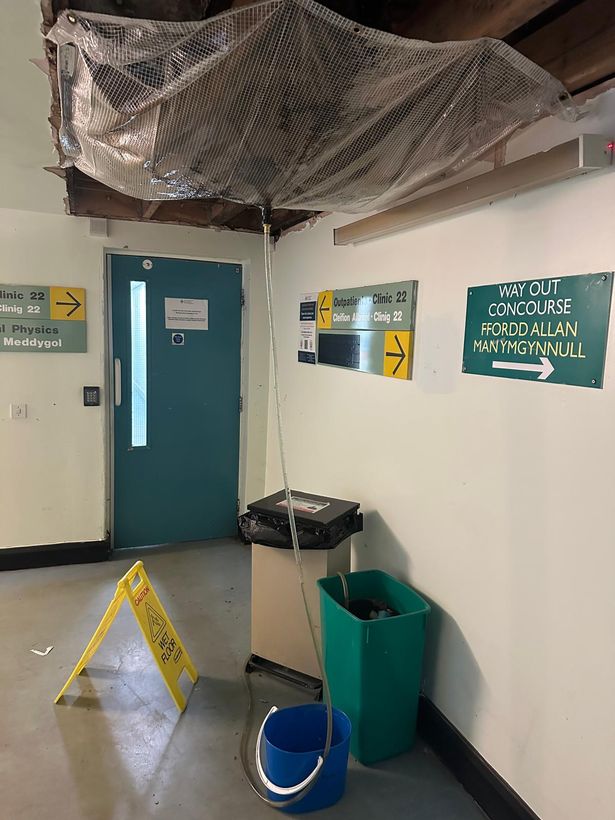 Collapsed ceiling in the University Hospital of Wales in Heath, Cardiff’Bird faeces everywhere’
We also heard from a woman who described her critically ill 80-year-old dad’s awful experience in the hospital’s tunnels, through which he was transported twice in the days before his death last month from a lung condition.
While critically ill he was pushed in his bed through the “disgusting” tunnels, his daughter said, from an overflow unit to the main hospital building so he could be treated with a higher concentration of oxygen.
“He was taken via a service elevator down to the basement of the hospital, and then to a series of tunnels,” she said. “These tunnels were wet, flooded in places, and there was bird faeces everywhere along with rubbish and discarded medical items.
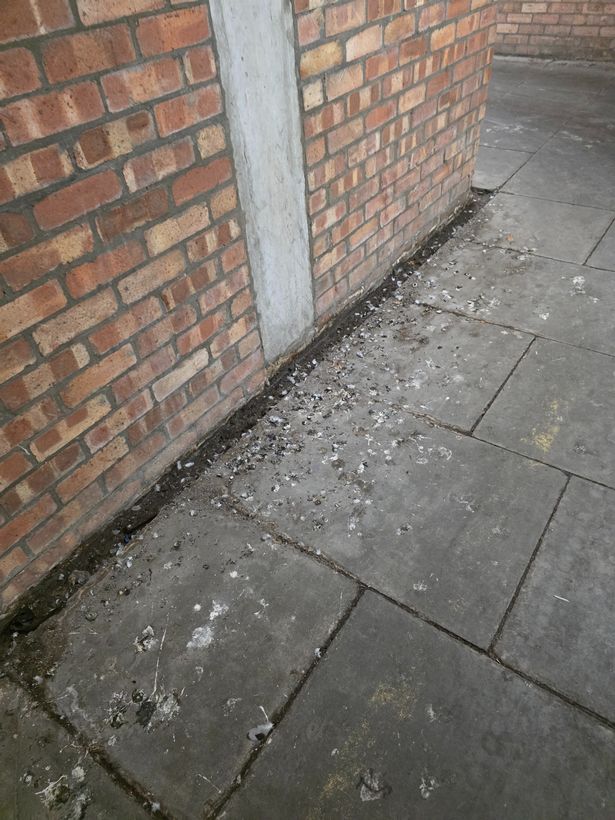 Bird droppings in Cardiff’s University Hospital of Wales
“He was in his bed with a portable oxygen cylinder. The ceiling was dripping on him and I had to cover him with coats to keep him warm and dry. It was a good ten-minute walk. The porter said it was the only way from one building to the other.
“We were slipping and sliding on the wet floor. My dad was frightened and really upset. When we finally got to the ward they asked how he was feeling now and he said ‘safe’. He lived for 12 hours after that.”
The daughter’s anguish worsened when she learned of her dad’s experience going through the same tunnels five days earlier – when she had not been present – late at night on his way to the overflow. “It materialised he’d had no blankets and the porter had got lost. My dad was completely traumatised by the whole experience.
“I spoke to a friend of mine, who is a nurse there, and she said: ‘It’s unbelievable and there’s nothing the staff can do about it.’ I feel desperately sorry for the staff, who are nothing but lovely and caring and kind.”
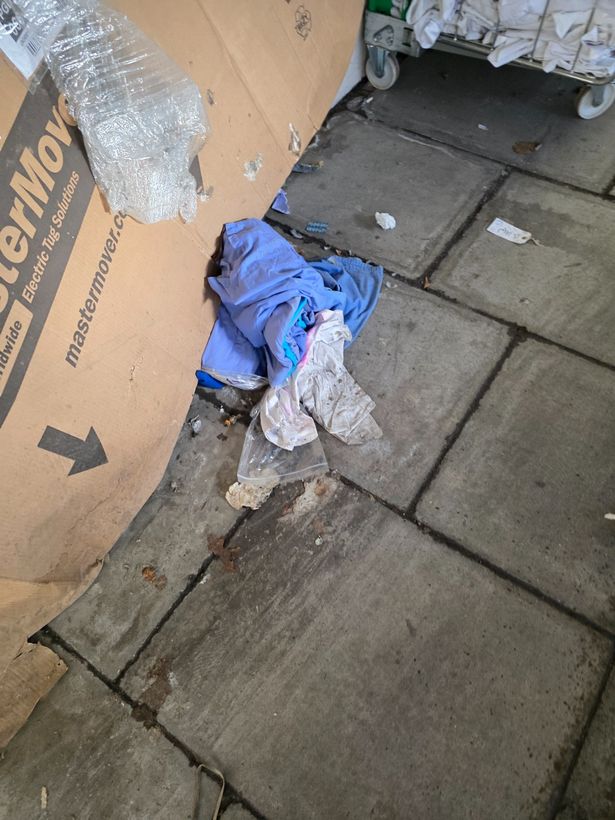 Part of the University Hospital of Wales, Cardiff(Image: Supplied)’No heating whatsoever’
John Ball, 77, was in the hospital last month being treated for severe emphysema and fluid on his lungs. Amid freezing weather there was a stretch of three days when his ward had “no heating whatsoever”, he said.
“We were given extra blankets,” he said. “The ward was full of very vulnerable patients and some were extremely ill. Not only is this a danger to patients’ health, it is also demoralising for the staff who are doing a very good job. If this were any other industry they would have walked out due to the cold.”
Mr Ball claimed the ward managers made repeated complaints to higher-ups before action was taken. “I threatened to sue the hospital if they didn’t sort it out,” he added. “Three days later they improved things. I don’t know if my threat made a difference.
“I would like to emphasise how hard the staff work, from catering to nursing, and they are being let down by the health board.”
A Cardiff and Vale university health board spokeswoman said: “The issue regarding temperatures within the A7 ward was first raised by colleagues on Wednesday, November 19, and the engineers were unable to attend on that day due to the number of maintenance requests being dealt with.
“The maintenance team attended the ward the following day to investigate the problem and took temperature readings across all areas of the ward with readings recorded between 20.5C and 22.5C, falling within the recommended limits set by Welsh Health Technical Memorandum. The team have worked to ensure there are no problems with water flow and to ensure no air is trapped in any of the system.”
‘Management did nothing’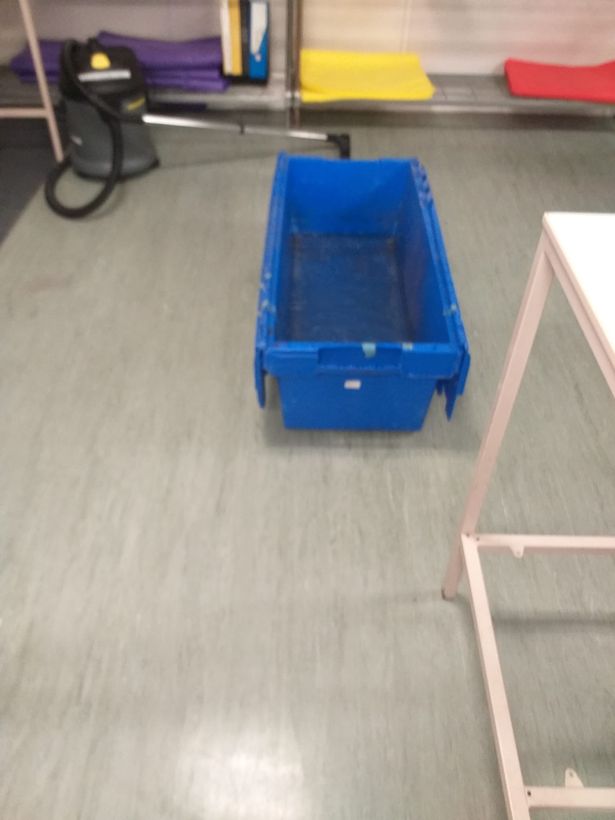 The ‘clean room’ in University Hospital of Wales
One former employee of the hospital’s decontamination unit – where surgical instruments are sterilised – told us the safety risks from the crumbling hospital estate were nothing new. They shared a picture from 2022 showing a bucket collecting water from a damaged ceiling in what was meant to be the sterile environment of a “clean room”.
“The leaks were coming from water pipes above the ceiling of the clean room. These pipes were always leaking and there were buckets everywhere with dirty water which we had to empty regularly.”
“It should have been closed down until the leak was fixed. It wasn’t. We had to empty these containers before we went home on weekends. It compromised sets [of instruments] being used on patients. Absolutely disgraceful, however management did nothing.”
The University Hospital of Wales is home to many services used by people from a much wider area than Cardiff. However, it was built in the 1960s, has major structural issues, and long-mooted plans for a replacement have not progressed far.
In September we reported on the case of Gareth Idris Johnson, a much-loved 41-year-old dad-of-three who died after the hospital’s maintenance problems led to him being moved to a different unit following an operation.
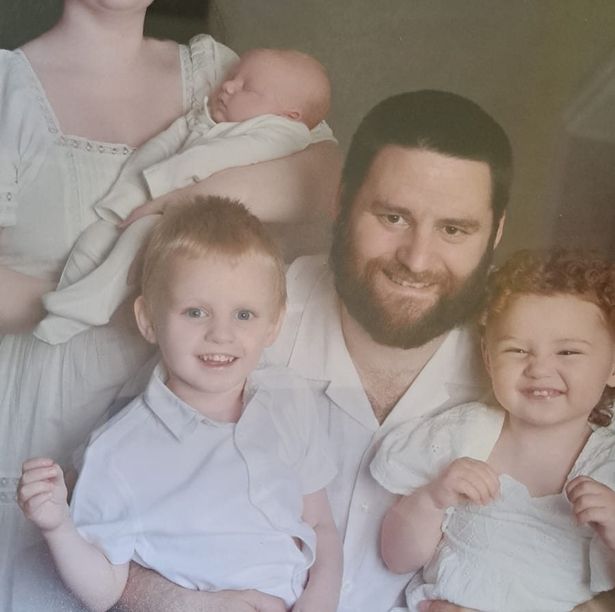 Gareth Idris Johnson is survived by his wife Chelsea and three children, Drystan Emrys, aged four, Eirianwen Beryl, aged two, and Ieuan Lee Reginald, aged six months(Image: Johnson family)
This prompted coroner Kerrie Burge to warn the health board there was a risk of more deaths if UHW’s problems were not addressed.
The recent report on operating theatres found chronic leaks risked affecting patient confidence, poor lighting made operations challenging, and corridors were “cluttered” because of insufficient storage.
And there was another plea for urgent action in last month’s letter from the health board’s senior consultant body, which you can read it in its entirety here. It was sent after an extraordinary meeting of nearly 300 consultants who expressed “deep anxiety” about the state of patient care.
The consultants complained of “persistent” sewage leaks, water damage, and poor cleanliness despite repeated reports from senior clinical staff. They said it was “particularly alarming” to hear reports that plans for a replacement hospital have been shelved “without any communication to clinicians”.
‘An ageing estate’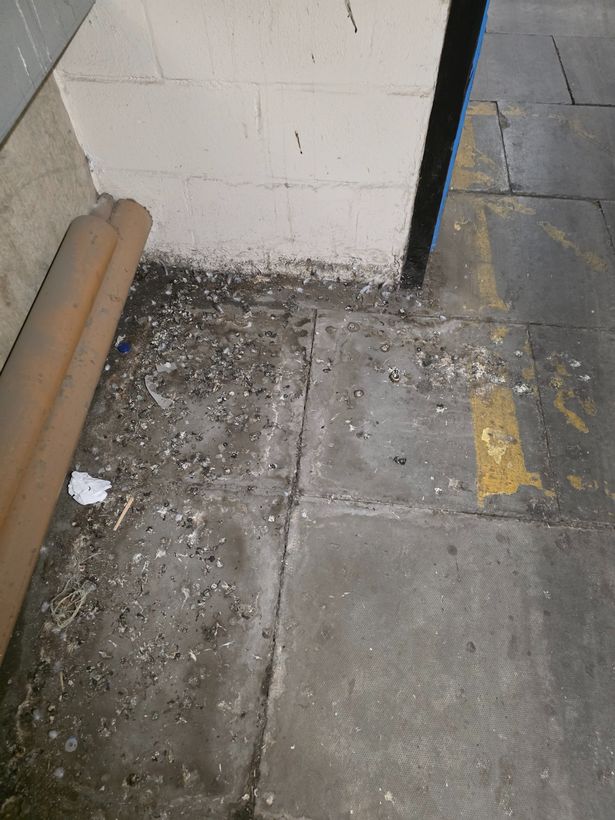 Bird droppings in University Hospital of Wales
A spokeswoman for Cardiff and Vale university health board said: “We appreciate that hospitals aren’t always the most comfortable environments for patients… We are aware that the modernisation and maintenance issues are indicative of an ageing estate.
“Colleagues within our capital and estates team provide continuous maintenance and repair works to the hospital infrastructure, prioritising the health and safety of patients and colleagues. This is done in conjunction with and supported by Welsh Government estates and capital colleagues.
“We strongly encourage any patients who have concerns during their care to speak directly with staff in the clinical area. Alternatively, concerns can be raised with our dedicated concerns team, who can provide a direct response to patients and their families.”
The health board vowed to continue monitoring the hearing issue and thanked staff for submitting a maintenance request so it could be investigated. There is also a plan for the hospital to get a new roof, it said.
Last month the Welsh Government told us the health board is still “developing a plan for the future of both the University Hospital of Wales and University Hospital Llandough sites. You can read more about that here.
Concerns raised in the consultants’ letter included a recruitment freeze and “the proliferation of middle management” and “frequent circular meetings without outcomes”.
The Tories and Plaid Cymru have accused the Welsh Government of not doing enough to turn around the crisis-hit hospital.
In July the Government did escalate the health board to a ‘level four’ targeted intervention due to “serious concerns relating to governance, culture, quality and safety and operational pressures” – falling short of level five, which would mean placing it in special measures. It remains at level four.
If you would like to contact us about an issue we should be investigating, email us at conor.gogarty@walesonline.co.uk