This repatriation effort represents a small but important step in colonial reparations
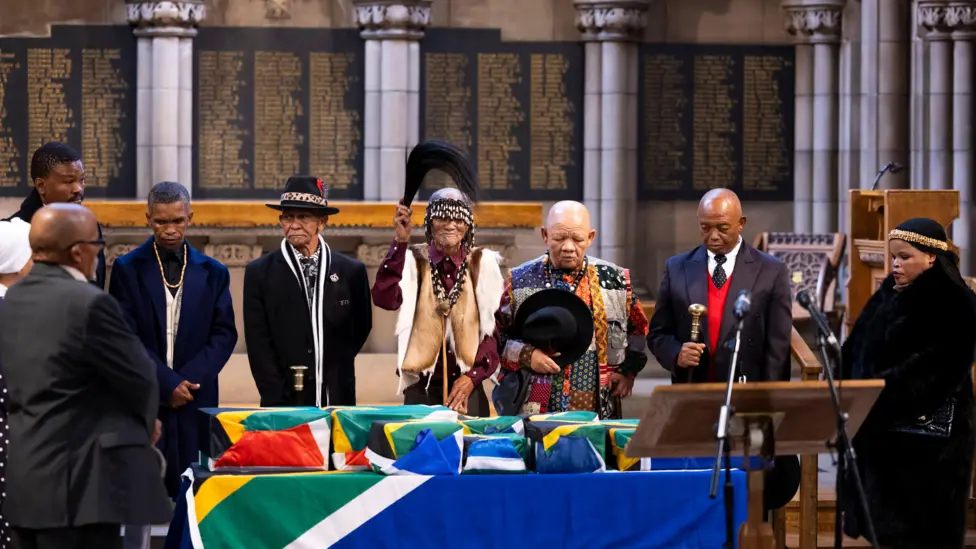
Last month, the Hunterian Museum at the University of Glasgow announced a repatriation effort of partial human remains to their ancestral origin in South Africa. A delegation from South Africa came to retrieve the remains, which included members from the Iziko Museums of South Africa, the South African Heritage Resources Agency, and the Department of Sports, Art and Culture.
The ceremony was organised and held in partnership with the Northern Cape Reburial Task Team, who represent indigenous Khoi and San communities in South Africa.
According to the BBC, the collection includes ‘partial remains of six individuals, two plaster face-casts and a soapstone smoking pipe excavated from a burial cairn’. A Hunterian press release revealed that five of the individuals’ remains and the smoking pipe are specifically claimed by the San, Nama, Griqua, and Korana populations. The final body is of Khoi San origin, but the plaster face-casts are of unknown origin.
On 13 October , a handover ceremony was held at the Hunterian Museum to mark the occasion. A subsequent private cultural ritual was performed when the remains arrived in Cape Town, and on 17 October , the Iziko South African Museum hosted a homecoming ceremony for the newly acquired remains.
As the Herald reports, the remains were believed to have been ‘unethically exhumed between 1868 and 1924 before being deposited with the University by alumni and other donors.’ This is a small but important step in decolonisation efforts.
In recent years, British museums have been under fire for receiving and exhibiting objects that were unethically sourced during the heyday of the British Empire. A leading human rights lawyer, Geoffrey Robinson, says the trustees of the British Museum in London ‘have become the world’s largest receivers of stolen property’.
International law and policy have begun to reflect a change in attitude towards repatriation efforts. The repatriation of the burial items from the Hunterian was facilitated by South Africa’s new National Policy on Repatriation of Human Remains and Heritage Objects. The importance of continued repatriation efforts cannot be overstated.
The cultural custodian of the Northern Cape San and Bushmen, Petrus Vaalbooi, was quoted in the Museums Journal saying: ‘This reburial is not merely the return of physical remains; it is a symbolic act of reclaiming heritage, confronting historical injustices, and restoring the dignity of a people.’The Hunterian has stated it is open to continued repatriation efforts in the future.
Image credit: The Huntarian