
Andrew Mountbatten-Windsor “in all likelihood” will not be owed any compensation for the early surrender of his lease of his home on the grounds of Royal Lodge, a committee of MPs has learnt.
The Public Accounts Committee has released details of their inquiries into Andrew’s lease arrangements for the home, which he is giving up amid ongoing scrutiny over his friendship with paedophile financier Jeffrey Epstein.
The committee of MPs has published responses from the Crown Estate and the treasury to questions it raised about the lease, after it emerged Andrew could receive compensation of £558,000 for giving it up.
Public anger mounted over the possibility of the disgraced former royal receiving a payout, particularly following reports that he had only paid a “peppercorn rent” for the Grade-II listed home for the past two decades.
While the extent of end of tenancy dilapidations and repairs required are “not out of keeping with a tenancy of this duration”, the Crown Estate said they will “in all likelihood” mean Andrew “will not be owed compensation for early surrender of his lease”.
It said “before this position can be fully validated however, a full and thorough assessment must be undertaken post-occupation by an expert in dilapidation”.
Andrew gave the minimum 12 month’s notice that he would surrender the property on October 30. If no end-of-tenancy repairs were required, Andrew would have been entitled to £488,342.21 for ending his tenancy on October 30 2026.
Meanwhile a letter from the Treasury said that there has been no record of the Treasury “being involved in determining the lease arrangements for Royal Lodge”, adding that the Crown Estate “has a proven track record in effective management” of its properties.
Where does Andrew get his money from?
Andrew’s only publicly declared stream of income is the pension he receives for his time spent in the Royal Navy between 1979 and 2001, according to the Guardian.
While this is said to amount to about £20,000 a year, historian Andrew Lownie, author of Entitled: The Rise and Fall of the House of York, told Yahoo News previously it will likely be higher as the figure will have increased with inflation.
In terms of public money, the last published figure dates from 2010, when Andrew received £249,000 for that year.
The Guardian said that following that year, his mother, Queen Elizabeth II, made direct payments to Andrew from her own private wealth while he carried out his royal engagements.
Before he lived at Royal Lodge, Andrew was based at Sunninghill Park near Ascot after it was gifted to him by his mother. Andrew sold the property in 2007 to Timur Kulibayev, a billionaire from Kazakhstan, for £15m.
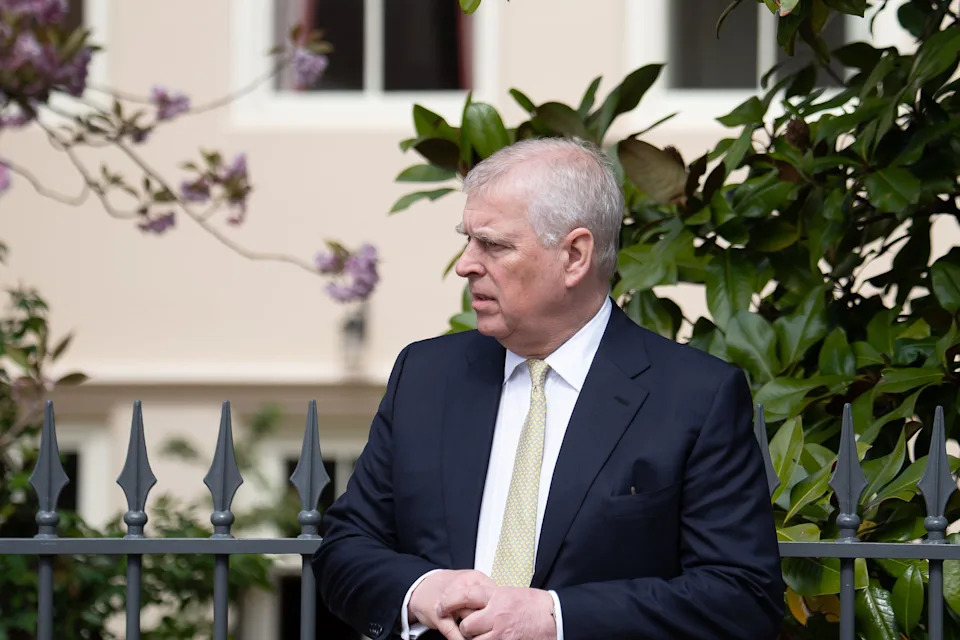
Andrew Mountbatten-Windsor may not receive all of a compensation for leaving Royal Lodge. (PA)
Royal author Robert Hardman claimed in a book published last November that King Charles had cut off his brother Andrew’s annual living allowance, reportedly about £1m a year.
Hardman said Andrew had other sources of income through his contacts in international trade, having been the UK’s special representative for international trade and investment between 2001 and 2011.
In 2015, Andrew and his ex-wife Sarah Ferguson bought a luxury chalet in the Swiss resort of Verbier for a reported cost of up to £13m, which was then sold in 2019 for a reported £19m.
How is the royal family funded?
The royal family has three main sources of funding.
Firstly, there is the Sovereign Grant, provided by the government to the royal household to support the King’s official duties, and includes the maintenance of the occupied royal palaces.
For 2025/26, the grant increased to £132.1m, having been £86.3m for each of the four previous years.
The second main source of income is the Duchy of Lancaster, a portfolio of land, assets and property held in trust for the King, with the aim of providing an independent revenue stream that is mainly used to pay for expenses incurred by other members of the royal family.
It encompasses more than 18,000 hectares of land and property in central London, and was worth £679m at the end of March 2025 and had made £24.4m in annual profit.
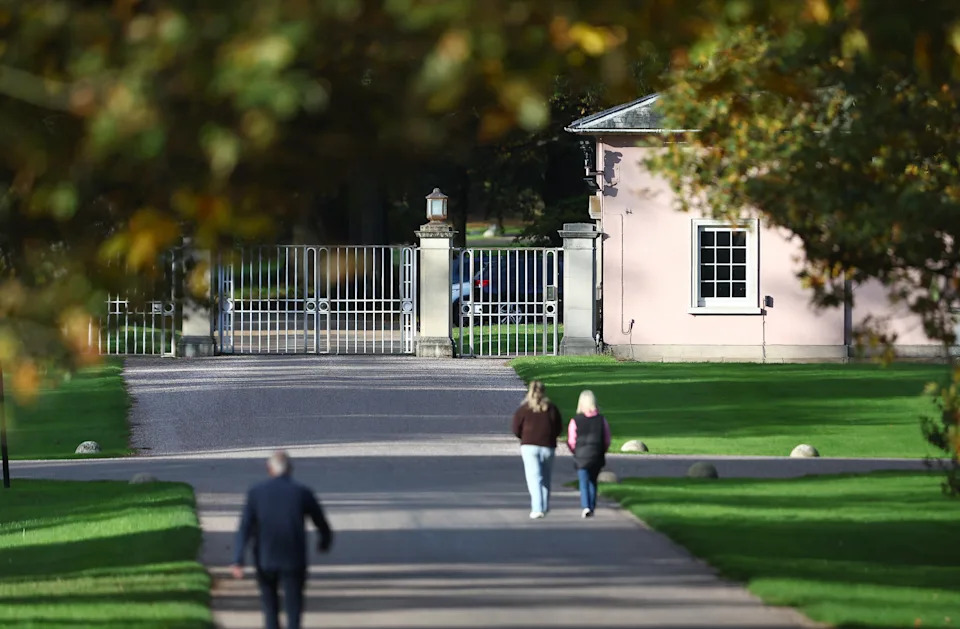
The entrance gates to Royal Lodge, which Andrew Mountbatten-Windsor is expected to vacate in the new year. (Getty Images)
Whoever holds the title of the Duke of Cornwall – currently the Prince of Wales – also benefits from the Duchy of Cornwall, covering land in south west England, with assets worth £1.1bn and annual profits of £22.9m.
Thirdly, there is the King’s personal wealth and income, derived from his own investment portfolio and private estates, used to pay for his private expenses.
This portfolio includes the Balmoral and Sandringham estate, both inherited from his mother, Queen Elizabeth II, and increased by £30m to £640m for the past year.
The way the royals are funded has often been criticised for lacking transparency, with former Home Office minister and Lib Dem politician Norman Baker telling the BBC in May: “The royal family has been very efficient in persuading the public purse to keep coughing up more money. We’re told public finances are tight… but we can pay for an increase for the royal family. It’s completely wrong.”
What happens next to Andrew?
On Monday 1 December, the King officially stripped his brother Andrew of his Order of the Garter and Royal Victorian Order honours, having already been stripped of his birthright to be a prince an HRH and his Duke of York title removed over his friendship with convicted paedophile Jeffrey Epstein.
Andrew is set to move from Royal Lodge in Windsor to somewhere on the King’s private Sandringham estate in Norfolk at some point in the new year.
It is thought that Andrew will be denied most of the £558,000 compensation for giving up his lease on Royal Lodge, where he had paid a peppercorn rent for more than 20 years.
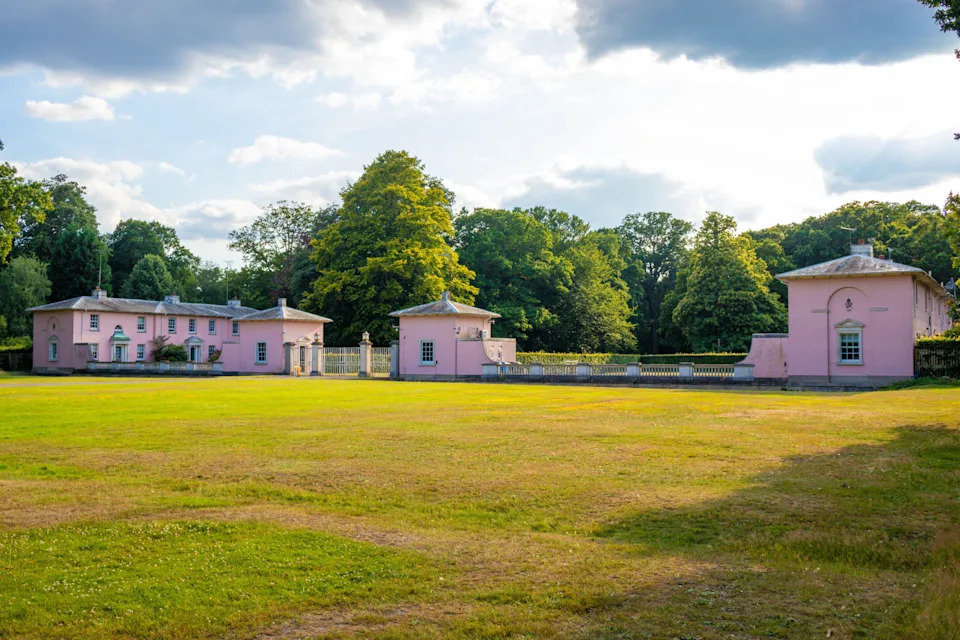
Andrew Mountbatten-Windsor’s lease for Royal Lodge has been the subject of scrutiny. (Getty Images)
He was due the payout after agreeing to quit the 30-room mansion, but The Telegraph quoted a royal source as saying there is “a lot of work that needs doing” to the property, with the cost of repairs likely to affect the payout.
The letter to MPs from the Crown Estate, published on Tuesday 2 December, further confirms that Andrew is unlikely to receive compensation.
It is thought, however, that Andrew will receive a one-off, six-figure payout to cover his move, along with an annual stipend from the King.
The Guardian reported that this stipend will be worth several times his £20,000-a-year Royal Navy pension.
Is it understood the King will use his private funds to cover this cost and not his income from the Duchy of Lancaster.