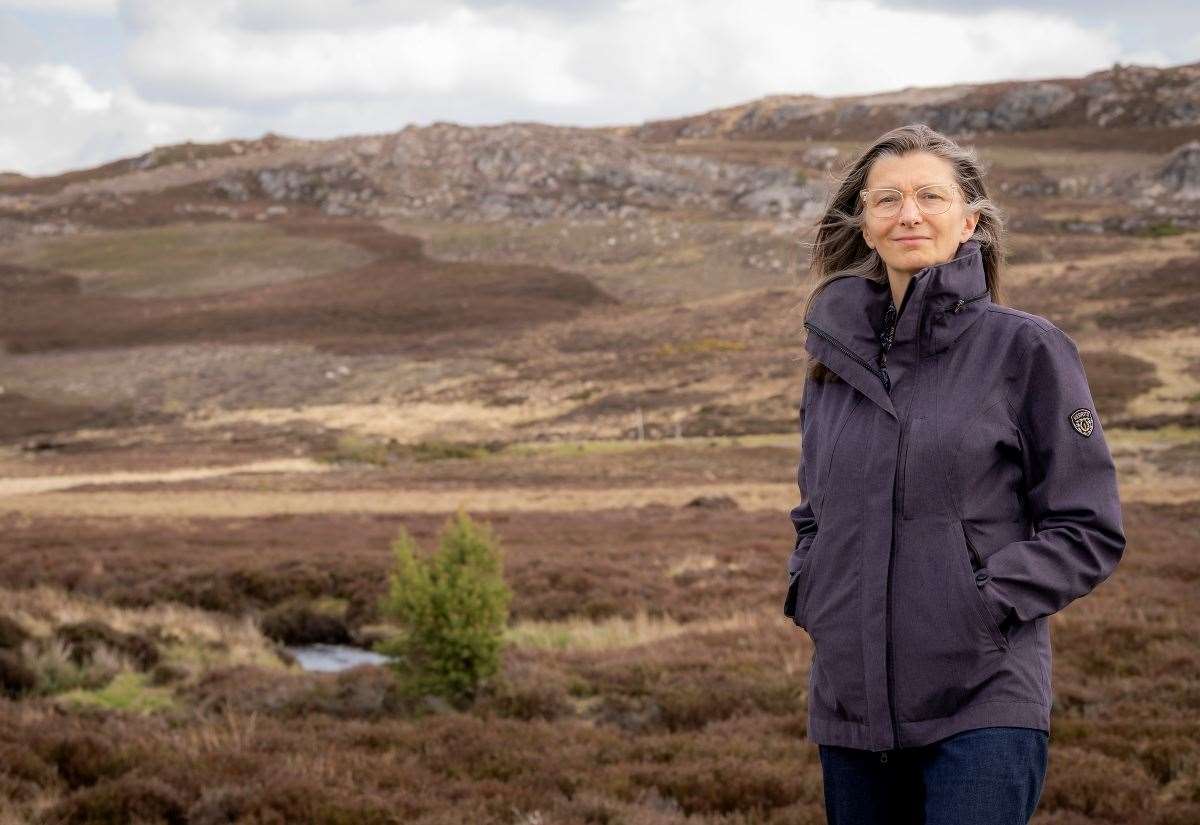
Holyrood Notebook By Ariane Burgess
The Far North is at the heart of Scotland’s natural heritage and its future. As your MSP, a big part of my work over the last month or so has been looking at ways to make our land and natural environment more healthy, fairer and a key part of regenerating and sustaining our communities.
Nature and communities cannot thrive while Scotland’s land is concentrated in the hands of a few. I made changes to what is now the Land Reform Act that will support communities and nature to thrive.
 ‘The way we farm has big impacts on the quality of our environment and climate emissions.’
Scotland is one of the most nature-depleted countries in the world, with 1 in 9 species at risk of extinction in Scotland. Large landowners have an important role to play in nature’s recovery.
The Act will require landowner’s of 1000 hectares or more to produce land management plans. I got a change included in the Act that will require that they set out plans for how they will manage their land to help nature recover from its terribly degraded state.
The government’s proposals require large landowners to consult with communities on their Land Management Plans, but there was no requirement for landowners to actually take this feedback into account in their final plans.
I made changes that rectifies this oversight – ensuring community views are acted upon.
The initial proposals for the Bill gave only a small number of public bodies the right to raise complaints about landowners who don’t produce Land Management Plans or otherwise ignore the new duties to consult with local communities.
I introduced changes to give more organisations and community bodies the right to raise complaints for further investigation.
The way we farm has big impacts on the quality of our environment and climate emissions.
Currently farmers who rent their land need to request permission from their landlord if they want to start farming organically or creating grazing pastures that are rich in wildflowers, ponds and other habitats that welcome a range of wildlife to farms.
With changes I brought to the Bill tenant farmers will be able to carry out nature-friendly farming activities without having to get landlord permission.
I am pleased to have made these few changes which will have big impact for communities and nature.
Something I’ve noticed in my work on Land Reform is that many people are disconnected from land and nature, even people who live in the countryside or small towns.
I put this down to the fact that we have an unfair landownership pattern in Scotland. Just over 400 people own 50% of Scotland’s land.
In other countries, Norway for example, many more people own smaller parcels of land and know how to work and care for it.
A relationship with nature and land is a big part of what can instil a sense of agency in people, a sense of independence.
To this end I am particularly pleased to have succeeded in bringing a change to the bill which will require the Scottish Government to support more people and community groups who want to build huts or small cabins on public land.
There’s already a pilot for this happening in Fife, which made it straightforward for me to suggest to the government that they make a model lease available across Scotland.
I really hope communities make use of this opportunity, so we see more people develop their connection with nature and their sense of agency and independence.
With more people connected to the land, together, we can restore our peatlands, protect our wildlife, and ensure our land serves the many, not the few.
Scotland has an opportunity to lead the world in nature recovery and land justice and I’m determined to make it happen.
Ariane Burgess is a Scottish Green MSP for the Highlands and Islands.
Do you want to respond to this article? If so, click here to submit your thoughts and they may be published in print.