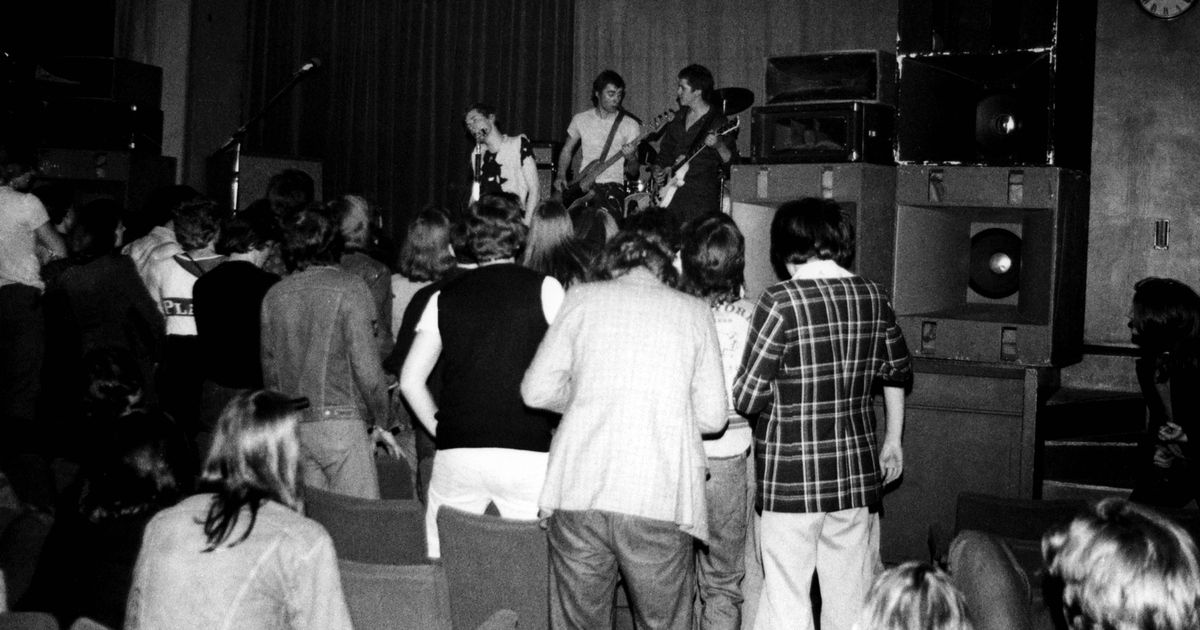
In the second part of our exclusive interview, Steve Diggle of Buzzcocks talks about the gig that changed music, causing a strike with a ‘filthy’ song and performing without Pete Shelley.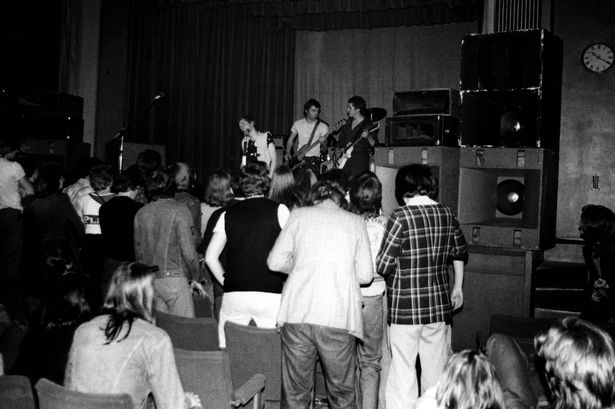 The Sex Pistols performing on stage at the Free Trade Hall in June 1976(Image: Redferns)
From a happy accident, a terrible beauty was born. That’s how Steve Diggle tells it anyway.
He was at Manchester’s Lesser Free Trade Hall the night the Sex Pistols exploded onto the stage playing to around 30 people.
It was a display unlike anything that had come before it. But it’s become a bit of a joke that everyone claims they were there that night of Friday June 4, 1976.
In fact, the London punks had been brought there by art college students Pete Shelley and Howard Devoto.
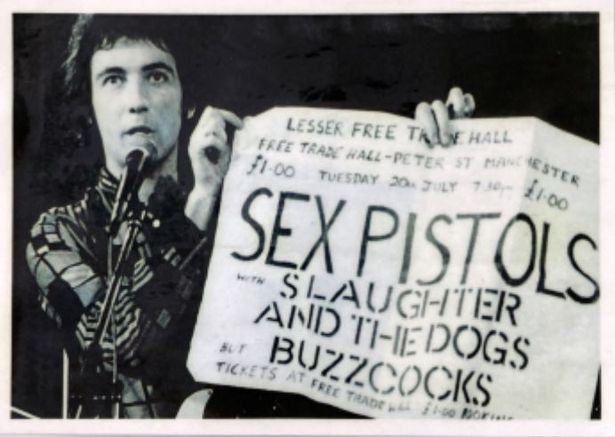 Pete Shelley of Buzzcocks with a poster for the later 1976 Sex Pistols gig at the Lesser Free Trade Hall
After seeing the band in London, they swiftly formed Buzzcocks, and convinced the Pistols’ manager Malcolm McLaren to let them support the band in Manchester.
It was agreed, but Howard and Pete couldn’t muster a rhythm section in time so put an advert in the New Manchester Review asking for a bassist.
‘BASS PLAYER NEEDED’ read a similar ad in the Manchester Evening News, seen by Steve Diggle.
He wasn’t really a bassist – just the owner of a stolen one. But he was desperate to be in a band no matter what, so phoned the number and the bloke on the other end agreed they should “write some songs and smash some guitars”.
Steve arranged to meet him outside the Free Trade Hall in town on a Friday in June and take him to Cox’s Bar, on Windmill Street, where you could get “a real pint of Boddingtons”.
But while he was waiting outside he was ushered inside by the Sex Pistols manager Malcolm McLaren who said the men he was waiting for were inside.
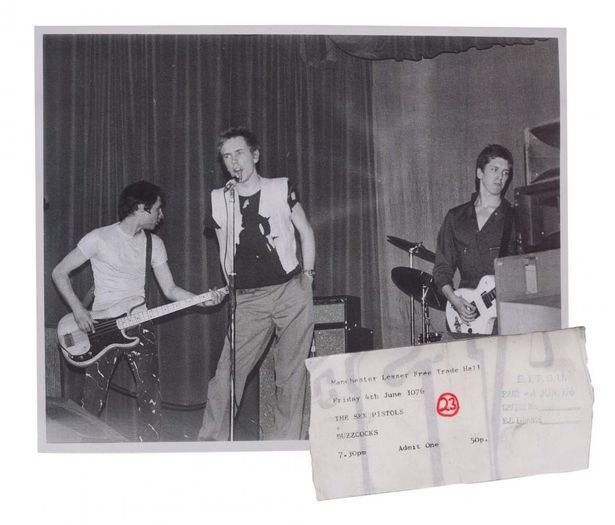 The Sex Pistols played twice at Manchester’s Lesser Free Trade Hall. Pictured is the band and Peter Hook’s ticket from that fabled gig(Image: Omega Auctions)
He introduced him to Pete Shelley, who was inside collecting tickets, and his pal Howard Devoto. “This is your new bass player,” said Malcolm.
The misunderstanding changed the course of all of their lives. Steve joined Buzzcocks that night and stayed to watch the Pistols play.
“I think them other two guys we were supposed to meet might still be waiting outside the Free Trade Hall now,” Steve jokes now, 50 years on.
“That night was a game changer massively. It’s like when Bob Dylan went electric. That’s how important it was that night – it changed people’s lives.”
Also lurking in the shadows of the Pistols gig that night was Morrissey, Mark E. Smith Bernard Sumner, Peter Hook.
But in truth, Steve would never have been there if his dad hadn’t nicked that bass guitar off the back of a lorry – a move he says was “the best thing he ever did for me”.
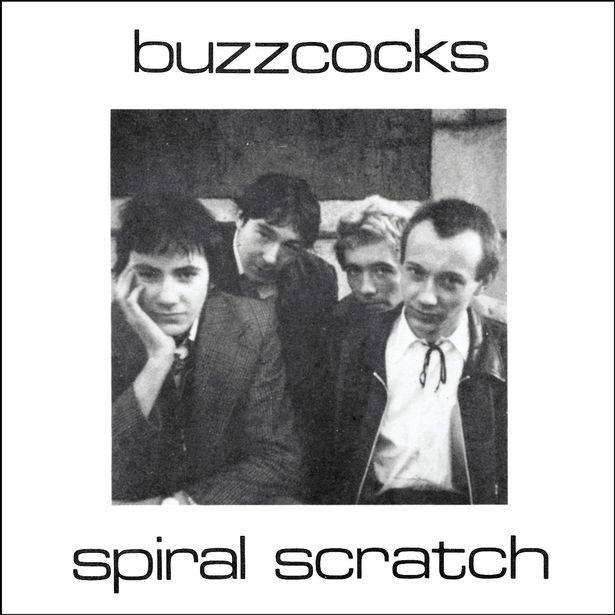 The Spiral Scratch EP, featuring the classic Buzzcocks line-up of (left to right) John Maher, Steve Diggle, Pete Shelley and Howard Devoto(Image: .)
The lads met a few days later at Howard’s bedsit on Lower Broughton Road, in Salford. Steve showed them his songs including Fast Cars – an ode to the purveyors of automotive phallic symbols.
That first rehearsal, played through a tiny amp “sounded terrible”, but Steve says “a terrible beauty was born”.
“You’ve got to remember nobody was doing anything like that,” he says. “Through one little amp. It was the 70s and everyone was doing quadraphonic.
“This thing came together out of nowhere and it worked. Beyond the proficiency of playing, there was something powerful there. More than we realised.”
A few weeks later, the newly-formed Buzzcocks – now with drummer John Maher – brought the Sex Pistols back to Manchester. They opened the gig which was again at the Lesser Free Trade Hall and attended this time by Tony Wilson and Ian Curtis among others.
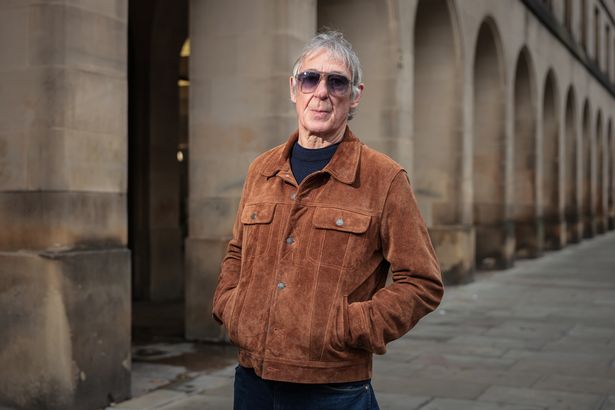 Steve Diggle outside what was the Free Trade Hall(Image: Kenny Brown | Manchester Evening News)
Buzzcocks – with their observational, political, often humorous lyrics – have been credited with inventing an entirely new genre of music. They were beloved by Kurt Cobain, who invited them to support Nirvana on their 1994 European tour. And their famous fans include Pearl Jam’s Eddie Vedder, the Manic Street Preachers, Ramones and Green Day.
But despite their worldwide renown, Steve feels they are frequently overlooked in the conversation about Manchester music lore.
“We brought the Sex Pistols when they were unknown to the Free Trade Hall. And they get the credit and we don’t and we’re born and bred in Manchester,” he says.
“That night changed people’s lives about punk. It changed the whole consciousness about what music was doing.
“Pete and Howard brought the f***in Sex Pistols from London and it was Buzzcocks what brought them and Buzzcocks that started the indie scene.
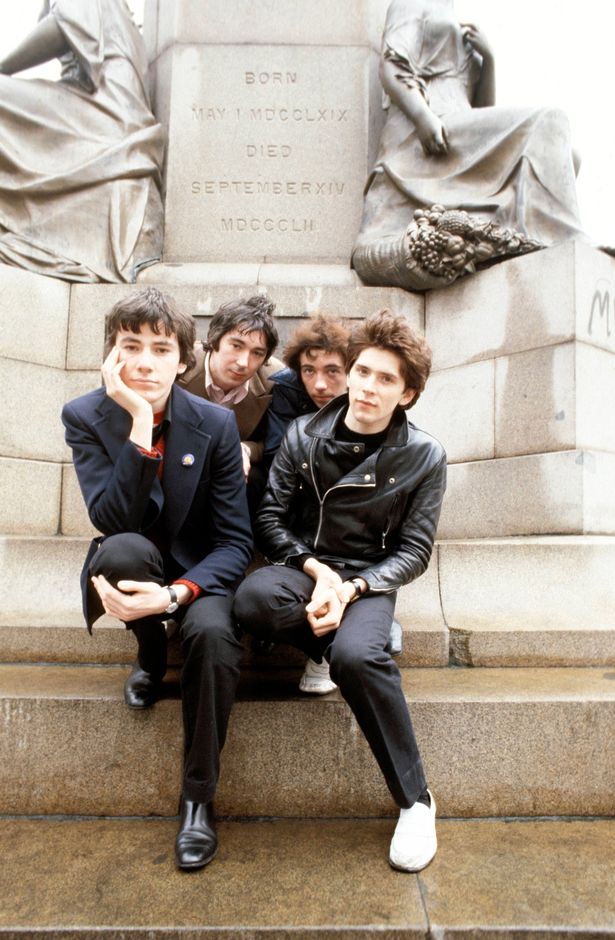 John Maher, Steve Diggle, Pete Shelley, Steve Garvey of Buzzcocks(Image: Redferns)
“Nobody had seen anything like the Buzzcocks. People say to us ‘you were the blueprint for indie’ because you can hear a lot of that indie sound in what we were doing in 76.
“They should put the f*****g Buzzcocks up there, that’s far more important in a lot of ways. I know how important that night was and how important Buzzcocks were to Manchester.”
He adds: “All them other Manchester bands of Tony Wilson’s – it changed because of us playing that night.”
A few months after those vital gigs, Buzzcocks released Spiral Scratch – an EP often credited with inventing indie music. But the title of their first single caused a problem.
“We said Orgasm Addict would be the first single. When it went to the pressing plant, they went on strike and said: ‘We’re not pressing this filth’.
“The release date was put back three weeks while they negotiated with the f***ing pressing plant that it was poetry.”
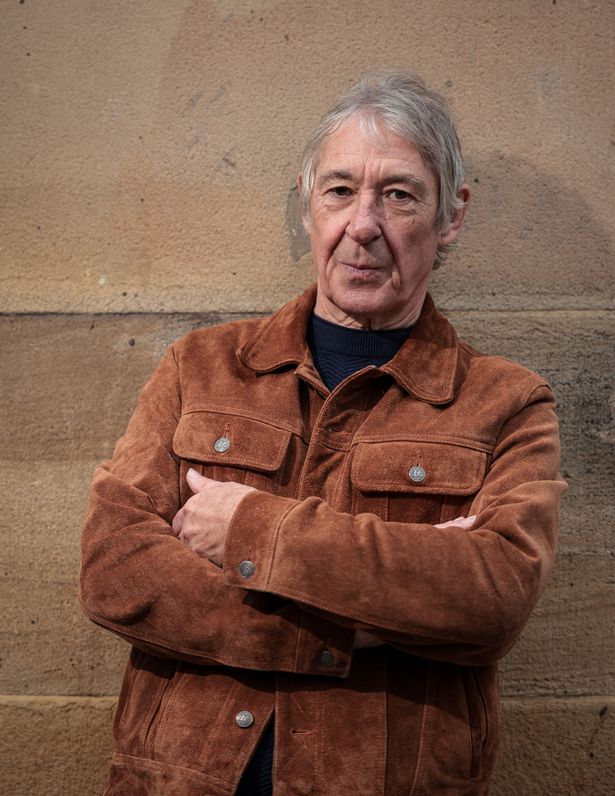 Steve Diggle today(Image: Kenny Brown | Manchester Evening News)
That song – mild by modern pop music standards but groundbreaking at the time – was banned by the BBC.
“We thought ‘everybody knows what an orgasm is, let’s put it on the table’,” says Steve.
“That kind of thing came from William Burroughs books, Naked Lunch, that kind of school of things. It was subversive really.
“The line: ‘You even made it with the lady who puts the little plastic robins on the Christmas cakes’ came from Howard Devoto working in a factory where a woman did that job.”
With their angular, distorted sound, avant garde, angry and often humorous lyrics – Buzzcocks had something special.
With Steve having spent his formative years on some of Manchester’s toughest streets, it’s perhaps unsurprising that his vocal style was on the snarling, angry side.
But he says he’s an introvert at heart and is most proud of the cerebral lyrics on songs like Why She’s a Girl From the Chainstore – a song that references sociologist Basil Bernstein.
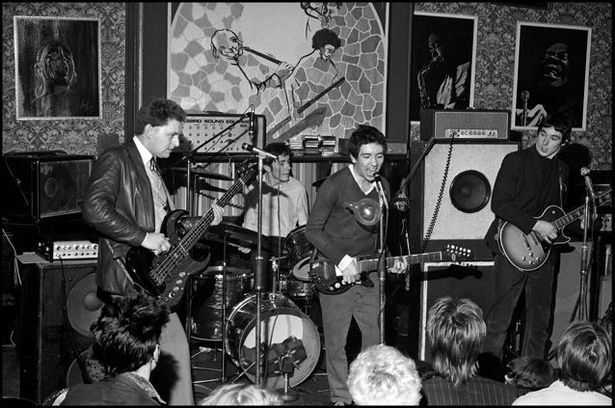 Buzzcocks perform at Band on the Wall in the late 1970s(Image: Kevin Cummins | Band on the Wall Archive)
“A lot of my songs were political. Harmony In My Head’s is about self rule. The Pistols were singing ‘anarchy in the UK’ I was saying you’ve got to rule yourself, not the government. You need to find yourself.”
The cerebral musings about class, heartache and inequality might not grab the attention of the masses, but Buzzcocks have most certainly enjoyed mainstream success. The catchy pop punk power of singles Everybody’s Happy Nowadays and What Do I Get? have seen them included in films, including Shrek, and even on a McDonald’s advert.
That’s a move Steve – a devout vegetarian – was never happy with, but he’s made his peace with it.
Their popularity continues to this day, with the band set to embark on a 50th anniversary tour next year. A new album has been recorded and Steve is still writing songs all the time.
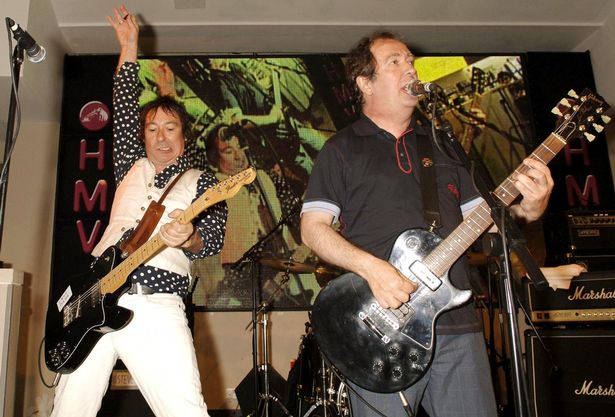 Steve Diggle and Pete Shelley perform during the MOJO Honours List launch in December 2018(Image: PA)
But performing without Pete – who died in 2018 – has always been bittersweet.
“We spent 43 years together,” says Steve. “We were there from day one, me and Pete.
“We had a good musical exchange but also we were just really close. Me and him would go to the pub when we had band meetings and rehearsals.
“We used to have an office at 50 Newton Street. We’d have our meetings in the Wagon and Horses across the street.
“We used to discuss everything me and Pete, all kinds of things. The humorous drunken wit. Heavy stuff. He was quite scientific and I loved the literature. I used to say I’m the illogical one, he’s the logical one.
“We went through hell and high water and an amazing career together.”
Just before he died, Pete told Steve he was ready to retire, but was told: “don’t be silly, we’ve got a lot to do’.
“He said ‘I’m getting tired Steve, you carry on. I said: ‘you’re not going anywhere.
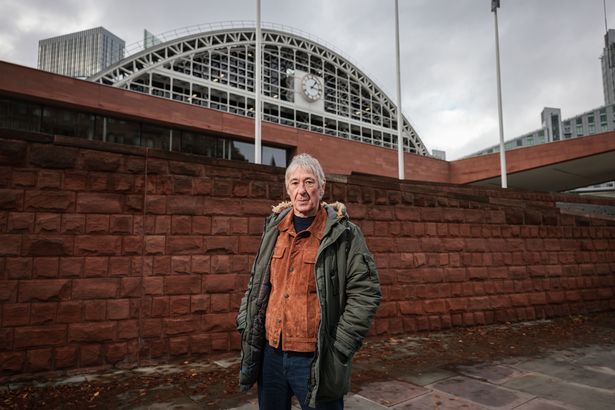 Steve Diggle(Image: Kenny Brown | Manchester Evening News)
“About two days later I got the phone call that he’d died.
“After he died, which was heartbreaking, we had the Royal Albert Hall booked. So we made it a memorial night for Pete.”
In Pete’s absence, Steve has strived to make new music to avoid “becoming a Buzzcocks tribute band”.
The new album, he says, is far more outward looking than his usual introspective style with lyrics about everything from reality television to lives lost at war.
“A lot of these punk bands rely on the past. But I don’t have to,” he says. “This new album’s hopefully full of surprises.
“Some people look at these albums and go, ‘Oh, it doesn’t sound like Buzzcocks’. I could recreate Singles Going Steady but what’s the point, you know?
“Every Beatles album is different, every Bob Dylan’s album is different, every David Bowen’s album is different.”
Working class realism, intellectualism and philosophy have always peppered the lyrics of Buzzcock songs. But at their heart, they wrote songs about the human condition.
“Blokes used to call us The Beatles of punk,” says Steve. “Or The Beatles in a blender. I can see where they’re coming from.”
Steve Diggle’s memoir Autonomy: Portrait of a Buzzcock is out now. Buzzcocks new album is due out next year.