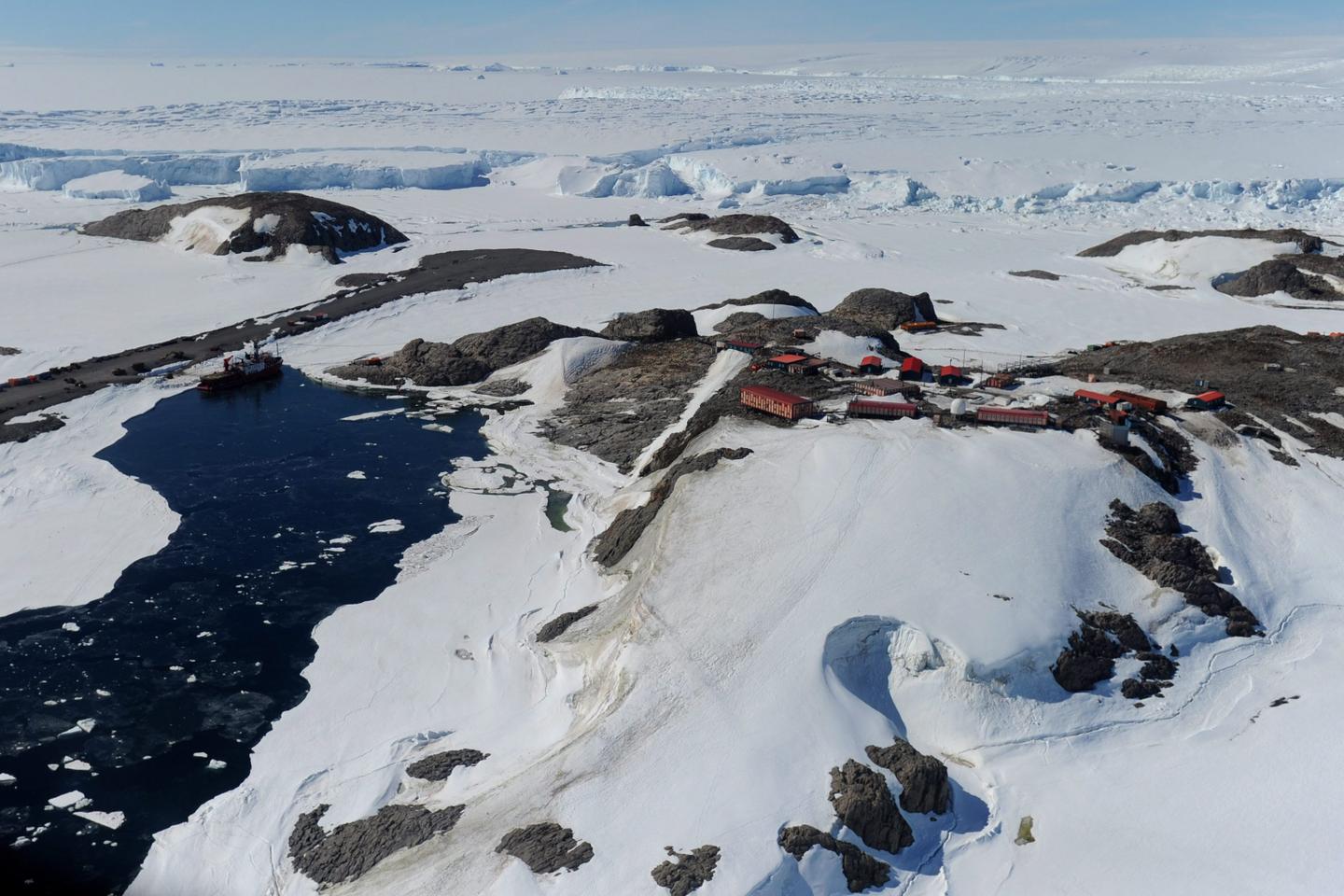
 French Antarctic base Dumont-d’Urville, Antarctica, January 17, 2012. DEAN LEWINS/EPA/MAXPPP
The Arctic and Antarctic are no longer just the planet’s thermostats. While they remain on the front lines of climate change – upended by rising temperatures, melting ice sheets and sea ice and shifting species – they have also become focal points for major geopolitical tensions, as their reserves of strategic minerals, hydrocarbons and fisheries are increasingly coveted.
It is in recognition of these “tensions” and “threats” that France has just revised its polar strategy, releasing a new edition that covers 2026 – 2040 on Wednesday, December 3. The aim is to enable France to remain a “world leader in polar research” while contributing to peace and stability in these extreme regions.
The previous roadmap, published in 2022, is “already outdated from a geopolitical perspective,” explained Olivier Poivre d’Arvor, an ambassador for the poles and maritime affairs, who drafted the strategy with several ministries, including Defense and Research. Russia’s invasion of Ukraine in February 2022 ended the era of cooperation in the far North – known as the “Arctic exception” – and upended regional balances, with seven out of eight Arctic states now members of the North Atlantic Treaty Organization (NATO), following Finland and Sweden’s accession.
You have 81.03% of this article left to read. The rest is for subscribers only.