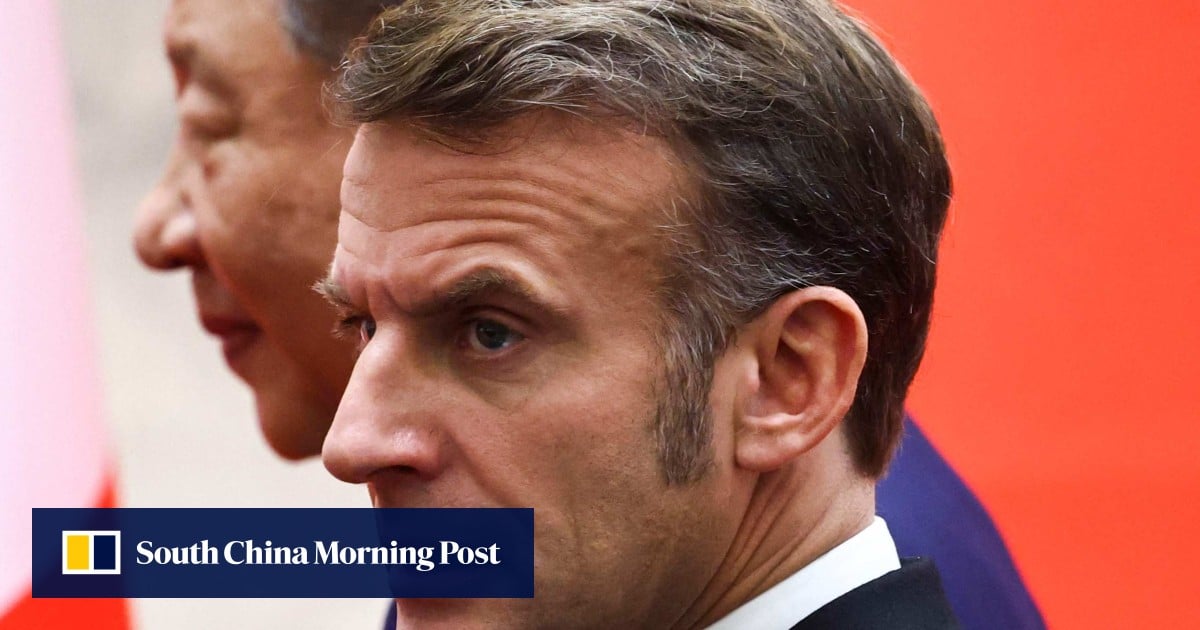
French President Emmanuel Macron has called on Chinese companies to invest in France and transfer know-how in emerging sectors like batteries, electric vehicles (EVs) and solar panels – highlighting growing concerns over the widening technological gap between the two countries.
“We want to welcome more Chinese investment through projects and re-industrialisation strategies, and this is what will allow us to break the cycle we’re currently in,” he said on Thursday in Beijing, where he attended a French-Chinese Business Council meeting alongside President Xi Jinping.
Macron called for “mutually beneficial projects” in sectors where he acknowledged China’s technological advantage, and urged Chinese firms to play a role in Europe’s development.
Chinese customs data on last year’s top traded goods with France could shed light on Paris’ motivations. Eight of China’s 10 largest exports to France by value were technologically advanced goods. EV batteries, laptops, solar panels and turbojet engine components featured in the top five, though small parcels still topped the list, mainly from e-commerce platforms like Shein and Temu.
The remainder of the top ten included container ships, electronic equipment, data processors, smartphones and clothes.
By contrast, four of France’s top exports to China by value were critical technologies, including aircraft engines, medicine and medium- to large-sized aircraft. Cosmetic products topped the list, accounting for 9 per cent of China’s total import value from the European country. The rest were fashion and agricultural goods such as cognac, handbags, flax, jewellery and wheat.
Analysts said the data pointed to a reversal in trade dynamics. Twenty years ago, China mainly sold basic consumer goods like clothes, tables and chairs to France, while the European country led in high-speed rail and aerospace technology, said Sacha Courtial, a China researcher at the Paris-based Institut Jacques Delors think tank.