by Arezo Rahimi
At just 18 years old, Fereshteh Karbalaei has watched the promise of a safe future disintegrate into weariness. She describes the situation for her community as having “turned into deep fatigue and despair,” a mental state so profound that many refugees have lost the courage to even have a dream and feel they have no value left in the world.
Her personal struggle and the five years she has dedicated to voluntarily teaching refugee children, underscores the depth of the crisis facing thousands. Under the shadow of stringent immigration policies, Fereshteh and other refugees from Afghanistan, primarily from the Hazara minority, remain trapped in a state of permanent limbo in Indonesia, a situation that has extended beyond a decade.
According to global statistics confirmed by UNHCR, Afghanistan remains one of the three largest sources of displacement worldwide, accounting for 5.7 million displaced persons. Furthermore, children under 18 constitute 40 percent of this total global displaced population. This legal and political suspension has now generated a severe and widely reported physical and mental health crisis, with its devastating consequences escalating from chronic stress to self-harm.
The Hidden Crisis of Self-Harm
The immense psychological pressure resulting from over a decade of uncertainty has created a mental health catastrophe among Afghan refugees in Indonesia. Ghorbanali Ebrahim, a refugee who has endured 11 years of this limbo, grimly confirms the crisis: “The biggest disaster from waiting so long is the complete collapse of our mental health and the worrying increase in people killing themselves.”
He reports that drastic acts, including suicide and self-harm, primarily within the Hazara community, have claimed over 20 lives. Khodadad’s experience is a searing testament to this suffering. He describes life away from the media’s attention as a “gradual death,” stained by tragic sights: “We often found their lifeless bodies on rooftops, in the corner of bathrooms, or hanging from the ceiling, scenes that will never be erased from our minds.”
For years, asking for help went unanswered. Khodadad recounts the abandonment by the global organizations responsible for their care. “There was nowhere to express our pain except to the responsible organizations like UNHCR and IOM; but unfortunately, they showed the smallest amount of importance or attention to our situation, or even our survival.”
The crisis became unbearable after the Taliban seized Afghanistan in late 2021. Cut off from family and overwhelmed by “horrifying and scattered news,” Khodadad reached his breaking point. After days without sleep and being blocked on WhatsApp by a local aid worker he desperately tried to contact, he lost control. Under severe mental and psychological pressure, Khodadad abandoned thoughts of ending his own life. Instead, he chose a powerful, silent protest: he sewed his lips together to expose the humanitarian tragedy in what he calls the “Green Hell of Indonesia,” hoping that their silent voice would finally reach the world.
Khodadad Gholami emphasizes that the critical psychological situation is so severe that many young people are now forced to constantly consume antidepressants and sleeping pills, and some are currently residing in “Mental health hospitals and asylums.” Hassan Ati narrates with sorrow: “One of my friends always seemed happy, so we didn’t notice, but he committed suicide, and now his wife and children are left alone here. This incident shows the extent to which depression is hidden and lethal within the migrant community, and how devastating its consequences are for their families.”
The Legal Trap and the End of Purpose
This crisis goes beyond medicine; it’s an existential struggle resulting from having no purpose. Describing his daily routine, Hassan Ati says: “We don’t have a fixed routine. We stay up late at night and sleep during the day because we don’t have work… I can say that we have become useless, aimless creatures, like animals.” He adds: “We don’t even feel useful to ourselves. We don’t even have the patience to read books or pursue other hobbies.” This feeling of futility is a direct result of legal deprivations. Mohammad Aman Shafaei, who lives in a shelter with 100 refugees, describes the situation: “There is no positive atmosphere among the migrants, and every piece of bad news leads to more depression.” He says with despair: “I feel like I am in darkness with no way back and nowhere to go.”
The root of this hopelessness lies in the stringent legal restrictions that, after 11 to 14 years of waiting, deprive migrants of any productive activity. As Indonesia has not ratified the 1951 Refugee Convention, Presidential Regulation No. 125 of 2016 dictates that registered refugees and asylum seekers have no right to work, no right to formal education, and no right to free travel. Hassan Ati says with regret: “If I had permission to study, I would be an educated person now. I wanted to get my Ph.D. and have higher education. The lack of work permission caused us to lose hope. Our self-confidence has significantly decreased.” He adds: “If we could work, we could at least support our families.”
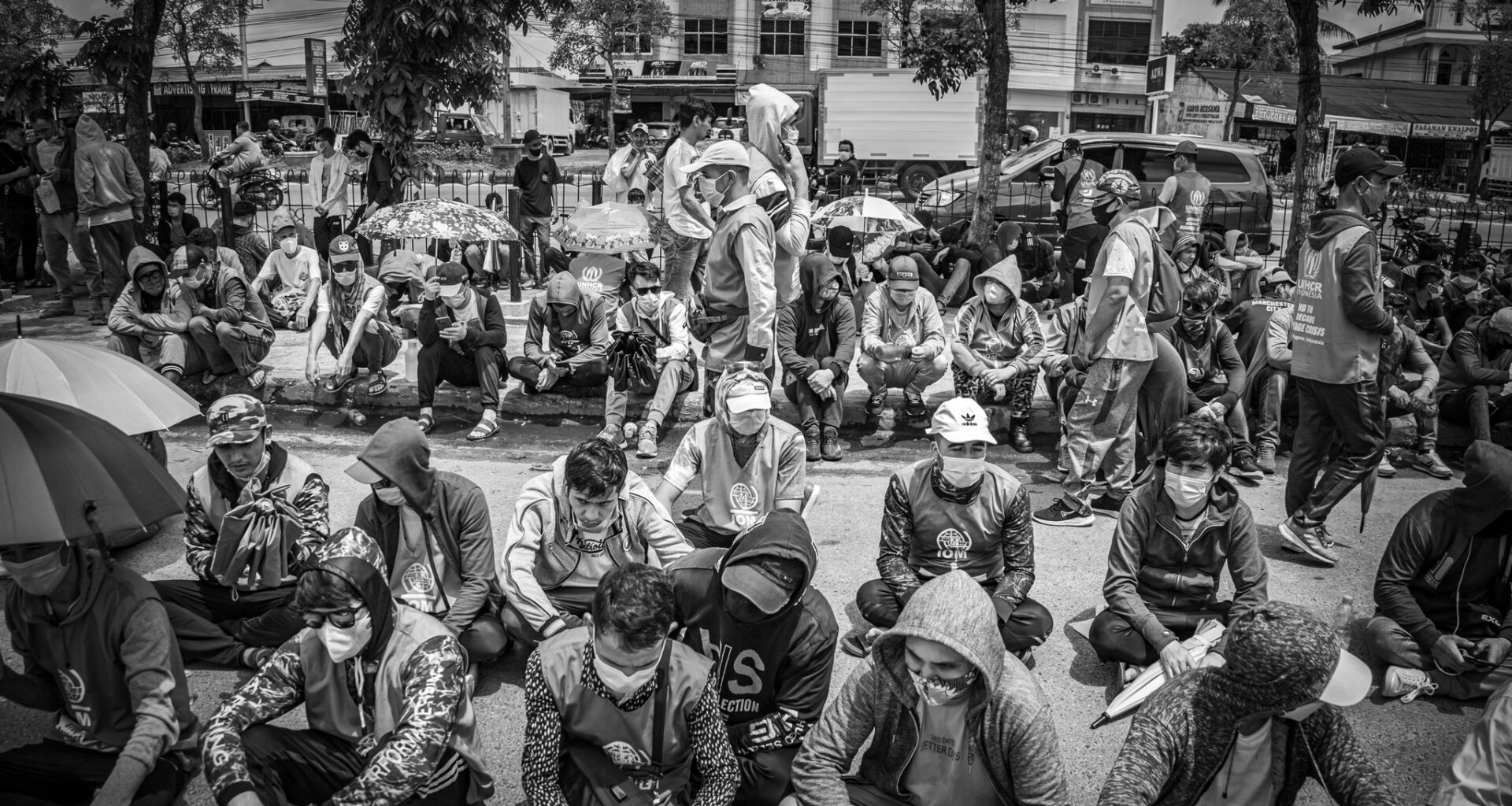
The consequences of trying to break these restrictions are also severe. Hassan Ati emphasizes: “Based on the laws of Indonesia, we have no right to any activity except staying in our accommodations.” However, the need for survival has forced some migrants into “black market” or illegal work. But this path has also led to disaster. “Those who did black market work or other jobs were often caught, and it resulted in them having to pay fines two or three, or even more times the money they earned, otherwise they would be imprisoned.” This places the migrants in a vicious and dangerous cycle: if they don’t work, they become depressed; if they do work, they are pursued and face crushing fines. In past years, refugees repeatedly tried to make their voices heard through large demonstrations, hunger strikes, and even sewing their lips shut. But Ghorbanali Ebrahimi emphasizes that “no significant positive changes have occurred during all these demonstrations and strikes.” This cessation of protests marks the peak of despair, where even the last means of expressing existence has been silenced. Khodadad Gholami has been detained and threatened by authorities several times to stop his protests, which has added a new layer of fear and hopelessness to their vulnerable condition. “Today, many refugees are tired and hopeless and have lost even the ability and hope to protest.”