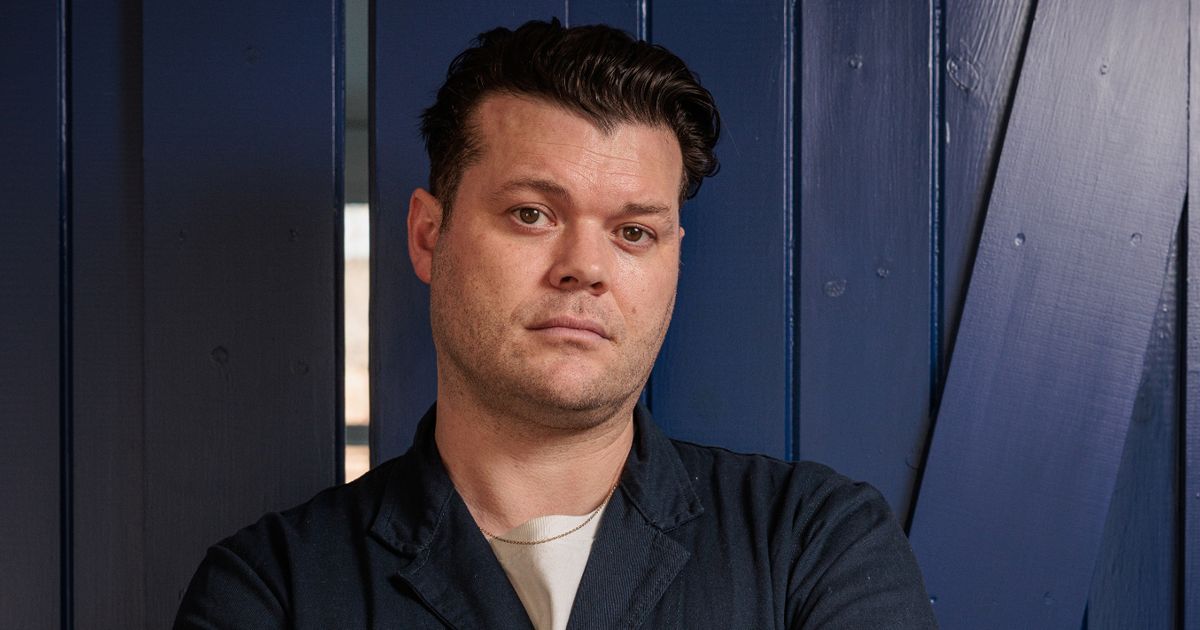
Marking a decade of their landmark album, the band return to the city where it all began. Jeremy Pritchard speaks to Beth Abbit about Salford, taking risks and why Manchester’s music scene welcomed them from the start. Jeremy Pritchard(Image: Kenny Brown | Manchester Evening News)
If we’re splitting hairs about proper Mancunian bands – as in those born and bred within the M60 – Everything Everything are not one of them.
Their members hail from the North East, Kent and Guernsey. But there is no denying they are a quintessentially Manchester band in spirit – radical, political, cerebral, beloved.
And bassist Jeremy Pritchard feels the band – who gave a barnstorming performance at Aviva Studios last month – have nothing left to prove in that respect.
“I don’t know if we feel maybe less indebted to what’s expected of a Manchester band than if we’d been born in Middleton say. We might feel more restricted or more indebted in some way to a certain way of doing things,” he says.
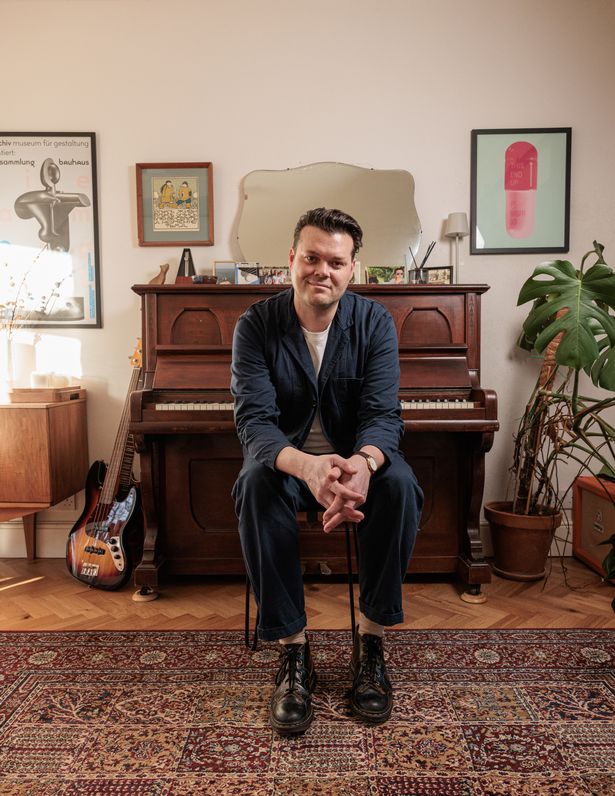 Jeremy Pritchard(Image: Kenny Brown | Manchester Evening News)
“I think modern Manchester should see itself in the same way that New York did in the seventies. David Byrne is not from New York, he didn’t grow up there. But is anybody going to tell him that Talking Heads are not a quintessential New York band?”
Everything Everything was formed when frontman Jonathan Higgs and Jeremy met at Salford University while studying music. Higgs later enlisted his drummer friend Michael Spearman and guitarist Alex Robertshaw.
Since then they’ve released six albums and been nominated for both the Mercury Music Prize and the Ivor Novello.
Manchester is the only home the band has ever known, with all their music recorded in Stockport.
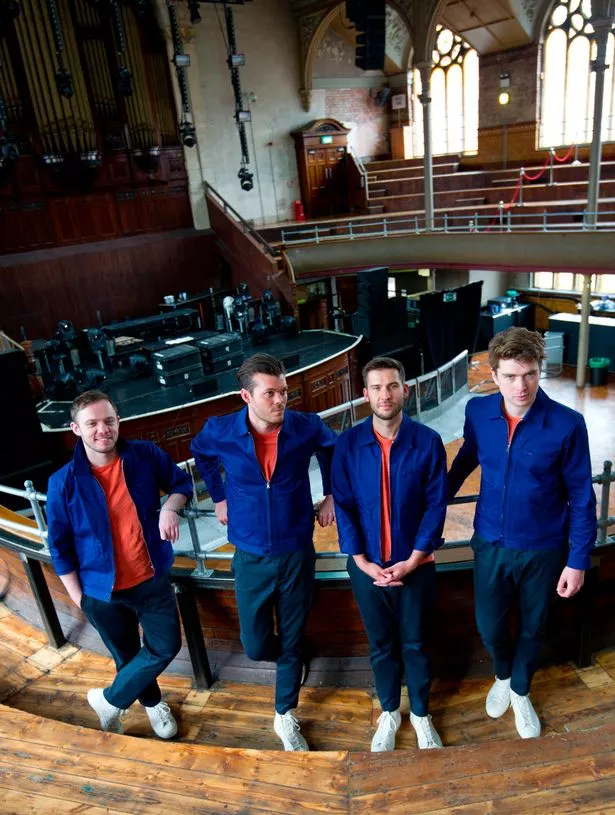 Everything Everything pictured at Albert Hall in 2017(Image: Manchester Evening News)
And it was the Manchester and Salford of the early noughties that first inspired Jeremy and Jon.
“I think there’s a spirit of radicalism in Manchester music. There’s this imaginary idea about Manchester bands that they all have a certain swagger, or something that ties them together stylistically or aesthetically,” says Jeremy. “Actually it’s not true.
“If you look at anything from 10CC through Joy Division, Happy Mondays, Oasis, Elbow. They don’t sound alike at all. There’s no through line – not in terms of style, not in terms of sound.
“But what they do have in common is the radicalism thing, which is the desire to do something different than what came before. That we definitely were inspired by.
“Manchester’s a radical town and it’s produced radical bands and I’d like to think we’re one of them.”
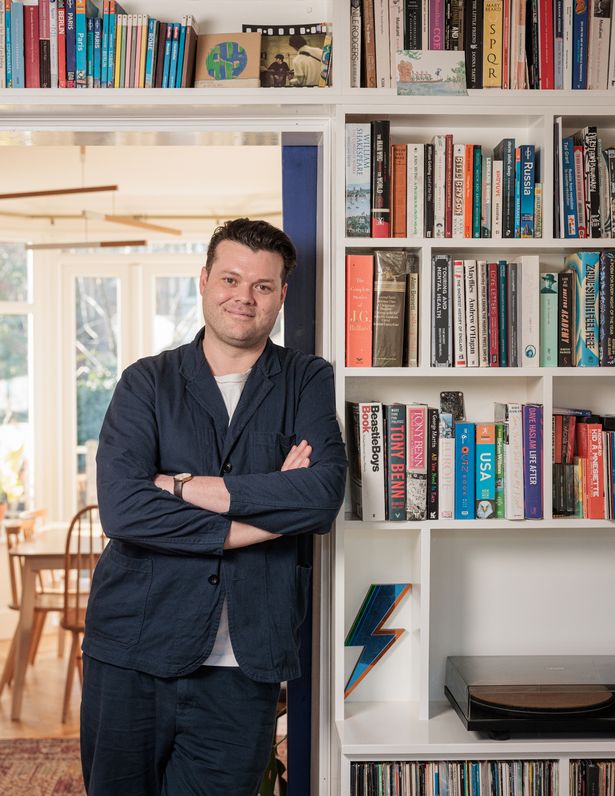 Jeremy Pritchard(Image: Kenny Brown | Manchester Evening News)
For Everything Everything, getting gigs in those early days wasn’t difficult. It’s something Jeremy attributes to the collaborative nature of the city.
“It’s very different to where I grew up in comparatively rural Kent. To move to Salford was quite a culture shock. Especially then – this was in 2003 – Salford was still quite undiscovered in some ways. And I was really enamoured straight away of the kind of accessibility and the lack of mystification around the music scene.
“You could just do it. You could be part of it. As soon as I was there and studying and met Jon, we started bands.
“We were playing around town a fair bit and the training ground was there. We were playing at the Pint Pot, Jabez Clegg, Night and Day, Hop and Grape. It was easy to be part of the fabric quite quickly.
“We just walked into Night and Day with a CD of demos and said, ‘can we have a gig please?’.
 The very early days of Everything Everything(Image: Publicity Picture)
“I don’t know if the scene is as accessible now, but I hope so. Because that’s one of the great things about the no nonsense attitude of the Manchester cultural scene. It’s open and accessible and contributors are welcome.”
Last Saturday, Everything Everything took to the stage at Aviva Studios to mark a decade since the release of their beloved third album Get to Heaven. The album was celebrated it in all its glory to a crowd of thousands.
It was a joyous event with the vast aircraft hanger-like space of Aviva allowing the band to put on a truly spectacular show.
“We’re basically looking at all of the music from that period. We’ve thought a lot about how we want to present it aesthetically,” says Jeremy.
“We’d made a very iconoclastic debut. Which sort of stamped our mark. And then the second album was a much more contemplative, introspective record.
“We toured so much on both of those albums that we really wanted a record that was really effective live. And we really wanted something that had hard uptempo energy.
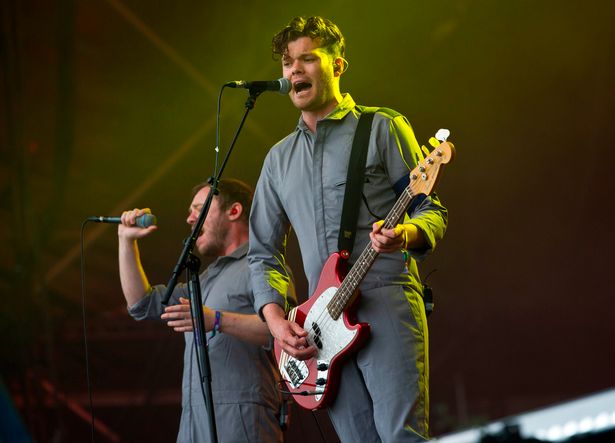 The band perform at Parklife 2018(Image: Vincent Cole)
“And that had a kind of brutality. Because that’s what we saw reflected in the world around us.”
Though Get To Heaven was a hit with both critics and fans, Jeremy says the band wasn’t entirely confident at the time.
“We knew we’d take a load of risks,” he says, a decade later. “Musically and lyrically and commercially even. That’s always the right thing to do, but it’s easy to say that in retrospect.
“Any confidence that I associate with that record now, I think came because of how well the album was received and how well it went down live. We actually had a really hard time making it and there were a lot of crises of confidence.
“There’s no denying that this record is the most connected thing we ever did. It’s the thing that resonated with people.
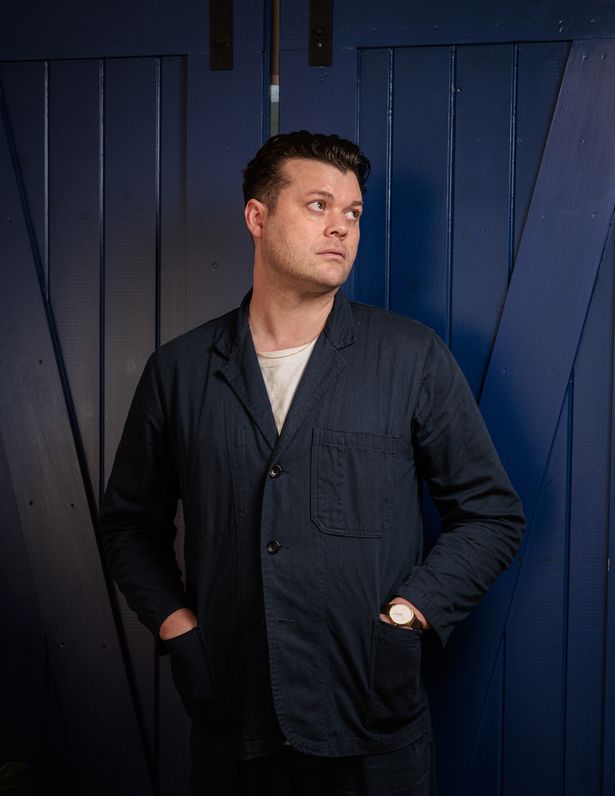 Jeremy Pritchard(Image: Kenny Brown | Manchester Evening News)
“Ten years on, we’re no longer looking at rolling news about Islamic State and Donald Trump gearing up for his first election campaign, although clearly we’re still dealing with him. The themes of this record still resonate with people.”
Get To Heaven is a busy, mathy record, full of complex ideas and bombastic moments.
And it looks to some profound moments in Manchester’s social history as inspiration. The song To the Blade was inspired by the murder of Salford aid worker Alan Henning by Islamic State – a bold case for a band to tackle.
“We didn’t want it to feel like it was exploitative in any way, but it was a reflection of the really sorry state of the times ten years ago,” says Jeremy.
“I think the interesting thing about that song and the rest of that album is that it still penetrates. I think it still has some relevance. A lot of stuff that we were talking about on that album was on the horizon at that point. And now it’s very much in our faces with Trump and Farage.
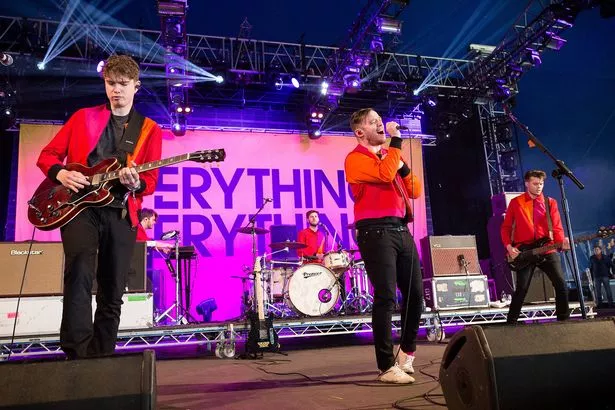 EE perform on the Big Top stage at The Parklife 2015 music festival in Heaton Park(Image: Manchester Evening News)
“Up until that point I think we were still finding our feet, I suppose, as a young band. And then five years and three albums in, you can’t we kind of I guess it’s the first really vivid statement.”
So how do EE balance their complex musicianship, political, sometimes arch lyrics with such a high level of sincerity?
“I think we’ve got better over time. Maybe it’s something that waxes and wanes a bit, but we got better and better at having the confidence to take the mask off a little bit.
“When you look at Man Alive, our debut album, it’s so heavily coded – you really have to have grown up with Jon to understand every single word of it.
“I think as we’ve gone along, he’s had more and more confidence to be direct and straightforward and honest and have that vulnerability.”
Jeremy’s Manchester favourites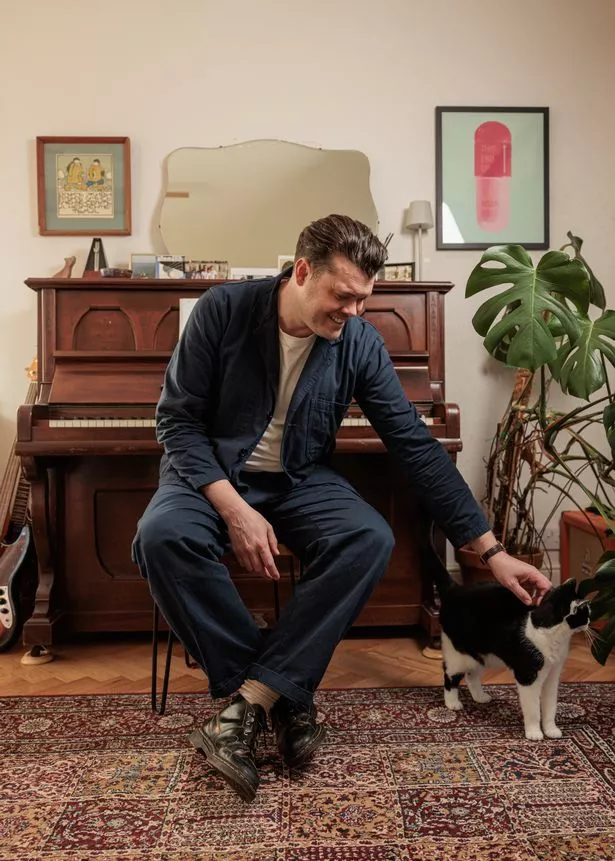 Everything Everything bassist Jeremy Pritchard at home with his cat(Image: Kenny Brown | Manchester Evening News)
Best band?
“Easy – The Smiths. I think Joy Division are something absolutely extraordinary. They may be one of the most original bands of all time. Certainly one of the most influential bands of all times. And the four of them are so much greater than the sum of their parts.
“But The Smiths mean so much to me. On a personal level and on a musical level.
“Andy Rourke was a huge influence on me as a bass player. I loved Morrissey’s lyrics. I think they’re one of the great British bands.”
Best pub?
“I still have a huge soft spot for Night and Day. Partly because it was so important to Everything Everything over our first handful of shows and just because I’ve seen some great gigs there.
“The great thing about all the great Manchester music venues is they all have their place. Me and Jon used to play like alldayers at the Klondyke in Levenshulme as well. That’s not a music venue. I think some of the greatest things I’ve been to in Manchester haven’t even been in real music venues.”
Best building?
“I really love Central Library. I like just the postmodernism of Manchester architecture. There’s you know there are a lot of very modern buildings that are quite sensitively done that are just plonked next to a two hundred year old path. And they don’t feel incongruous.”
Best park?
Alexandra Park. It’s beautiful this time of year when the leaves are changing and I love the green parakeets. There’s a point in the evening where they all go bananas when it’s bedtime.”