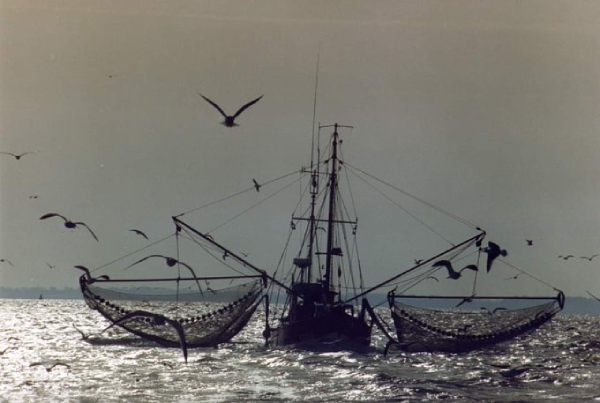
Ministry Acknowledges Shrinking Fishing Opportunities
German fisheries minister Alois Rainer said the scheme was intended to rebalance capacity with reality. “We are bringing the performance of the fishing fleet back into balance with the actual fishing opportunities,” Rainer said, adding that the funding would “enable a sustainable structural adjustment in the German fishing fleet and secure an economic perspective for those North Sea businesses that want to continue operating”.
While the language focuses on sustainability and future viability, the initiative effectively confirms that further fleet contraction is considered unavoidable under current spatial and regulatory conditions.
The measure implements a core recommendation of Germany’s Fisheries Future Commission, which has repeatedly warned that the existing fleet size is no longer compatible with the cumulative impacts of conservation policy and offshore energy development.
Wind Energy Funds Redirected To Fleet Reduction
Funding for the scrappage programme will come from revenues generated under Germany’s Offshore Wind Energy Act. These funds are earmarked for environmentally sensitive fishing measures, as well as structural interventions within the fishing sector, including capacity reduction.
The decision to use offshore wind revenues to finance vessel decommissioning is likely to sharpen debate within the fishing industry, where fishermen have long argued that energy development is displacing fishing activity without adequate compensation.
Administration of the scheme will be handled by the Federal Office for Agriculture and Food (BLE), with the programme running in three phases through to the end of 2027. The first funding window is opening immediately, with applications accepted until 31 January.
Structural Shift, Not Temporary Relief
While presented as a support measure, the programme underlines the scale of structural change now being pursued by the German government in the North Sea. Rather than temporary relief or income support, the policy is explicitly designed to remove vessels from the water permanently.
For fishermen remaining in the fleet, the government argues that reduced competition for shrinking fishing grounds will improve economic stability. For those exiting, the scheme is positioned as a managed withdrawal from an industry facing increasingly tight spatial and regulatory constraints.
Whether similar approaches will be extended to other EU fishing nations facing comparable pressures remains an open question, particularly as offshore wind targets continue to expand across the North Sea.