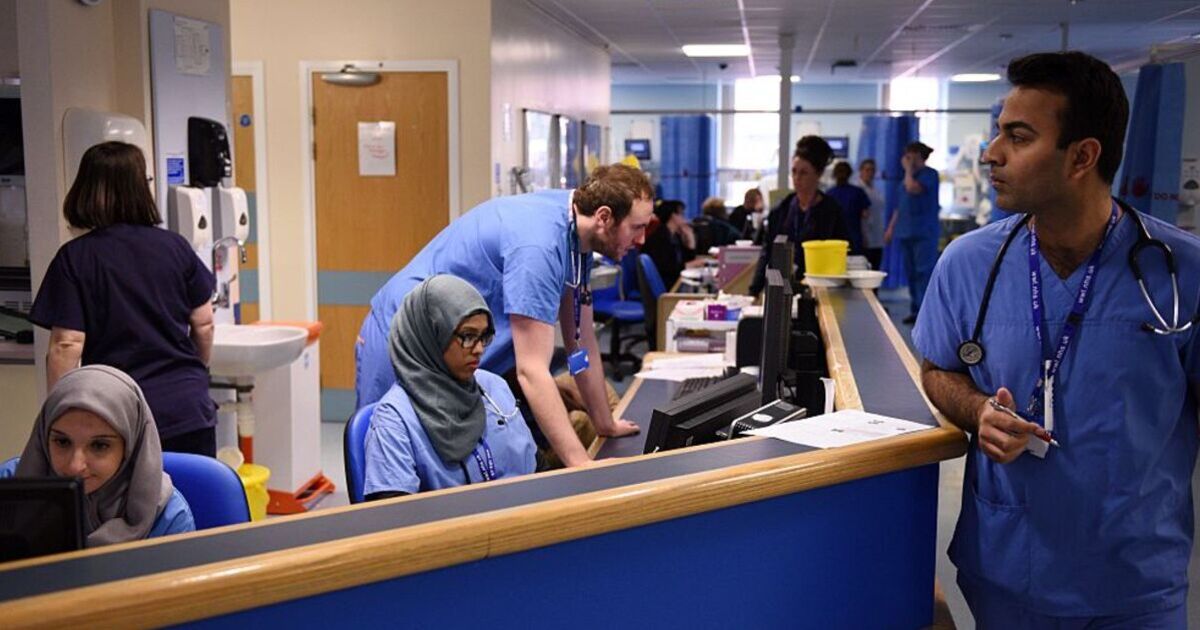
The NHS has declared an early crisis after a new mutant “superflu” sweeps across the UK, overwhelming hospitals with patients. The emergency is being compounded by looming strikes as doctors demand better pay and work conditions.
The new bug at the centre of the health crisis is a mutant strain of the flu, known as “drifted” influenza A(H3N2). It has also been dubbed as “subclade K” or “super flu’ by medical experts in the UK. The bug is believed to be more infectious than last year’s flu strain and is reportedly causing more severe illnesses in patients.
The virus is also leaving people more vulnerable to contracting other nasty illnesses.
Hospitals in England have admitted a record number of people with flu for this time of year, and there are fears there could be an “unprecedented wave” of infections to come.
Virology experts have urged the public to wear masks to protect themselves from the unpleasant bug.
Mandatory mask rules have already been brought in over recent weeks in some parts of hospitals in Lincolnshire and Shropshire.
Professor Nicola Lewis, World Influenza Centre director at the Francis Crick Institute, said: “We haven’t seen a virus like this for a while, these dynamics are unusual.
“H3 is always a hotter virus, it’s a nastier virus, it’s more impactful on the population.”
An average of 1,717 flu patients were in beds in England each day last week, including 69 in critical care, according to the first of this year’s NHS winter situation reports.
This is 56% higher than the equivalent numbers for the same week in 2024, when the total was 1,098 with 39 in critical care.
It is also well above levels seen at this point in both 2023 (160 patients) and 2022 (772).
Meanwhile, the British Medical Association announced a fresh round of strikes in England in the long-running pay dispute.
Junior doctors will stage a five-day walkout from 17 December, the fourteenth such strike since March 2023.