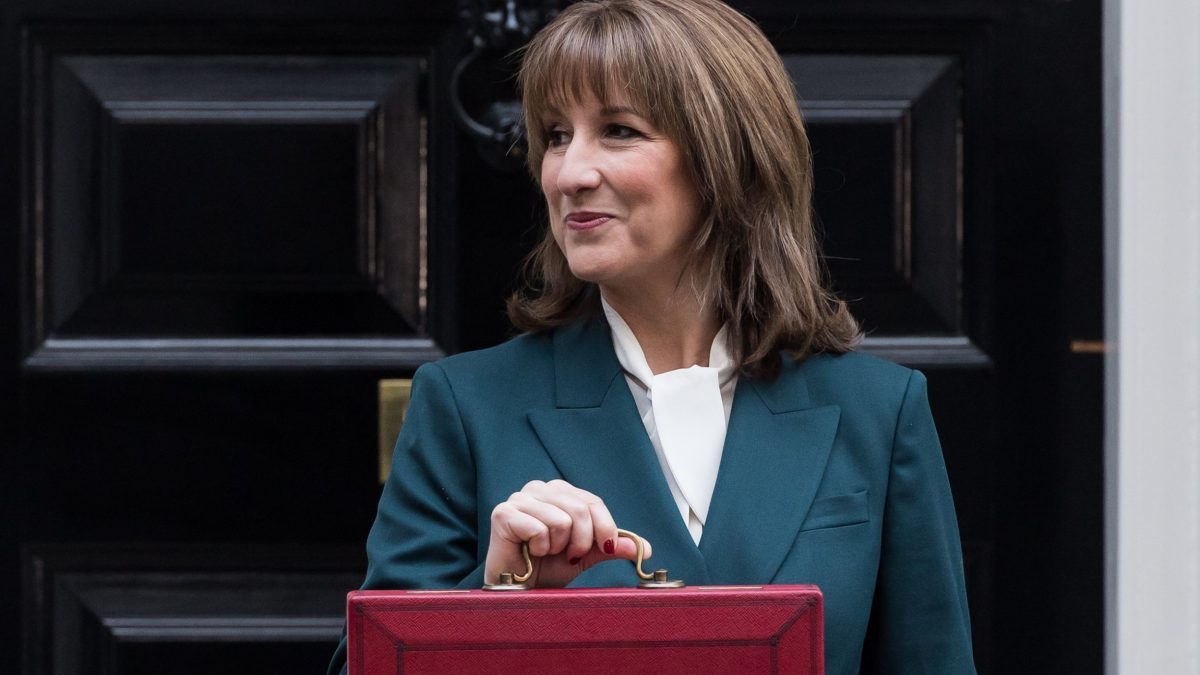
Pensioners and people close to retirement have risked harming their savings by withdrawing lump sums sooner than planned
Thousands of savers made the “irreversible” decision to withdraw hundreds of millions of pounds in tax-free cash from their pension pots due to uncertainty in the run up to the Budget, The i Paper has been told.
Pensioners and people close to retirement have risked harming their savings by withdrawing lump sums sooner than planned – and the Government should have been clearer that they would not touch the nontaxable limit, experts have said.
It is a decision that cannot usually be reversed and withdrawing early means savers miss out on growing their pension fund over time.
Quilter, the multinational wealth management firm, saw a threefold increase in retirees withdrawing lump sums from their pensions tax-free in the build up to the much-anticipated fiscal event when compared to normal levels.
And the boss of investment company AJ Bell said he saw hundreds of millions of pounds of additional withdrawals from pensions as a result of uncertainty leading up to the Budget.
New FeatureIn ShortQuick Stories. Same trusted journalism.
Currently, savers are allowed to draw out 25 per cent of their pension fund tax-free, up to the value of £268,275.
But there were fears the policy could be changed by Chancellor Rachel Reeves after the Fabian Society – a think tank aligned with Labour – proposed the limit be cut to £100,000.
Government sources ruled out a reduction around two weeks before the Budget, but experts say many had already made the decision to pull their cash in case there was a policy change.
For much of the run-up to the Budget, the Treasury had refused to respond to media questions over whether or not they were considering particular measures.
That strategy was a contrast to many previous years, where the Chancellor’s aides were quick to make it clear whenever a policy, mooted in the press or by the finance industry, was in fact not on the table.
Limiting the size of the tax-free lump sum is a popular idea among some on the left because much of the benefit flows to wealthier pensioners and those with little to no private savings do not get any of the tax advantages.
But Reeves has also said she is keen to encourage a culture of saving in the UK, to help people fund their own retirement and also to build up a greater pot of cash that can be invested in promising British firms.
The surge in withdrawals this year is a continuation of a trend that began after the Labour Government took power in the summer of 2024, which was also put down to uncertainty over policy change.
The amount of money withdrawn from pensions jumped by almost 36 per cent in 2024/25, with savers taking out £70.9bn compared to £52.2bn the previous year.
Risks for savers
Wealth advisers say the decision, which cannot usually be reversed, may have negative consequences for some savers.
This is because pension investments often grow over time, meaning pensioners who wait longer to pull their money will have a larger pot, so they can withdraw a larger amount of money tax-free.
There is also the risk of running out of money if they pull money early and then spend it. People are living longer and so savings are crucial for people to have a comfortable retirement which can often run for several decades.
Retirement experts said earlier communication from the Government over whether the rules would be changed before this year’s Budget could have prevented more pensioners from making the decision.
Retirement plans ‘undermined’
Jon Greer, head of retirement policy at Quilter, said: “Lack of clarity and rumour mongering makes people fearfully act just as they did the year before, and when it comes to pensions, that’s dangerous. Decisions like taking your lump sum are irreversible. If people fear this benefit is under threat, they may act early triggering tax charges or undermining their retirement plans.
“We’ve seen before that speculation leads to confusion and poor decision-making so this shouldn’t have come as a surprise. While the Treasury eventually confirmed tax-free cash was safe, that reassurance came very late in the day, too late for those who had already acted on fear.
“It’s a situation of the government’s own making, and it highlights why timely communication is essential to protect savers.”
Gianpaolo Mantini, chartered financial planner at Saltus, said the firm had seen a “marked increase” in withdrawal enquiries driven by the speculation.
He said: “It was an area where clients felt anxious and uncertain. Thankfully, but belatedly, the Treasury confirmed that there would be no changes, but by this time, it was too late for many. Taking tax-free cash early is rarely advisable unless it forms part of an established long-term plan.
“I recently worked with a client who had a large pension convinced that he would lose all or a significant amount of his tax-free cash. The plan had been to draw this down in phases over many years to supplement general income needs and therefore reduce annual tax liability.”
He explained that pensioners who withdrew cash and then re-invested it outside elsewhere faced paying tax on the investment growth.
Fidelity, another large pension firm, said it had seen a “considerable increase” in clients requesting to withdraw money in the Budget lead-up.
Royal London, another firm, told The i Paper it had seen a marked increase in questions about taking tax-free cash, and a slight uptick in people taking withdrawals.
Pensioners will ‘have to live with the consequences’
Michael Summersgill, chief executive at investment firm AJ Bell, told the Today programme on BBC Radio 4 that there were hundreds of millions of pounds of additional withdrawals from pensions in the run up to the Budget as a result of uncertainty.
He added: “While no changes were made to the key incentives in the current pension system – namely, the deferral of income tax on pension contributions and a tax-free entitlement on pension withdrawals – uncertainty in the lead up to the Budget resulted in heightened pension withdrawals as customers approaching retirement responded to the extensive speculation.”
Some pensioners who took their tax-free cash in anticipation of a policy change before the 2024 Budget tried to reverse the decision.
Some providers allowed them to do this, though others did not.
But this year, HMRC suggested in September that if pensioners took this decision, they would have to live with the tax consequences.
HMRC wrote in a bulletin: “If an action has resulted in a tax consequence, and an attempt is made to reverse the action, normally the resulting tax consequences cannot be reversed. The tax consequences will normally stand.”
The Treasury said that Chancellor Rachel Reeves had moved to quell speculation on tax changes prior to the Budget.
On 1 September, in response to tax speculation, she said: “People who seem to know what is in the budget before we have made those decisions are just wrong. A lot of them are talking rubbish and frankly, a lot of what they’re saying is irresponsible. I will make the decisions, but working people and businesses can rest assured.
“I know how important it is to return growth to our economy, and I will do that in the Budget this year.”
The disadvantages of taking tax-free pension savings early
Taking your tax-free pension cash early can be a bad decision for some people financially because leaving a pension invested can mean it grows to a larger size.
If a retiree had a £400,000 pension at 60 and chose to take their tax-free cash, they would get £100,000 tax-free.
But if they let it grow to £500,000 over the next five or six years and took it at 66, they would get £125,000 tax-free.
If you withdraw the money and then invest it, you may also have to pay tax on the gains, whereas if you keep it within your pension, you can benefit from tax-free growth as well.
Why some take their cash sooner
Some retirees take their cash if they need it for specific purchases or for paying off debt.
For example, some use the money to pay down their mortgage so they can enter retirement without having any housing costs.