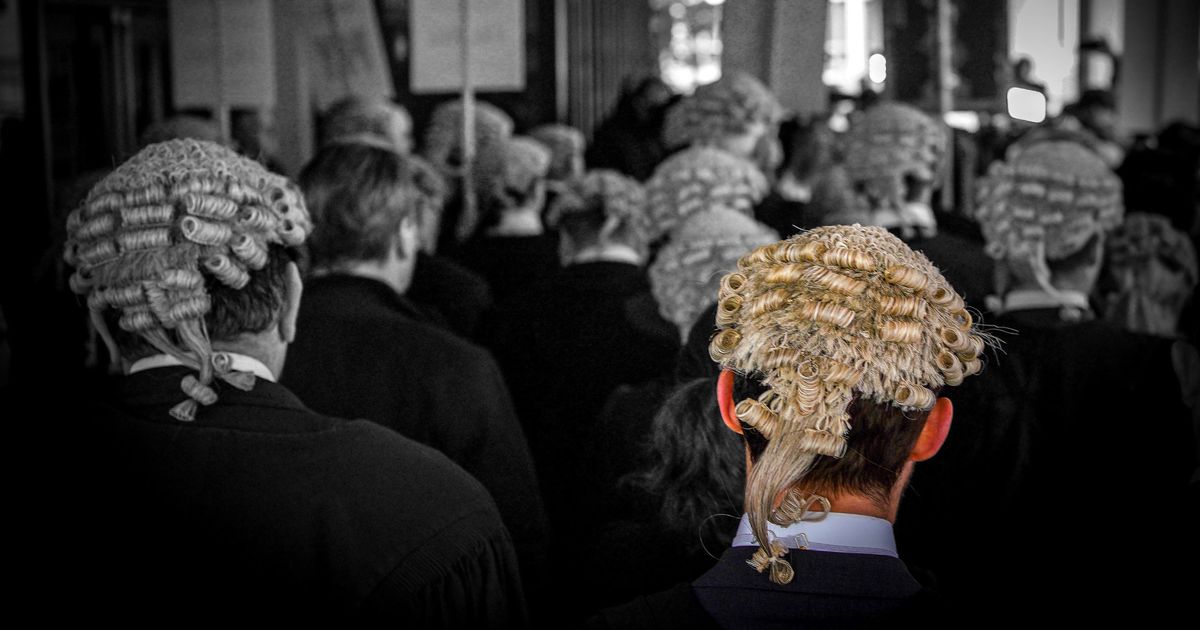
Senior Manchester barristers react as jury trials set to be scrapped for many crimes Barristers have had their say on the proposals
It is the one compulsory, civic duty which citizens of the United Kingdom are expected to observe, outside of war time. People can only be excused from jury service for good reason, such as childcare commitments or having a holiday booked and paid for.
But under controversial plans announced by the government, aimed at tackling the seemingly untameable backlog in cases waiting to get to the Crown court, the use of jurors at trials up and down the land is set to be reduced.
Those accused of the most serious criminal offences – such as murder, rape and other violent offences – will still face a jury trial, where 12 of their peers will determine their guilt. But for cases where the likely sentence for the crime would be three years or under, the right to a jury trial would be removed.
Defendants would instead face trial by judge alone. In addition, more power would be given to magistrates, who would be allowed to sentence defendants to up to 18 months in prison, up from the current 12 month figure. Justice Secretary David Lammy said that the reforms were needed to reform a criminal justice system in ‘crisis’. Currently almost 80,000 cases are waiting to get to court, a figure projected to rise to 100,000 by 2028.
Victims and defendants in some cases are left waiting three years or more to have their day in court and secure justice. But is a restriction in the access to jury trials, a cornerstone of the UK’s criminal justice system for hundreds of years, the silver bullet to solve this problem?
The Manchester Evening News spoke with some of the leading criminal barristers working across our courts today, to take the temperature and assess what they have made of the proposals. Among those we interviewed, there was consternation and serious questions as to whether restricting access to jury trials would have any impact whatsoever on tackling the backlog.
Andrew Thomas KC is the vice-chairman of the Criminal Bar Association, and last year was the lead prosecutor as the UK’s largest ever drugs ring was brought to justice, following the UK’s longest ever criminal trial, taking almost two years at Manchester Crown Court.
He told the Manchester Evening News: “There is no dispute that we’ve got an emergency in the Crown courts with the amount of work that’s outstanding. At the moment, on the latest figures, if you make a complaint of rape in Greater Manchester now, once the case gets all the way to the Crown Court, if that happens, the average time for the case to come on for trial is now 684 days, which is a very long time.
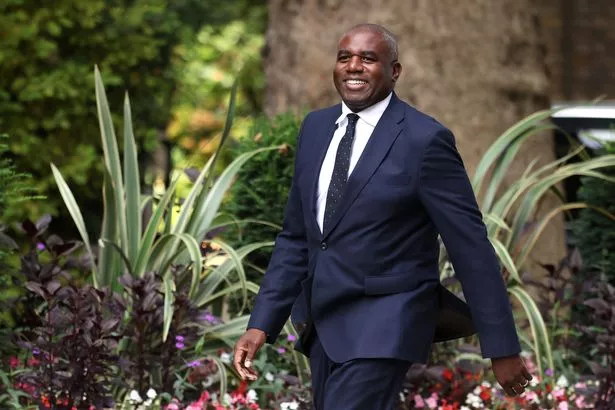 Justice Secretary David Lammy(Image: Getty Images)
“So on top of all the time for the investigation and the preparation of the case, even once it’s in the Crown court, you’re waiting effectively two years for your trial. And that’s having an impact. People don’t want to make complaints because they can’t take the pressure of waiting all that time. There’s no dispute we’ve got to do something about it. But this isn’t the answer.
“Nationally there’s a backlog of 80,000 cases. and the proposals that David Lammy has made won’t affect that backlog at all. The proposals will relate to new cases coming into the system.
“Jury trials are not the problem. It’s not the jury trials which have slowed things down. And if the judges are deciding cases themselves, that will create more work because judges will have to give detailed, written reasons for their decisions, which they don’t need to do when it’s a jury taking the decision.”
Mr Thomas says there is also a question as to whether judges are as representative of communities as juries are. He said: “There has been a huge amount of effort put into trying to improve the diversity of judges, but necessarily judges are older people.
“The people who currently qualify to become senior judges are predominantly men, predominantly white, and necessarily are people who’ve been educated at university. They don’t represent the full breadth of people of all ages in society, and juries do.”
So what would he do to tackle the backlog, if he was the justice secretary? Mr Thomas argued: “The most important thing is to remove the limit on the days that the Crown courts are allowed to sit. So in [Greater] Manchester, the senior judges at Bolton, Crown Square, and Minshull Street are told how many sitting days that are allowed for each year.
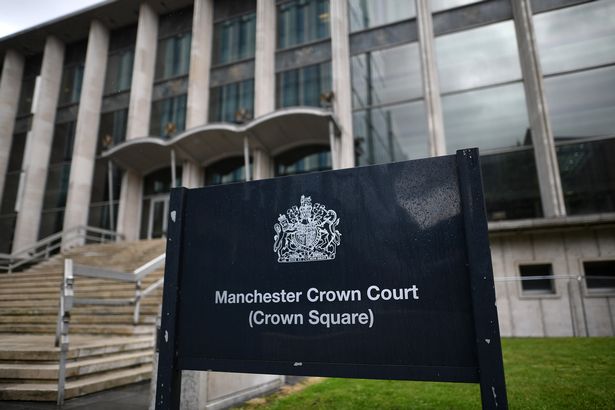 Manchester Crown Court, Crown Square(Image: M.E.N.)
“Sitting days are one judge in one courtroom. That means that there’s an artificial cap and that the senior judges are not able to run their own courts with all the resources they need to clear the cases that are coming through. So removing the cap is the single most important thing that can be done. There are also things that can be done to encourage people to plead guilty earlier in their cases, with incentives for that.
“There are other problems that delay cases like broken technology, prison vans not turning up or not bringing the right prisoner at the right time. Hours and days of court time are wasted dealing with problems like that.”
Nina Grahame KC has appeared in many high profile Manchester murder trials, including defending the man who killed Tyson Fury’s cousin. Like Mr Thomas, she does not believe that the proposals will achieve what they set out to do.
She told the Manchester Evening News: “We don’t think that it’s going to achieve what the government is saying. They’re saying, basically, by introducing this measure it will somehow reduce the backlog.
“We don’t think that it will. There’s been no pilot scheme, there’s been no statistical analysis, and we’ve had no details from the Ministry of Justice as to how they say this is actually going to work. It’s untried, it’s untested.
“And what they’re suggesting they’re going to do is effectively, the way the Criminal Bar Association describe it, is taking a wrecking ball to a system that’s been in place since for centuries that it’s pretty important constitutionally.
“If you’re going to do that, and you say you have a better system that can work better, we think that they should be providing some form of proper analysis and testing to actually justify the action that they’re proposing they’re taking.
“We don’t think that juries and jury trials have anything to do with increasing the backlog. That’s not how the backlog has risen. The backlog’s risen because there’s been a lack of judges.
“The government over the years has put a limit on the number of days that judges can sit, so courtrooms sit empty a lot of the time. There’s been a lack of barristers, criminal barristers are leaving the profession. So there’s a lack of counsel. There’s a lack of working courts because the premises are falling apart. This is what’s causing the backlog.”
Ms Grahame argues there has been a lack of clarity as to how these new judge-only trials will work. She said: “We don’t understand where they’re going to sit because they’ve got no premises. We don’t understand where the judges are going to come from to try these cases. There’s been no information about that.
“I think the idea is that the judges we have at the moment will stay sitting with juries to hear the serious cases, while somehow a whole new range of judges is going to be created to have these judge-only trials. If you take judges out of the Crown courts from their jury trials in order to hear these non-jury new trials, well then we’re going to have less jury trials going on. So the serious cases backlog is still going to exist.”
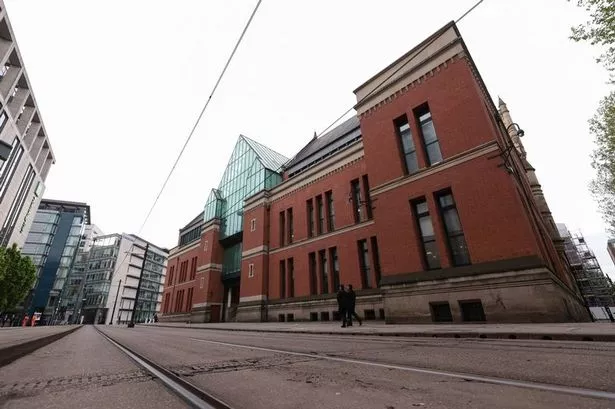 Minshull Street Crown Court in Manchester(Image: MEN Media)
Nicola Carroll has more than two decades worth of experience in the criminal justice system, and regularly prosecutes and defends in serious cases in Manchester’s Crown courts. She told the Manchester Evening News of the proposal: “It’s ill-thought through on a practitioner level, I don’t see it working. I’m not entirely sure it’s going to get through, it would be a constitutional change. It could be months or even years away.
“I don’t know a criminal barrister who is for it. We think it’s the beginning of the end and a complete suspension of our fundamental human rights of a trial by jury. It’s concerning.
“When a prosecutor stands to open the case, it may seem like game over. It’s only when you get part way through, there is disclosed unused material or something that may tip the balance in the favour of an acquittal.
“When we defend, we are bound by a code of ethics in which we have to fight fearlessly on behalf of our clients. How are we going to do that in a judge-led trial? Who, very often, don’t want to hear from us in closing speeches, or to be addressed on the law as they know it already.
“[Jury trials] are not the reason for the delays. The criminal justice system has been suffering from a significant lack of underfunding for many, many years under different governments. There is also that the prison is not producing the prisoners on time, technology fails every day, the fabric of the building itself, people get ill, there’s a lack of sitting days. I believe this was a knee-jerk reaction and I don’t see it happening.
“The jury trials are not the problem. The problem has been there for a long time. It has been swept under the carpet and has now grown to a size which can’t be ignored. I find Lammy’s language divisive. I make it abundantly clear that I am opposed to this.”
Announcing the proposals, David Lammy, Deputy Prime Minister and Secretary of State for Justice, said: “This government inherited a justice system in crisis – victims are waiting far too long to get their case to court, and even more are being let down by a system that allows nefarious defendants to try and game the system.
“The crumbling system we inherited has resulted in a Crown Court backlog of nearly 80,000 and rising. Justice delayed is justice denied. This is not acceptable. Today I have set out a bold blueprint for a modern justice system that works for – not against – victims – one that is faster, fairer and finally capable of giving brave survivors of crime the justice they deserve.
“These reforms are bold and it will take time to turn the tide on the rising backlog, but these measures are necessary to tackle the emergency in our courts. We are putting victims before tradition for tradition’s sake and fairness before those who want to game the system.”
The Government argues that judge-only trials would take ‘20 per cent less time’ than a jury trial. Mr Lammy also said that ‘funding must rise’ to allow for more sitting days in the Crown Court. £34 million in funding was also announced to support criminal lawyers working for legal aid.