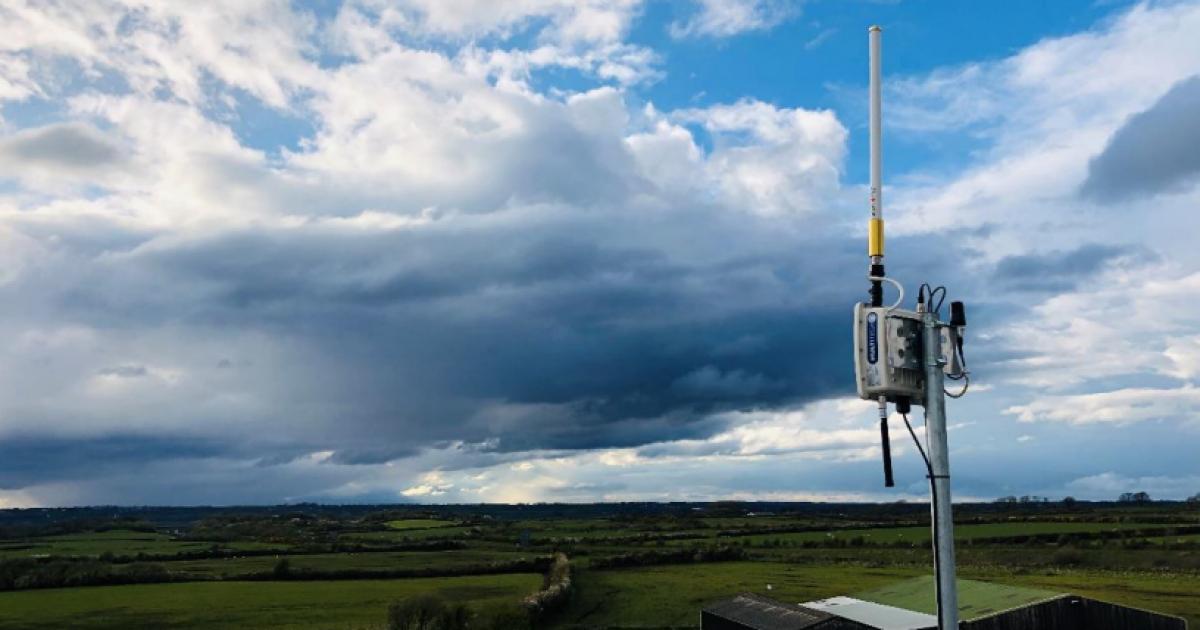
The power of the Internet of Things (IoT) innovations and LoRaWAN (Long Range Wide Area Network) technologies will be central to the launch of this new exciting network for farmers.
The Smart Agriculture IoT trials project is fully funded by the UK Shared Prosperity Fund and is delivered by Mentera on behalf of Ambition North Wales through its Digital Programme.
Through utilising the power of smart agriculture technologies, farmers involved in the network aim to improve farm efficiency, productivity and sustainability in order to help them reach their business goals.
On-farm trials focusing on adopting technologies and new processes will be carried out across North Wales over the coming months, covering a diverse range of focus areas across the dairy, red meat, poultry and horticulture sectors.
From theft prevention and on- farm security, to monitoring rainfall, soil health, runoff and river turbidity for environmental awareness, to monitoring bulling activity with a suckler herd for improving fertility, these trials will utilise the power of LoRaWAN and IoT technology to strengthen individual farm businesses.
LoRaWAN is a wide-area networking system designed for connecting IoT devices and communicating data over long distances with minimal power consumption.It is therefore considered a specific way for simple, battery-powered sensors to talk to the internet over large areas without relying on cellular or Wi-Fi networks, making it increasingly popular in agriculture and farming.
In turn, the project aims to build on the existing open access network that has been developed by participating councils in North Wales to increase LoRaWAN accessibility to the wider agricultural sector.
The farms forming the new Smart Agriculture IoT network span across all six counties in North Wales.
In Anglesey, a horticulture farmer is investigating orchard soil sensing for efficient fruit production, as the orchard is prone to both drought and waterlogging issues.
Fruit trees are also sensitive to small changes in soil pH, therefore monitoring the soil conditions throughout the year will allow for evidence-based management decisions to be made, including interventions and species planting planning.
Meanwhile, in Flintshire, a dairy farm is focussing on maintaining optimum herd health and welfare through monitoring housing environment and water intake of the herd.
With the use of LoRaWAN and IoT sensors, the business will monitor environmental conditions of housing sheds, including temperature, humidity and CO2, as well as water tank usage to ensure clean water is continuously supplied.
If water usage reduces significantly or stops at any point, the aim is that an alert will be sent, indicating the troughs may be fouled, therefore intervention can be made to empty the trough and refill with clean, fresh water.
A poultry farmer in Conwy aims to achieve problem detection within the poultry units, focussing on light intensity and water. Insufficient or high light intensity can negatively affect egg production (more floor eggs), increase stress and aggression and reduce feed and water intake when less than optimal conditions are achieved.
Water availability will also be monitored to identify water supply issues promptly and ensure a continuous, clean water supply is achieved at all times. Remote monitoring and alerts will be especially valuable during times when staff are not present at the units, such as overnight.
In a direct response to the recent rise in trespassers leaving gates open in remote hill areas, one red meat sector project in Denbighshire is focusing on smart gate monitoring for improved livestock safety.
This trial will install LoRaWAN sensors on various gateways for enhanced security, monitoring remote areas and receiving alerts for unauthorized access, providing peace of mind that gates remain in their correct state.
In Gwynedd, a beef and sheep farmer is aiming to improve water efficiency and water monitoring to better gauge water availability and immediately detect issues in water supply if ever to occur.
With the newly developed water system supplying water to the lower part of the farm to enable rotational grazing, close monitoring will allow for informed management decisions to be made, ensuring livestock have continuous water supply throughout the year, avoiding the risk of affecting livestock performance.
The use of technology for better resource management is also being harnessed on a beef farm in Wrexham, aiming to improve electric fence monitoring across the farm. Continuous monitoring of farm boundaries will ensure the fence remains effective and if an issue occurs, immediate alerts will trigger prompt repairs, avoiding complications such as livestock breaking out, as well as reducing time and labour spent on manually checking the fence.
Other focus areas include:
- Soil and Weather Monitoring for Optimising Grass Production
- Operations Alert System and Farm Security
- Monitoring Solar Water Pump System: Fault Detection and Usage
- Enhancing Livestock Health and Productivity: Soil Health, Water, and Housing Management
- Farm Security and Asset Tracking
Manon Llwyd Lewis, Smart Agriculture IoT Trials Officer at Mentera, says: “This is a fantastic opportunity for farmers in North Wales to be at the forefront of agricultural innovation. The adoption of technologies like LoRaWAN is crucial for creating more resilient, productive, and sustainable farm businesses and the network provides an exciting opportunity for us to integrate the advance in technology into the farming industry in North Wales”.
For ongoing updates , please visit Mentera’s website at mentera.cymru/