Belgium: ‘I love the aromas of herbs and spices in mustard shops’
I fell in love with Belgian snacks when cycling the amateur version of the Tour of Flanders some years ago. The feed stations along the route were crammed with packets of Meli honey waffles and Meli honey cake. I ate so many that I suffered withdrawal symptoms after finishing the last of them at the end of the 167-mile route.
On return visits to Ghent, my first port of call is any local supermarket to buy a couple of boxes of the sweet treats. After stocking up, I head to the Tierenteyn-Verlent mustard shop on the Groentenmarkt. The 19th-century interior is like an old-fashioned apothecary filled with the soothing aromas of the spices and herbs used in the mustards they make fresh each day in wooden vats on the premises.
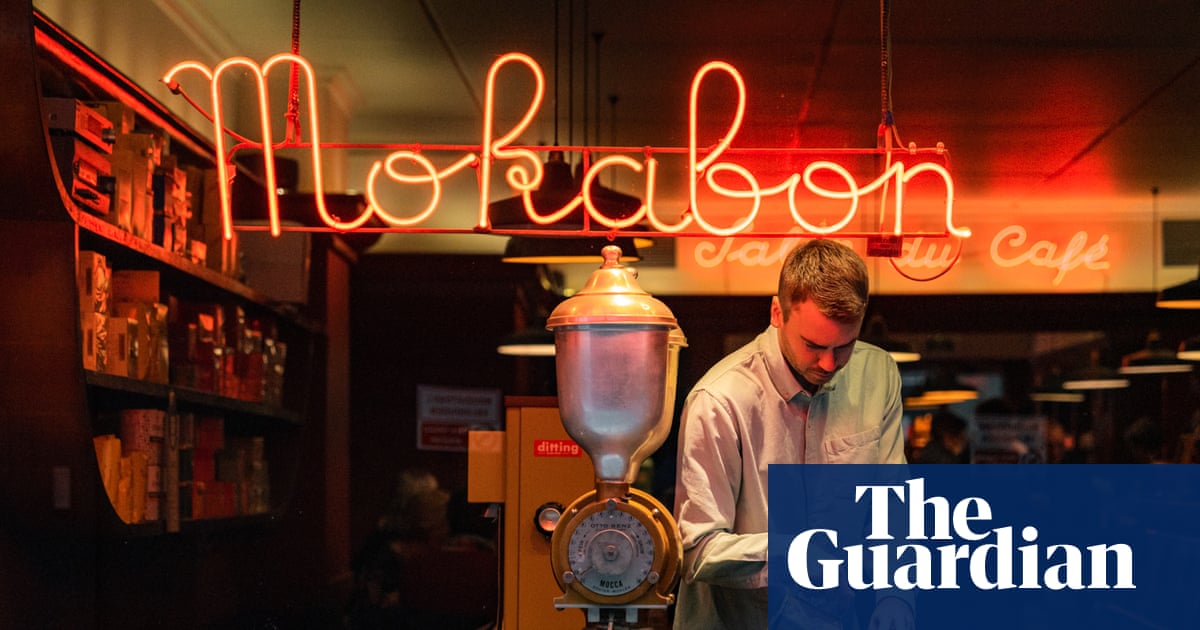
From there, it’s a short hop to Mokabon on Donkersteeg, a 1950s cafe that has seemingly been preserved in aspic with all the original sleek features, including a beautiful wooden bar, red walls and small round tables. At the front of the cafe is a small counter where they sell home-roasted coffee beans (they’ve been roasting since the late 1930s) that they then package in distinctive yellow and red paper bags.
Oh, and on that first visit, I also came home with a Belgian bike.
Andy Pietrasik
France: ‘Artfully arranged shelves are a siren call to drool’The Bonne Maman jam section in a French supermarket. Photograph: Andy Pietrasik
The middle aisle of my local Lidl has nothing on French supermarket booty. I once bought six big saucissons in a hypermarché because they each came with a free Laguiole-style steak knife. Eventually, even the dog started turning his nose up at dried sausage treats.
You know what they say about French style; well, it carries on through to the shelves of French supermarkets, each brand artfully arranged with labels facing forward and issuing a siren call to linger and drool.
There’s the perfectly aligned Bonne Maman jam section offering typically Gallic flavours such as mirabelle intense, coings (quince), figues violettes (fig) and reines-claudes (greengage). Identifying the different types of fromages blancs, crèmes fraîches and creams could qualify as a specialist section on Mastermind. Then there are the cheeses: there are countless varieties from Normandy, Auvergne-Rhône-Alpes and Bourgogne-Franche-Comté.
But my favourite aisles, aside from the wines, are the tins and terrines: terrine de sanglier (wild boar), terrine de lapin (rabbit), pâté du dimanche (pork and duck liver); cassoulet made with duck and Toulouse sausages; and my all-time Proustian taste – confit de canard. Then a quick dash through the snack section reaps armfuls of Lay’s crisps, paysanne tapenade flavour (only in France); galettes au beurre (buttery biscuits); and Haribo Pik Dragibus sweets.
AP
Italy: ‘I have a weakness for sugared jellies and lemony beer’A confectionery shop in Florence. Photograph: John Bracegirdle/Alamy
As a child, I went on holiday abroad just twice – both times to visit family in Italy. That was the start of my love affair with Italian sweets. This is a country that loves a little something sugary and all shops, from big supermarkets to local alimentari, offer an Aladdin’s cave of candies. I have a particular weakness for fruit jellies and the joy of the Italian supermarket is that you can buy huge bags of them (my favourites are Dufour’s Big Frut range), each individually wrapped.
I also never leave Italy without several boxes of Baci chocolates. There is something so beguiling about these “little kisses”, the mound of nutty filling encased in dark chocolate with a whole hazelnut popped on top and then wrapped in silver and blue paper with a message of love tucked inside. Don’t even think of buying them at the airport, where they mysteriously triple in price; instead, find a Prix, which is super cheap, or, for more choice, the big supermarket chains such as Coop and Conad.
If you’ve driven to Italy, then a supermarket sweep will lend itself to armfuls of groceries worth bringing back – olive oil, pasta, balsamic vinegar and don’t forget the porcini mushrooms – but make sure you leave room for a couple of packs of Birra Moretti Limone. While you may be tempted to scoop up a bottle of limoncello, everyone knows it never tastes as good once you get it home. Much better to get that citrusy hit in a beer. Basically, it’s an Italian shandy made from lager and Sicilian lemon juice, making it low alcohol – and delicious. Turns out those tangy, citrusy notes are the perfect accompaniment to a delicious bag of sugared jellies.
Max Benato
Ireland: ‘Skip the Taytos and get tortilla chips made in Tipperary’Smoked wild Atlantic salmon from the Woodcock Smokery, Skibbereen. Photograph: Paul Sherwood Photography
For Irish expats on a trip home and international tourists alike, it is almost mandatory that you stock up on Barry’s tea and Tayto crisps before leaving the country. They won’t let you through airport security on your way out if you don’t have at least one big red box of teabags and a few jumbo packs of salted potato snacks crammed into your suitcase.
Fine as these exemplars of Irish marketing ingenuity are, I’m here to tell you that other great products do exist; it’s just that sometimes you need to dig around a bit to find them. Most Irish supermarkets supply a range of farmhouse cheeses such as Gubbeen and Durrus, which are wonderful, but I’d go the extra mile for Boyne Valley Bán, a magnificent hard goat’s cheese available at Sheridans cheesemongers, which has shops and concessions around the country.
I’d also track down a big jar of Harry’s Nut Butter (the original paprika flavour with the shades-wearing elephant on the label) and White Mausu’s dangerously addictive peanut rāyu – both easy to find in delis and some supermarkets too (SuperValu usually has a good selection of small Irish producers).
I might lose my passport for saying this, but I’d skip the Taytos and grab a bag of Blanco Niño tortilla chips, made in the very un-Mexican county of Tipperary but no less spicily delicious for it. And be sure to pick up some smoked fish – Burren Smokehouse is good, and widely available, but Sally Barnes’s Woodcock Smokery, though harder to come by, is the gold standard.
Killian Fox
Germany: ‘I head for in-store bakeries and deli counters’German bakeries sell a huge variety of breads. Photograph: Jurgen Wiesler/Alamy
One of the things I miss when I’m travelling away from Germany is the fantastic bakeries. Most of the big supermarket chains – such as Edeka and Rewe (which tend to be pricier than Aldi and Lidl) – have in-store bakeries selling everything from pastries to pretzels.
But few things say “home” to me more than the aroma of freshly baked Brötchen. I don’t even know what the proper translation would be – bread roll? Bun? Bap? – but you can get them in many different varieties, with sunflower or poppy seeds, made from sourdough, or as a soft pretzel roll. Fill them with cream cheese, cheese or meat from the deli counters for a good value lunch or breakfast.
Germany’s highly federal system is reflected in its regional cuisine – which is sometimes represented in the fresh counters, too. If you’re in Bavaria, please try a pretzel and white sausage with mild mustard, or in northern Germany a bread roll with battered fish or pickled herring. And if you’re longing for a sugar hit, Hamburg’s finest Franzbrötchen with butter and cinnamon should do the trick.
From the confectionary aisle I would stock up on Ritter Sport chocolate and vegan gummy bears or liquorice from Katjes, one of Germany’s largest sweet makers and a pioneer in using plant-based ingredients and natural flavourings.
However, the thing I miss most about German supermarkets when I’m abroad is the good old deposit system, called pfánd, where you return plastic bottles and cans to the supermarket and get up to 25 cents each. They then get recycled. Throwing them in the bin just does not feel right.
Anna Ehlebracht